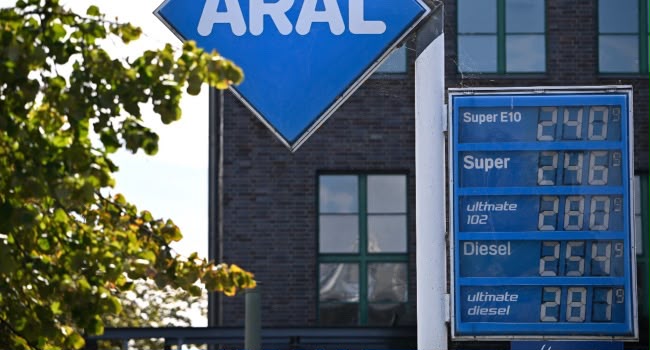
Germany’s latest fuel subsidy has come under scrutiny over concerns that the government’s attempt to shield motorists from soaring energy costs could deliver greater benefits to frequent drivers and owners of larger vehicles than to lower-income households.
The subsidy, which took effect on Thursday, is designed to cushion consumers against the sharp increase in fuel prices linked to disruptions in Middle Eastern energy supplies amid the ongoing US-Iran conflict.
Under the measure, petrol prices fell by about 14 cents per litre to an average of 2.06 euros, while diesel dropped by about 15 cents to 2.20 euros per litre, according to Germany’s automobile association, ADAC.
The government’s official discount is 17 cents per litre, although the amount motorists actually see at filling stations can vary depending on crude oil prices and exchange rates.
The latest intervention has also revived concerns over whether oil companies will pass the entire benefit on to consumers.
During an earlier fuel subsidy programme in May and June, energy companies retained about 200 million euros out of the 1.6 billion euros paid by the German government, according to the country’s Monopolies Commission.
Motoring organisations are therefore demanding greater transparency to ensure that the latest public intervention does not produce a repeat of the earlier experience.
“This new fuel discount must now finally reach consumers in full,” a spokeswoman for the Auto Club Europa told AFP, warning that part of the subsidy should not again remain with the oil industry.
Beyond the question of how much motorists receive, economists have raised concerns about the design of the intervention, arguing that a blanket reduction at the pump does not necessarily direct public assistance to households most affected by rising living costs.
Clemens Fuest, head of the Ifo Institute, said the measure could redistribute resources towards frequent motorists with larger cars rather than people with lower incomes or pensioners.
For some motorists, the reduction has offered little relief despite the government’s intervention. Andrea Hoecker, a 33-year-old public relations worker in Frankfurt, described the reduction as insufficient, saying it might help in the short term but would not address the underlying problem.
A teacher, Lorena Konle, similarly said fuel prices remained unsatisfactory despite the reduction, reflecting continuing pressure on household budgets.
Germany is not alone in responding to the energy shock, as several European Union countries have introduced measures ranging from fuel-tax reductions to direct payments to households to limit the effect of higher energy costs.
The German intervention, however, places the focus not only on reducing prices at filling stations but also on whether the billions of euros committed by the government will translate into meaningful relief for the consumers they are intended to support.