
More than 103 million Nigerians are now on the National Register of Voters ahead of the 2027 general elections, with the Independent National Electoral Commission (INEC) set to commence nationwide distribution of Permanent Voter Cards (PVCs) on Friday.
The development brings the voter registration process into a crucial phase, as the commission moves from enrolling eligible citizens to ensuring that registered voters obtain the documents required to participate in the elections.
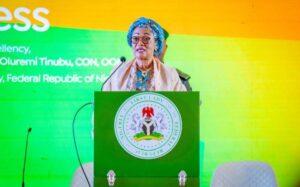
INEC Chairman, Prof. Joash Amupitan, SAN, disclosed the latest figure on Monday at a strategic workshop for media executives organised by INEC in collaboration with Development Alternatives Incorporated (DAI) and the Nigerian Guild of Editors (NGE) in Abuja.
Amupitan said the three-phase Continuous Voter Registration (CVR) exercise had attracted more than 10.6 million new applicants, while the public display of the Preliminary Register for claims and objections had been completed.
He added that the commission had concluded the final Automated Biometric Identification System (ABIS) cleanup of the voters’ register, paving the way for the next stage of the electoral process.
The INEC chairman, who announced October 9 as the commencement date for nationwide PVC collection, urged eligible voters to participate in the exercise and ensure that they were properly captured ahead of the elections.
He said INEC was also continuing to improve the Bimodal Voter Accreditation System (BVAS) and the INEC Result Viewing Portal (IReV), stressing that the credibility of the 2027 elections would depend not only on technology and operational efficiency but also on public confidence.
“The ultimate arbiter of electoral integrity is public trust,” Amupitan said.
The INEC chairman therefore called for stronger collaboration between the electoral commission, media organisations and civil society, arguing that timely access to verified information would help prevent communication gaps from being exploited by purveyors of misinformation.
He said the commission was prepared to provide editors with direct access to information that could help verify field incidents, logistical developments and security reports in real time.
Amupitan also urged news organisations to establish dedicated digital fact-verification desks and proposed a sustained feedback mechanism between INEC and the Nigerian Guild of Editors throughout the 2027 election cycle.
President of the NGE, Mr Eze Anaba, said the workshop was particularly important with the country moving closer to another general election, stressing that credible elections required citizens to have confidence that their votes would count and that electoral institutions would act fairly.
Director, Voter Education and Publicity Department of INEC, Mrs Victoria Eta-Messi, identified misinformation and disinformation as major contributors to declining public participation in elections, urging the media to ensure that accurate information reaches citizens as PVC collection begins.
Also speaking, DAI Team Leader, Rudolf Elbling, said credible elections depended not only on effective electoral administration but also on professional and fact-based journalism, identifying electoral technology, information disorder and the safety of journalists and voters as major issues ahead of 2027.
Executive Director of the Centre for Media and Society, Dr Akin Akingbulu, said Nigeria was approaching a critical stage in its democratic development, with electoral information already shaping public discourse across traditional and digital media platforms.
Akingbulu reminded editors of their responsibility as gatekeepers of electoral information, warning against the publication of unverified material and deepfakes. “Verify before you amplify,” he said.
The Executive Director of the International Press Centre, Mr Lanre Arogundade, meanwhile, warned that the political economy of the media could influence the capacity of newsrooms to maintain impartiality in election reporting, noting that electoral contestation extended beyond campaigns and voting to include information battles and citizens’ perceptions.
INEC National Commissioner and Chairman of its Information and Voter Education Committee, Mohammed Haruna, said the commission had continued to improve its conduct of elections under its current leadership, citing the Anambra governorship election, FCT Area Council elections, Ekiti and Osun governorship elections and legislative bye-elections.
He said INEC had also monitored the primaries of 22 political parties for the 2027 elections, including nominations arising from newly created court-ordered constituencies.
The workshop, held at BON Hotel Octagon, Jahi District, Abuja, was themed “Strengthening Democracy Through Partnership Among Editors, Civil Society and Electoral Institutions.” It featured technical sessions on electoral integrity, election technology, enforcement of electoral laws, misinformation, voter participation, electoral safety and ethical election reporting.