Idara Jerome, Uyo
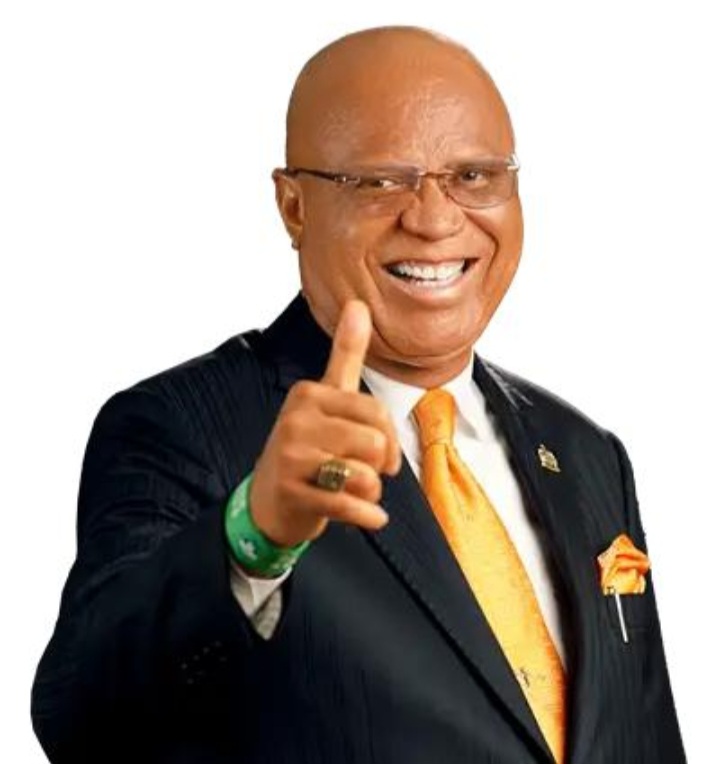
Akwa Ibom State Governor, Umo Eno, has declared a total state of emergency in education and approved N500,000 for each of the 1,776 registered private schools in the state, directing the proprietors to use the money to support their teachers.
The twin measures, announced on Monday at the 2026 World Teachers’ Day celebration in Uyo, translate to a potential N888 million intervention for teachers in the private-school sector, while the governor also approved N50,000 wardrobe allowance for each of the 20,000 teachers employed by the state.
Declaring the education emergency, Eno said the decision was aimed at producing a comprehensive overhaul of the sector, with emphasis on improved learning outcomes, digitalisation, innovation, teacher development and stronger accountability.
He directed Deputy Governor Akon Eyakenyi, herself a teacher, to work with the Commissioner for Education to constitute an Education Emergency Committee that would undertake a holistic assessment of the sector and produce a comprehensive reform document.
“We will look at the educational sector holistically. What should we do? What can we do? What must we add?” the governor said, adding that the administration would seek to establish more schools for innovation at the secondary and tertiary levels.
Eno said the declaration was particularly significant because education was the next major sector his administration intended to prioritise after healthcare, stressing that the government wanted to leave behind an education system capable of equipping children to compete in a changing world.
The governor, however, linked the new investment to increased responsibility on teachers, insisting that improved welfare must produce corresponding commitment in the classroom, including regular attendance, training and retraining and measurable improvements in students’ academic performance.
“I want our teachers to be held accountable in teaching our students. I want them to continue to do training and retraining. I want our teachers to be in school and stay in school,” he said.
Beyond public schools, Eno said the intervention would extend to the private-school system, where 1,776 registered schools would each receive N500,000 specifically to “spread love” to their teachers, bringing the total proposed support under the scheme to N888 million.
For the state’s 20,000 government-employed teachers, the governor approved a separate N1 billion wardrobe intervention, based on the N50,000 allowance for each teacher, saying their appearance and confidence were important to their role in shaping children.
The new commitments come against the backdrop of other education investments by the administration, including the construction and furnishing of 38 model primary schools, with at least one in each local government area, equipped with solar power, ICT facilities, teachers’ residences, sick bays, libraries, games areas and assembly halls.
Eno also announced that N15 billion had been released as matching grant to the State Universal Basic Education Board, SUBEB, which he said had enabled interventions in more than 100 schools, while the government had paid more than N2 billion in inherited 7.5 per cent contributory pension obligations owed to teachers.
The governor said the government had maintained free and compulsory education and continued to pay WAEC and NECO examination fees for Akwa Ibom students, with 172,000 students already registered for the examinations under the programme.
He also announced the transformation of the Akwa Ibom College of Education into the Akwa Ibom University of Education and named Professor Philip Afaha as its Vice Chancellor, with a mandate to commence the accreditation process for the new university.
In addition, Eno approved the recruitment of another 2,000 teachers after an earlier approval for 1,000, but cautioned applicants that success in the Computer-Based Test would not automatically guarantee employment, as candidates would still be subjected to interviews and other civil service requirements.
The governor also directed an Inter-Ministerial Committee to take over the Teachers House project and complete it within six months, responding to a request from the Nigeria Union of Teachers, while assuring teachers that his administration would continue to prioritise their welfare alongside reforms aimed at raising the quality of education in the state.