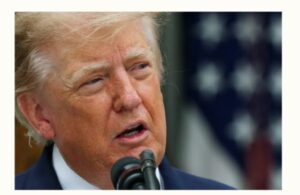
President Donald Trump has described the United States’ military confrontation with Iran as a “military exercise” despite the rising human cost of the conflict, with Pentagon figures showing that 21 American service members have died and 865 others wounded.
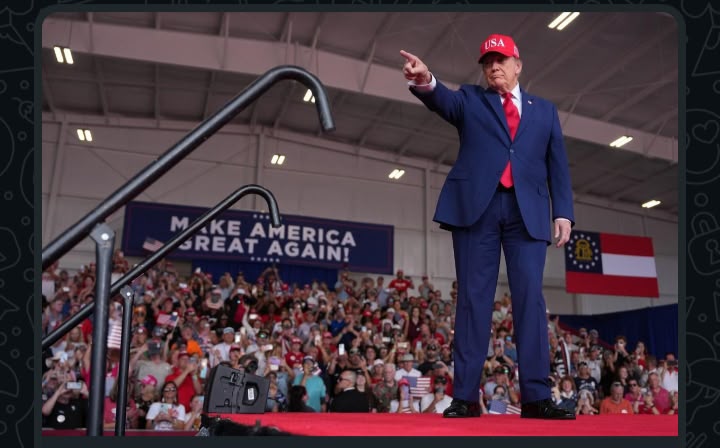
The remark, made at a rally in Georgia on Friday, has renewed questions about the administration’s public presentation of a conflict that has resulted in American casualties and could lead to further military strikes against Iranian targets.
Trump made the comment while highlighting the performance of the US stock market, arguing that the economy remained strong despite the fighting.
“So we have the highest stock market in history. And this is with the war,” he said, before adding, “But it’s not, it’s just, it’s a military exercise, OK? It’s a military exercise.”
The description comes as the administration continues to defend its military campaign against Iran, while the possibility of additional strikes suggests that the confrontation may not be nearing an end.
On Thursday, Trump indicated that US forces could target Pickaxe Mountain, a fortified site associated with Iran’s nuclear programme. “We may have to go there,” he told Newsmax, adding that the military would strike the facility and destroy it quickly.
The latest casualty figures also raise questions about the administration’s repeated attempts to distinguish the operation from a full-scale war. In September, Trump described the conflict as “small potatoes” and compared the 18 American deaths recorded at the time with the much higher number of US military personnel killed during the Vietnam War.
Although he acknowledged then that every death mattered, the Pentagon’s subsequent increase in the official toll to 21 has underscored the continuing human cost of the campaign.
The updated figures include two additional non-combat deaths: Army National Guard Major Sorffly Davius, 46, who died in Kuwait on March 6, and an unidentified Navy service member who died by suicide in September, according to reporting by The Washington Post, which cited a US official.
The casualty count has also become a point of contention between the Pentagon and media organisations over the completeness of publicly available records. In September, The Washington Post reported, citing six US officials, that the number of military deaths connected to the Iran conflict in the Middle East exceeded the figure contained in the Pentagon’s public database.
Defence Secretary Pete Hegseth dismissed that report as “a complete lie” at the time. The Pentagon subsequently updated its figures, while maintaining that it was committed to providing accurate and transparent casualty information.
A senior Department of War official, responding to an inquiry from Newsweek, defended the military campaign, arguing that American forces were working to prevent Iran from acquiring nuclear weapons and protect US interests.
The dispute over terminology has extended beyond Trump. Vice President JD Vance previously said he would not describe the confrontation as a war, while House Speaker Mike Johnson maintained in March that the United States was not at war and characterised the operation as limited.
Republican Representative Thomas Massie, who co-sponsored a resolution seeking congressional approval for further military action against Iran, criticised such descriptions as double-talk, highlighting disagreements over how the administration should define and authorise the campaign.
The political implications are significant, with the November 3 midterm elections approaching and public support for the military action under pressure. A Pew Research Center survey released on October 8 found that 65 per cent of Americans disapproved of Trump’s handling of the US military action against Iran, while 33 per cent approved.
Trump’s latest remarks therefore place the administration’s messaging under scrutiny at a time when the official death toll is rising, further strikes remain possible and voters are weighing the consequences of the conflict.
Whether described as a war, a limited operation or a military exercise, the campaign has already cost American lives, leaving the administration to defend both its military objectives and its characterisation of the fighting.