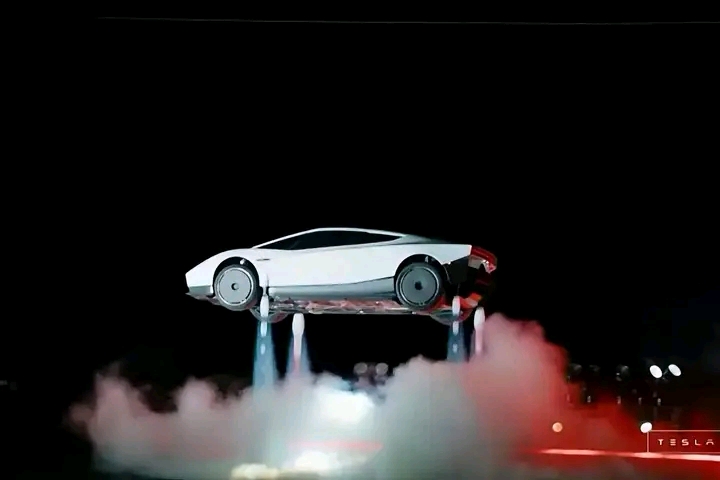
Tesla has reignited excitement in the electric vehicle industry after showcasing its next-generation Roadster, a high-performance sports car equipped with rocket-style propulsion technology developed alongside SpaceX.
The vehicle was demonstrated in Texas on October 15, 2026, with a series of eye-catching stunts that included mid-air manoeuvres and jumps over other vehicles. The display offered a glimpse into Tesla’s ambition to push automotive engineering beyond conventional electric performance.
Elon Musk, Tesla’s chief executive, claimed the Roadster could accelerate from zero to 60 miles per hour in less than a second and achieve top speeds above 230 mph. If the performance claims are realised, the vehicle would represent a significant leap in acceleration technology for road-oriented sports cars.
The collaboration with SpaceX introduces rocket-inspired technology intended to enhance the car’s capabilities, fuelling speculation about the possibility of limited flying-car functions. However, the demonstration does not mean the vehicle can operate as a conventional flying car in everyday conditions.
Despite the dramatic unveiling, prospective buyers may have to wait several years before the vehicle becomes commercially available. Production is not expected to begin until 2028, while Tesla has yet to disclose the final purchase price.
Regulatory approval also remains a major obstacle. Tesla has indicated that the rocket-powered features are not authorised for use on public roads, meaning the vehicle’s most extraordinary capabilities may remain restricted to controlled environments unless the necessary permissions are obtained.
The unveiling adds another ambitious project to Musk’s portfolio, bringing together electric vehicle engineering and aerospace technology. Whether the Roadster can translate its spectacular demonstrations into a commercially viable product will depend on production readiness, safety requirements and regulatory acceptance.
For now, Tesla has offered a bold preview of what its next-generation sports car might achieve, but questions surrounding cost, availability and the practical use of its rocket-assisted features remain unanswered.