North Korea has intensified its military posture along the border with South Korea, with Kim Jong Un’s influential sister, Kim Yo Jong, warning that any action perceived as a provocation could trigger an overwhelming response from Pyongyang.
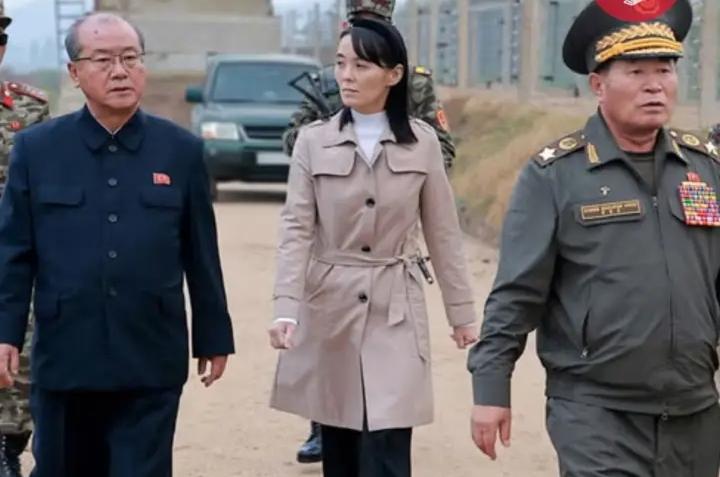
Kim Yo Jong issued the warning during a visit to the heavily fortified border, where she inspected ongoing defence construction alongside Pak Jong-chon, a senior military adviser, according to North Korea’s state-run Korean Central News Agency.
During the inspection, she reportedly instructed North Korean troops to respond swiftly and decisively to any perceived threat, reinforcing Pyongyang’s determination to strengthen its military positions along the frontier.
The latest development comes amid growing hostility between the two neighbouring countries, with both sides exchanging warnings over military activities near the border. South Korea’s military has also vowed to take decisive measures against what it considers provocations from the North.
Kim Yo Jong has additionally threatened to restart propaganda broadcasts through loudspeakers directed at South Korea. She accused Seoul of contributing to the rising tension by firing warning shots at North Korean soldiers operating near the border.
The confrontation follows North Korea’s ongoing fortification campaign, which began in April 2024. Pyongyang has since installed landmines, erected barbed-wire fences and constructed anti-tank barriers along sections of the Military Demarcation Line separating the two countries.
Relations have deteriorated further since Kim Jong Un abandoned his country’s longstanding objective of reunification with South Korea and formally designated its southern neighbour a hostile state.
According to South Korean authorities, North Korea has deployed as many as 7,000 workers to the border this year. Seoul has also reported approximately 50 incidents in which North Korean personnel crossed the Military Demarcation Line towards its side, prompting South Korean troops to fire warning shots on several occasions.
The military standoff has also raised concerns about the dangers posed by landmines in the Demilitarised Zone (DMZ). At least three South Korean soldiers were reportedly injured in a mine explosion in the area last month, with Seoul and the United Nations Command blaming the incident on mines planted by North Korea. Pyongyang denied responsibility.
Pak Jong-chon dismissed the accusations as deliberate and unfounded, insisting that North Korean forces understood the location of their territory and were carrying out activities within their own borders.
He also called for the frontier to be transformed into an impenetrable military stronghold, urging troops to adopt highly specialised and overwhelming measures against what he described as enemy provocations.
The Korean Peninsula has remained technically at war since the 1950–1953 conflict ended with an armistice rather than a peace treaty. The latest exchange of threats underscores the continuing risk of further escalation as both countries strengthen their positions along one of the world’s most heavily militarised borders.