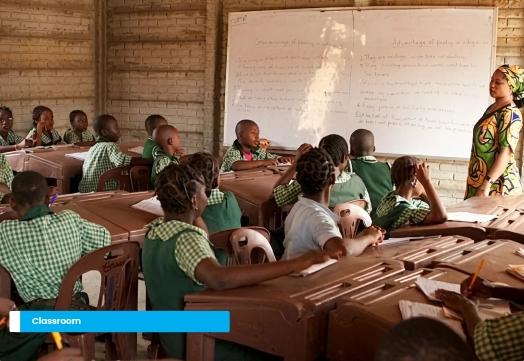
The debate over the proposed involvement of old students in managing government-owned schools has raised fresh concerns about affordability, inequality and the government’s responsibility to provide quality education for all Nigerians.
Critics have warned that allowing alumni associations to play a dominant role in running public institutions could create a system in which schools with wealthy and influential graduates enjoy better facilities, while those serving less privileged communities continue to struggle with inadequate infrastructure.
Ogudoro argued that introducing arrangements that could increase the financial burden on families would further disadvantage children from marginalised backgrounds who already face difficulties accessing quality education.
He maintained that improving educational standards should not come at the expense of equal opportunity, warning that Nigeria could deepen existing social divisions if access to well-equipped public schools increasingly depends on the financial strength of their alumni.
The controversy has also brought attention to what critics describe as the distance between political leaders and the realities of public education. Ogudoro argued that many public officials do not enrol their children in ordinary government schools, opting instead for foreign institutions or private international schools in Nigeria.
According to him, this separation limits the direct exposure of some policymakers to the problems confronting pupils in government-owned schools, potentially weakening the urgency with which education reforms are pursued.
Adeduntan similarly warned that excessive dependence on alumni funding could produce unequal standards across the public school system. He argued that institutions with wealthy, organised and influential former students could secure modern laboratories, solar power and other essential facilities, while schools whose graduates have limited financial resources might remain trapped in years of neglect.
He described such an arrangement as a form of inequality disguised as progress, warning that public education could gradually become divided between well-supported schools and those left behind.
The concerns come against the backdrop of Nigeria’s wider education crisis. UNICEF reported in September 2024 that approximately 10.2 million primary-school-age children and 8.1 million junior-secondary-school-age children were out of school across the country. The agency also found that 74 per cent of children aged seven to 14 lacked basic reading and mathematics skills.
Although the figures do not specifically measure disparities caused by alumni funding, they underline the scale of the challenge facing a system already struggling to deliver accessible and effective education.
Supporters of greater alumni involvement in school management have pointed to concerns about the sustainability of projects funded by former students. The Kings College Old Boys’ Association reportedly expressed frustration that facilities provided through its interventions often deteriorated within months because of poor maintenance and inadequate supervision.
The issue, however, raises a fundamental question about the limits of private assistance in public institutions: should alumni associations be expected to finance and maintain projects that government authorities are responsible for sustaining?
Adeduntan acknowledged the importance of giving back to former schools but stressed that such contributions should not become a substitute for effective government oversight and adequate funding.
He questioned whether old students could realistically be expected to maintain projects indefinitely after completing them, arguing that public authorities must be held accountable for preserving facilities and ensuring that investments in education deliver lasting benefits.
Ultimately, the dispute surrounding Kings College highlights a broader policy dilemma for Nigeria. Alumni contributions can help address urgent shortages and improve school facilities, but without a dependable system of public funding and maintenance, such interventions risk producing isolated centres of excellence rather than improving education across the country.
The challenge for policymakers is to establish a framework in which former students can support their institutions without allowing the quality of public education to depend on the wealth, influence or connections of the people who once attended them.