Russian men facing health problems, alcoholism and financial hardship are increasingly being targeted and pressured into signing military contracts, raising concerns about a growing pattern of forced recruitment as the war in Ukraine continues.
A CNN report said relatives of affected men and human rights advocates described cases in which individuals were allegedly taken away by unidentified men, pressured into signing military contracts and subsequently sent to the battlefield.
One relative told CNN that an uncle in his late 50s, who suffered from vascular problems and could barely walk, was taken away by men in civilian clothes in July. He allegedly signed a document he believed was merely an acknowledgment of the men’s visit, but which turned out to be a military enlistment contract.
The man later contacted his family from a training ground in Luhansk, in Russian-controlled eastern Ukraine. By late September, his relative was informed that he was missing in action.
Another family reported that a man with alcohol-related problems was detained in July and subsequently signed a military contract. CNN reviewed the contract and a video showing him saying goodbye to his distressed mother before entering a van. Less than a month later, the family received news that he was missing.
Russian military lawyer Artem Klyga, who advises citizens on their rights regarding military service, told CNN that reports of forced recruitment had increased since the beginning of the summer.
He said many of the cases involved vulnerable men who lacked the resources or knowledge to resist pressure from recruiters.
The coalition Call to Conscience, which provides legal assistance to Russian conscripts and reservists, also reported a rise in complaints during July and August, saying the methods used to secure recruits were becoming increasingly harsh.
The Russian region of Penza emerged as a particular hotspot in June, when videos circulated online showing women demanding the release of men held inside a bus at a military recruitment centre. In footage verified geographically by CNN, a woman questioned whether the men had enlisted voluntarily.
Russia’s Defence Ministry dismissed reports of forced mobilisation in Penza as false.
CNN also reported allegations that some men were subjected to physical violence and pressured to enlist despite medical conditions that could exempt them from military service.
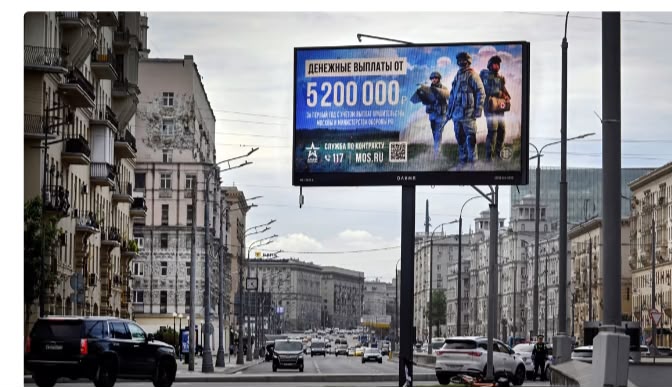
The recruitment drive has raised concerns about financial incentives offered to individuals who help secure new soldiers. CNN found evidence of payments in several Russian regions, alongside job advertisements offering substantial rewards for each person who signs a military contract.
Pavel Malkov, governor of the Ryazan region, announced in August that individuals who helped recruit contract soldiers would receive between 50,000 and 300,000 roubles, equivalent to approximately $590 to $3,500 at the time.
Anti-war organisation New Alternative Route told CNN that such incentives could encourage people to target vulnerable individuals and pressure them into military service for financial gain.
The organisation, founded by Russian information technology professionals living in exile, has been documenting alleged forced recruitment practices and advising people seeking to leave the country.
Although the reported incidents have fuelled speculation about a new wave of mass mobilisation, analysts cited by CNN said the practices might be driven by regional recruitment targets rather than a direct order from the Kremlin.
Janis Kluge, head of the Eastern Europe and Eurasia Division at the German Institute for International and Security Affairs, told CNN that the authorities appeared to be tolerating coercive methods that could help address Russia’s military manpower needs.
Russia has continued to deny plans for another large-scale mobilisation, despite mounting battlefield casualties and concerns about recruitment levels.
The growing fear of forced enlistment has also prompted some Russians to consider leaving the country. CNN reported that inquiries to human rights groups about emigration were increasing.
A 21-year-old Russian identified by the pseudonym Igor told CNN that he left the country after being pressured twice to sign a military contract, including during a visit to a local recruitment office to update his medical exemption.
He said he feared that officials might enlist him without his consent and that the authorities could close the country’s borders before he had a chance to leave.
The accounts point to concerns that Russia’s recruitment system may be increasingly relying on pressure and alleged deception to sustain the flow of soldiers to the war in Ukraine, even without a formal announcement of another mass mobilisation campaign.