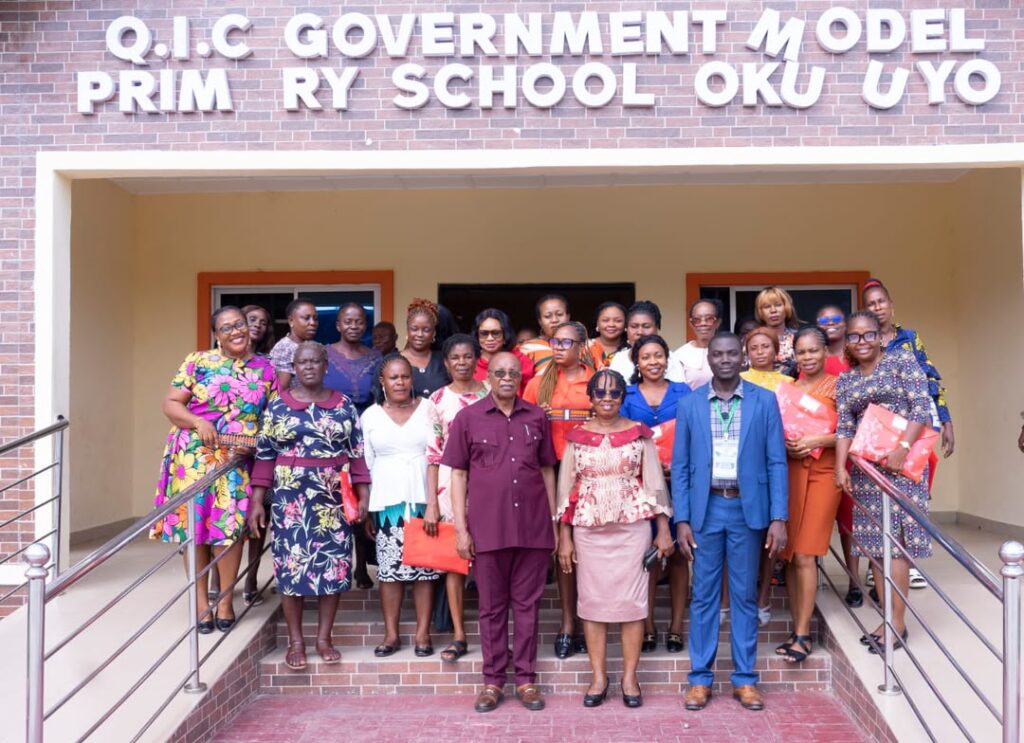
The Akwa Ibom State Universal Basic Education Board (SUBEB) has commenced a statewide training programme for 800 primary school teachers, targeting improved teaching methods and learning outcomes in literacy and numeracy.
The five-day capacity-building exercise, organised in partnership with the Universal Basic Education Commission (UBEC), Abuja, began on Monday with participants drawn from public primary schools across the state.
The teachers are undergoing training simultaneously at 16 designated centres, with each centre accommodating 50 participants. The programme is scheduled to end on Friday, October 30.
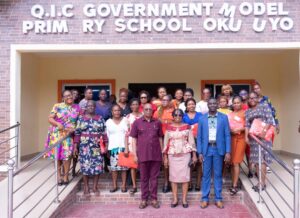
Flagging off the exercise at QIC Model Primary School, Oku, Uyo, SUBEB Executive Chairman, Dr Anietie Etuk said the initiative was aimed at strengthening teachers’ capacity to deliver foundational education more effectively.
Etuk identified literacy and numeracy as essential components of primary education, stressing the need to equip teachers with practical instructional techniques that would help pupils develop reading, writing and mathematical skills.
He attributed the commencement of the programme to the timely release of counterpart funding by Governor Umo Eno, commending the state government for providing the financial support required for its implementation.
The Permanent Secretary of SUBEB, Dr. Roseline Mfon, also acknowledged the government’s support, while emphasising the importance of sustained investment in teacher development.
Resource persons facilitating the workshop include former University of Uyo Vice-Chancellor, Prof. Comfort Ekpo; Director of Teachers’ Professional Development, Mrs. Blessing Inima; Head of Academic Services, Local Government Education Authority, Mrs. David Assanga; Prof. E. E. Joshua, a master trainer; and Dr. Ekemini Akpan.
The training centres are located in Uyo, Itu, Nsit Ibom, Nsit Ubium, Ibesikpo Asutan, Abak, Ikot Ekpene, Ikono, Oruk Anam, Essien Udim, Oron, Urue Offiong, Eket, Esit Eket, Mkpat Enin and Ibiono Ibom.
The programme forms part of efforts to strengthen basic education delivery through improved teacher competence and classroom instruction, particularly in the foundational skills pupils need for further learning.