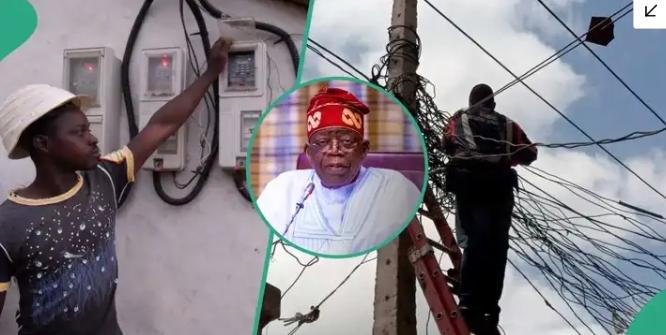
The Federal Government has identified Lagos, Ogun State and the Federal Capital Territory (FCT) as priority locations for a proposed round-the-clock electricity supply programme aimed at improving power availability for households and businesses.
Minister of Power, Joseph Tegbe, disclosed that the three locations would be part of an initial pilot scheme designed to provide more reliable electricity, particularly in areas with high commercial and industrial activities.
Speaking at an interactive meeting with senior media executives in Lagos on Friday, Tegbe explained that the Lagos-Ogun axis and Abuja electricity distribution franchise area were selected because they account for more than half of Nigeria’s electricity demand.
He noted that the government was considering the economic importance of the areas, stressing that improved electricity supply would boost businesses, encourage industrial activities and reduce the amount households and companies spend on generators and other alternative power sources.
However, the minister did not announce a specific date for the commencement of the programme. He explained that implementation would depend on the technical capacity of the electricity infrastructure and the commercial viability of the proposed arrangement.
The initiative is part of a wider electricity development strategy covering three major economic corridors: Lagos-Ogun, Benin-Enugu-Port Harcourt and Abuja-Kaduna-Kano. The government plans to coordinate investments in generation, transmission and distribution across these routes to improve electricity delivery.
Tegbe also disclosed that the Federal Government had released N1.23 trillion out of the N3.3 trillion approved by President Bola Tinubu for the settlement of verified debts owed to electricity generation companies.
According to him, the payments are expected to improve the financial stability of the power sector and strengthen the ability of electricity companies to operate effectively.
He further revealed that more than 2.8 million electricity customers had been provided with meters between 2023 and October 2026 through the Presidential Metering Initiative. He added that newly completed transmission facilities and equipment had increased the country’s transmission capacity by over 1,300 megavolt-amperes.
The minister said the administration was also working towards achieving 10,000 megawatts of electricity generation capacity. As part of efforts to strengthen grid management, a new National Grid Control Centre is being constructed in Osogbo to replace the existing facility, which has been in operation for more than 60 years.
Despite these plans, Tegbe acknowledged that the electricity industry continued to face serious challenges, including inadequate gas supply, ageing equipment, vandalism, transmission limitations and insufficient metering. He said the government had approved additional security measures to protect critical power infrastructure.
If successfully implemented, the proposed 24-hour electricity scheme could bring significant relief to businesses and residents in the selected locations by reducing generator expenses and making power supply more predictable.
However, the minister admitted that Nigerians had grown frustrated with persistent electricity failures, noting that the success of the government’s efforts would ultimately depend on visible improvements in supply rather than official promises.