More than 1,400 flights across the United States were cancelled on Sunday as airlines continued to battle the effects of a nationwide aviation disruption that forced the Federal Aviation Administration (FAA) to suspend departures for several hours on Friday.
Although the restriction has been lifted and normal flight operations have gradually resumed, thousands of passengers are still experiencing delays and cancellations as airlines work to restore their aircraft and crew schedules.
Data from flight-tracking platform FlightAware showed that 1,458 flights within, arriving in or departing from the United States had been cancelled as of Sunday. A further 2,411 flights linked to the country were delayed.
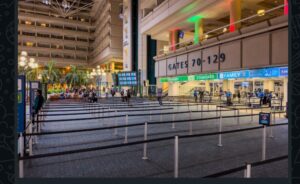
Some of the busiest airports continued to experience significant disruptions, including Atlanta, Dallas/Fort Worth and Chicago O’Hare. New York’s JFK Airport, Charlotte and Boston Logan were also among the airports recording considerable cancellations.
The disruption began on Friday after a telecommunications failure affected systems used by air traffic controllers. The FAA subsequently ordered a nationwide ground stop as a precautionary measure to protect aviation safety.
US Transportation Secretary Sean Duffy explained that the problem occurred during routine work to replace ageing copper telecommunications lines with fibre infrastructure. According to officials, a newly installed router began sending excessive connection requests to other routers, affecting communication and radar systems.
The incident forced the FAA to halt departures nationwide for more than four hours before restrictions were lifted at approximately 8:15 p.m. Eastern Time on Friday.
Several major airlines have since introduced special arrangements to reduce the difficulties passengers are facing.
American Airlines announced a travel waiver covering 21 airports, allowing eligible customers scheduled to travel between November 13 and 18 to change their bookings without paying additional fees. Passengers who meet the conditions can also cancel their trips and request refunds.
Delta Air Lines is offering free rebooking for affected customers travelling between November 13 and 15. The airline has encouraged passengers with flexible schedules to consider moving their journeys to Monday, November 16, or later.
JetBlue has also removed change and cancellation fees, as well as fare differences, for eligible passengers affected by the disruption. Customers can reschedule their journeys through November 18 or request refunds under the airline’s waiver conditions.
United Airlines is allowing affected passengers to change their travel dates without additional charges, provided their replacement flights meet the airline’s stated conditions. Customers who decide not to travel may also qualify for refunds.
Southwest Airlines, meanwhile, warned that delays and cancellations could continue as it works to return its operations to normal. The carrier is allowing eligible passengers with bookings between November 13 and 16 to rebook or travel standby within five days of their original departure dates without paying fare differences.
Airlines have advised passengers to check their flight status through official websites or mobile applications before leaving for the airport.
Despite the FAA’s decision to reopen US airspace, the continuing cancellations highlight how a technical failure affecting air traffic control infrastructure can disrupt the wider aviation industry long after the immediate problem has been resolved.