The United States Army is considering detonating nearly five tonnes of highly unstable bomb-making material in Iowa by Tuesday, despite a federal appeals court temporarily suspending the environmental permit that authorised the operation.
The development has sparked widespread concern among residents, environmental organisations and political leaders, who fear the explosion could release dangerous lead particles into the atmosphere, potentially affecting communities across Iowa and neighbouring Illinois.
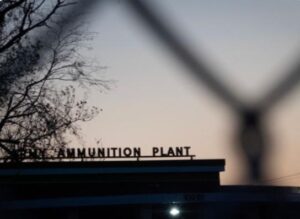
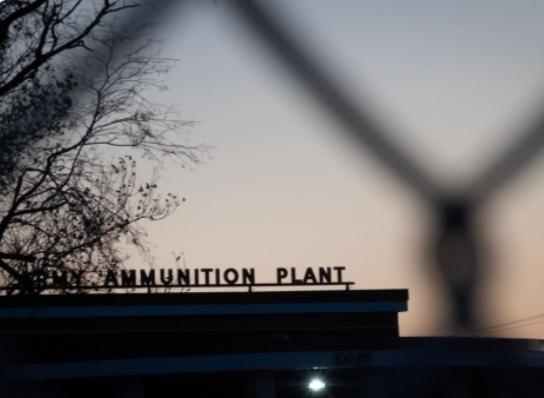
The material, identified as lead azide, is stored in nearly 70 drums at the Iowa Army Ammunition Plant in Middletown. It is a chemical compound commonly used in detonators for military explosives.
In a court filing on Saturday, the US Department of Justice argued that the Army could proceed without the suspended permit by relying on a separate emergency provision in federal regulations.
The Justice Department maintained that the court’s decision did not prevent the military from taking action under the alternative legal authority, insisting that detonating the material under controlled conditions was safer than allowing it to explode unexpectedly.
Army officials said the substance had deteriorated significantly and could become even more dangerous as temperatures fall. According to the military, even slight movement or friction could trigger an accidental explosion, making transportation and other disposal methods extremely risky.
The Army said it discovered the problem in March during routine inspections of its stockpile. After consultations with environmental experts, the Environmental Protection Agency (EPA) and other stakeholders, officials concluded that controlled detonation presented the lowest immediate risk.
However, environmental campaigners strongly disagree with the decision and have questioned whether the government has adequately assessed the possible consequences.
The Iowa Environmental Council and the Sierra Club’s Iowa chapter, represented by Earthjustice, challenged the EPA’s emergency permit in court, arguing that the proposed operation could expose thousands of people to toxic lead contamination.
Their concerns prompted the Eighth Circuit Court of Appeals to temporarily suspend the permit on Thursday while considering the emergency legal challenge.
Despite the court’s intervention, the Army’s latest position has raised fears that the military could proceed by invoking the emergency exemption, potentially undermining the ongoing judicial process.
Rachel Rintelmann, an attorney with Earthjustice, accused the Justice Department of preparing a legal route that could allow the Army to bypass the court’s review.
The controversy has also drawn attention from neighbouring Illinois, where officials fear that wind could carry contaminated particles across state boundaries.
Illinois authorities warned that parts of western and central Illinois could be affected, depending on weather conditions. Residents have been advised to remain indoors on the day of the operation and keep their windows and doors shut for at least one to two days afterwards.
Officials also recommended using air cleaners fitted with HEPA filters. Livestock and pet owners were advised to keep their animals indoors until the potentially contaminated air had passed and wash them afterwards.
Iowa Governor Kim Reynolds activated the state’s emergency operations centre on Friday as authorities stepped up preparations and coordination with federal agencies.
Meanwhile, Cedar Rapids officials, despite being more than 80 miles from the ammunition plant, said they were taking precautionary steps to monitor drinking water supplies for possible contamination.
The city’s water system relies partly on wells located along the Cedar River.
Several political figures have also criticised the handling of the situation. Josh Turek, Iowa’s senator-elect, called for the operation to be postponed, citing concerns raised by residents about the possible health consequences.
Rob Sand, the state’s incoming governor, also questioned the government’s communication strategy, saying residents deserved clearer explanations about why other disposal methods had been ruled out.
Illinois Governor JB Pritzker disclosed that he had spoken with Acting Army Secretary Adam Telle, urging the federal government to provide more information about the potential impact on communities across the state.
Health experts have warned that lead exposure poses serious dangers, particularly to children. The US Centers for Disease Control and Prevention says exposure can damage brain development and cause problems with learning, behaviour, hearing, speech and physical growth.
Dr Sameer Vohra, director of the Illinois Department of Public Health, stressed that there is no safe level of lead in the human body.
Patrick O’Shaughnessy, an environmental health expert at the University of Iowa, also questioned why the deteriorating material had not been properly addressed years earlier, describing the situation as an unfortunate consequence of prolonged neglect.
The Army had previously contracted MuniRem Environmental, a Georgia-based company that specialises in chemically neutralising military explosives, to handle the material. However, the agreement was later cancelled, with the military opting for controlled detonation instead.
The company’s chief executive, Valentine Nzengung, told CNN that the Army informed them it had reviewed available reports and determined that controlled detonation was the safest option.
With cooler weather expected and winds forecast to blow from north to south at between five and 10 miles per hour, authorities are closely monitoring conditions that could influence the movement of lead particles.
The Federal Aviation Administration has also imposed temporary flight restrictions around Middletown from Monday through Wednesday as preparations continue.
Although the appeals court’s suspension remains in place, the Army has indicated that it could carry out the operation under emergency provisions as early as Monday or Tuesday, leaving residents and environmental groups demanding greater transparency and stronger assurances about public safety.