Michael Dada
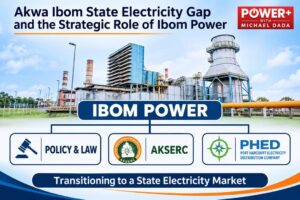
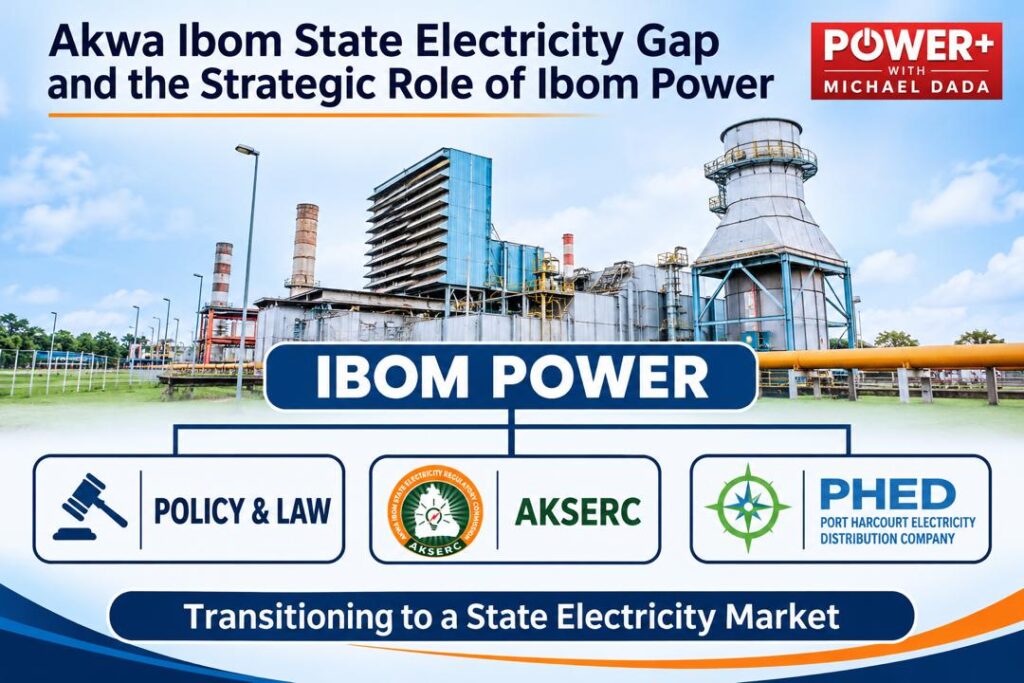
Akwa Ibom State is approaching a defining moment in its power sector as it prepares to transition to a state electricity market.
However, the success of this transition will depend on how effectively the state leverages its existing generation capacity, particularly the 191MW Ibom Power Plant, to address its widening electricity supply gap.
As of 19 November 2026, the Nigerian Independent System Operator (NISO) reported 2,745MW of available electricity on the national grid, of which PHEDC received 250MW.
Based on Akwa Ibom State’s historical 16% share of PHEDC’s allocation, this translates to approximately 40MW available for the entire state.
This estimate is consistent with PHEDC’s recent asset delineation, which puts Akwa Ibom’s historical allocation at about 44MW.
In practical terms, Akwa Ibom has to depend on approximately 40MW of grid allocation to serve a population of about 7 million people across its 31 local government areas.
This represents a significant electricity supply gap for a state with a growing tourism industry, alongside increasing residential and commercial electricity demand.
For instance, the 2 x 15MVA injection substation at Edet Akpan Avenue (Four Lanes) in Uyo, which serves Shelter Afrique Estate, Ewet Housing Estate, Four Lanes, Osongama and several other locations within the vicinity, including a dedicated line to Ibom Hotel, has an estimated load capacity of 24MW.
This means that even at 80% capacity, a single injection substation serving several locations within the state capital could require almost half of the electricity allocated to the entire state from the national grid.
Consequently, PHEDC has to ration the limited supply through load shedding, meaning that electricity supply to some locations often comes at the expense of others.
This is where Ibom Power becomes particularly important.
Akwa Ibom should not be grappling with an electricity supply deficit when it owns a power generation asset with an installed capacity of 191MW and the potential to deliver over 100MW.
His Excellency, the Governor, has disclosed plans to optimise plant operations through a concession.
This is a laudable vision that could reinforce Akwa Ibom’s pioneering status in Nigeria’s power sector, having conceived and established Ibom Power as the country’s first state-owned independent power generation project.
Nearly two decades later, no other state has been able to replicate this feat with a power generation asset of comparable capacity.
Therefore, the longer the plant remains out of operation, the greater the risks of equipment deterioration, exposure to potential acts of vandalism and delays in achieving the Governor’s objective of making Akwa Ibom a leader in Nigeria’s subnational electricity market.
According to General Electric (GE), the Original Equipment Manufacturer (OEM), Ibom Power’s gas turbine is designed for extended operating intervals of up to 8,000 hours, equivalent to approximately 330 days, before a scheduled maintenance.
However, available operational records show that Ibom Power accumulated only about 700 actual operating hours (29 days) between January and November 2026, largely due to gas supply constraints.
Such prolonged inactivity and frequent shutdowns raise concerns about equipment deterioration and the indicative replacement value of the Ibom Power plant.
Bayelsa State recently commissioned a 60MW power plant, which is less than a third of Ibom Power’s 191MW installed capacity, at an estimated cost of over N140 billion.
Similarly, in December 2025, a 77% stake in the 435MW Geregu Power Plant was acquired for about N1 trillion.
At nearly 44% of Geregu’s capacity and more than three times Bayelsa’s output, Ibom Power’s indicative replacement value would exceed N330 billion.
Unfortunately, the plant has remained inoperative for most of the year, despite requiring less than 5% of this estimated replacement value to be restored to sustainable operation.
Of the 16 states that have assumed regulatory oversight of their electricity markets, nine have federally controlled or privately owned power generation facilities domiciled within their territories, while the remaining seven depend mostly on the national grid for electricity supply.
Ibom Power, therefore, gives Akwa Ibom State a distinct strategic advantage to build its electricity market around an existing state-owned generation asset rather than relying on the inadequate 44MW electricity allocation it receives from the national grid through PHEDC.
As Akwa Ibom approaches the completion of its transition to a state electricity market, the strategic importance of Ibom Power in closing its electricity supply gap becomes increasingly evident.
Ultimately, the success of Akwa Ibom State’s electricity market will depend on how quickly it can transform Ibom Power from an underutilised asset into a dependable source of electricity for the state.