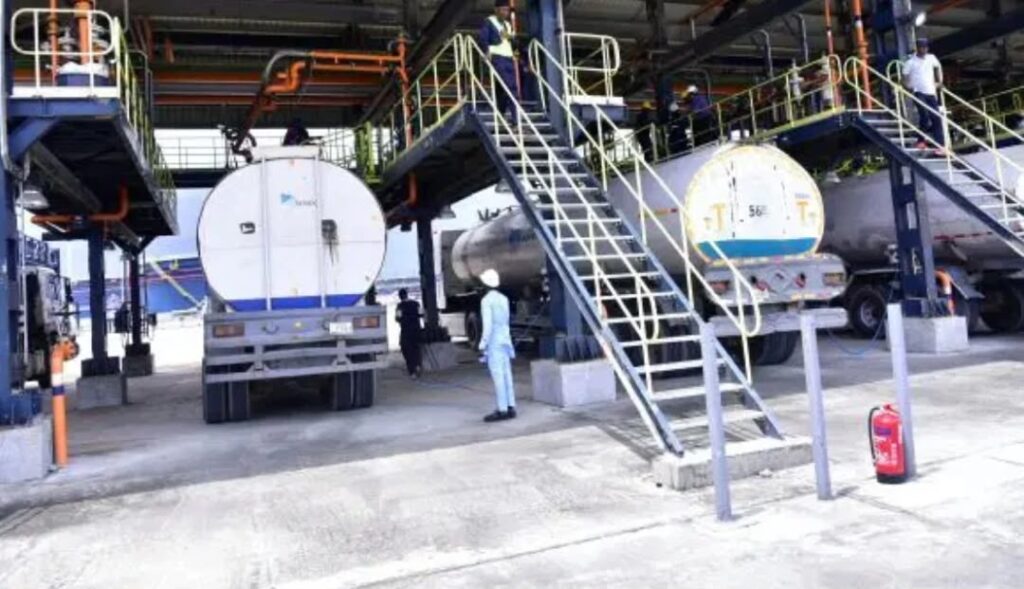
The Dangote Petroleum Refinery and Petrochemicals has expanded its free petroleum products delivery scheme to four additional states, bringing the number of states benefiting from the initiative to 14.
The newly covered states are Kano, Imo, Anambra and Nasarawa, in a move expected to reduce transportation costs in the downstream petroleum distribution chain and potentially ease pressure on petrol pump prices.
The initiative, which began with Lagos, Ogun, Rivers, Kaduna, the Federal Capital Territory and Delta, is aimed at taking refined petroleum products closer to independent petroleum marketers and retailers.
The refinery, by taking responsibility for the cost of transporting products to designated locations, is effectively removing a major component of the expenses incurred by marketers in moving products over long distances.
The development is expected to improve the efficiency of fuel distribution while creating greater room for marketers to operate at reduced logistics costs.
Independent petroleum marketers have also welcomed the expansion, saying it could provide relief from some of the financial and operational challenges associated with product transportation and distribution.
Group Executive Director, Commercial Operations, Oil and Gas, WAEP and Fertiliser, Dangote Industries Limited, Fatima Aliko Dangote, said the initiative was designed to ensure that the benefits of local refining were extended beyond the refinery.
She said domestic refining would only achieve its full impact when the gains were transmitted across the petroleum value chain to businesses and consumers.
“The value of domestic refining must ultimately be felt beyond the refinery gate.
“By absorbing the cost of delivering petroleum products to our customers, we are removing a significant component of the distribution burden and creating room for those savings to flow through the value chain to consumers,” Dangote said.
She added that the initiative was part of efforts to make petroleum products distribution more efficient by eliminating avoidable costs and supporting a more competitive downstream market.
The Independent Petroleum Marketers Association of Nigeria (IPMAN) also commended the initiative, describing it as a significant intervention for independent marketers.
The association noted that marketers often commit substantial resources to purchasing petroleum products, while additional transportation costs and delays in moving products to their destinations further increase their financial burden.