By Idongesit Mishael
The death of a senior management staff member, followed by the loss of spouses of two other employees, has deepened the anguish among workers of Ibom Power Company, where about 120 employees are battling more than eight months of unpaid salaries amid prolonged shutdown of the state-owned power plant.
For the workers, the crisis is no longer simply about delayed wages or an idle power station. It is increasingly about how families survive when salaries stop coming, medical cover disappears and the little financial cushion available to employees is gradually exhausted.
Sources familiar with the situation, who spoke on condition of anonymity because they were not authorised to discuss the company’s internal affairs, said the death of the senior staff member in the midst of the crisis, with the funeral held in May 2026, was followed by the deaths of the spouses of two other employees, reportedly after health-related illnesses.
The sources, however, did not establish that the deaths were caused by the company’s financial crisis. What they described was the difficult environment in which employees and their families had been forced to navigate illness, medical expenses and other basic needs while salaries remained unpaid for months.
One source said the workers had increasingly depended on loans and other forms of borrowing to survive, with some struggling to meet rent, school fees, feeding and medical expenses.
The situation became more difficult after the company’s Health Maintenance Organisation subscription was reportedly discontinued, leaving workers and their dependants without the medical protection they had previously enjoyed.
“People have been surviving on loans for months,” one source said, adding that the workers had endured the situation because they remained hopeful that the company would resume generation and recover financially.
But that hope has been repeatedly tested by the plant’s prolonged inability to operate.
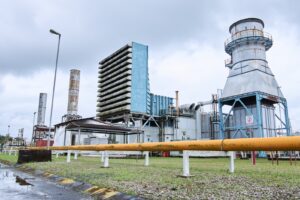
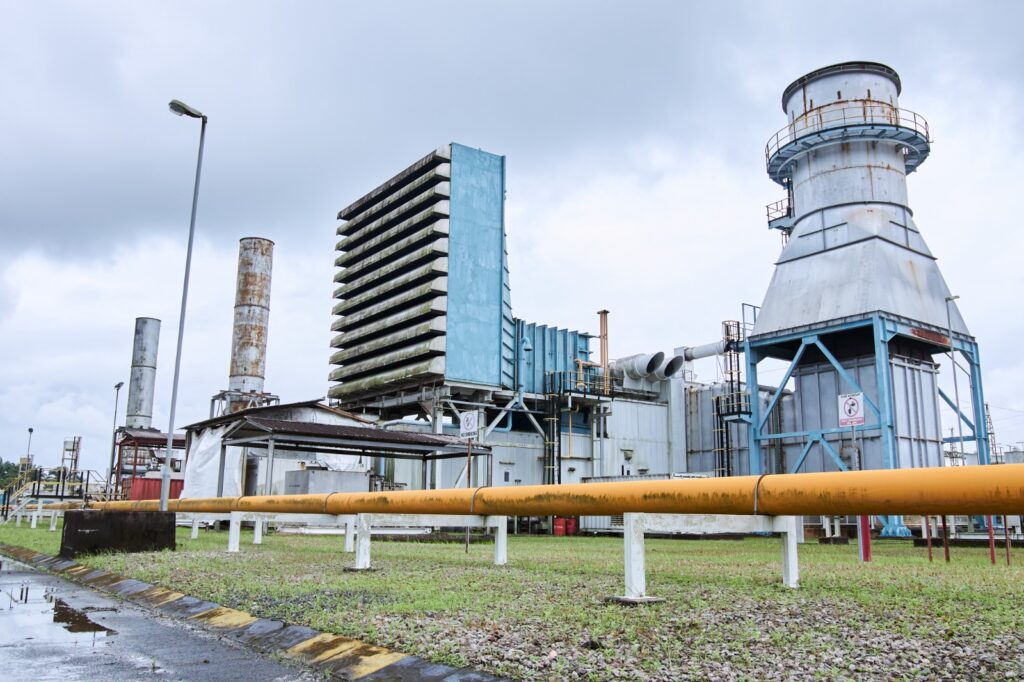
An on-the-spot assessment by VVCWatch at the Ibom Power facility in Ikot Abasi also showed a power generation asset whose present condition contrasts sharply with its strategic importance to the state’s electricity ambitions.
The company, which has about 100MW of available generation capacity from the plant, has operated only intermittently in the past year, with gas supply constraints identified as the immediate obstacle to sustained generation.
According to information provided by persons familiar with the company’s operations, the gas crisis began to severely affect the plant after its gas supplier stopped supply in August 2025.
Since then, brief periods of generation have produced only temporary relief for workers.
One source said when the plant generated for about three days in November 2025, the company used the proceeds to begin paying the October salary in instalments. Further periods of generation in February, May and June 2026 reportedly enabled management to make additional payments, but failed to eliminate the accumulated arrears.
The pattern has left workers in an unusual situation: their ability to receive salaries has become tied to the number of days the power plant is able to generate electricity.
Whenever the plant generates and earns revenue, part of the proceeds reportedly goes into settling gas obligations, leaving limited resources for salaries and other operational expenses.
The result, according to the sources, is that workers have remained caught between a company that needs gas to generate revenue and a workforce that needs salaries to survive.
The crisis also comes at a critical time for Akwa Ibom’s electricity sector.
Governor Umo Eno’s administration has introduced an electricity policy, enacted a state electricity law and established the Akwa Ibom State Electricity Regulatory Commission as the state prepares to exercise greater responsibility over its electricity market.
The reforms are aimed at creating a functional electricity market and improving power supply across the state.
But Ibom Power’s condition raises a difficult question for the emerging electricity regime: how can the state expand its electricity market if one of its most strategic generation assets cannot consistently generate?
For the employees, however, the question is more immediate.
They want the government, as the sole shareholder, to intervene to clear the salary backlog and provide the payment security required to restore gas supply to the plant.
A source said the immediate bailout should not be viewed merely as a wage intervention, arguing that paying the workers would provide humanitarian relief while securing gas would enable the plant to resume generation and begin rebuilding its own revenue base.
The workers’ plight is also tied to the broader financial crisis in Nigeria’s electricity industry, where generation companies have struggled with unpaid electricity market debts and gas suppliers have demanded stronger payment guarantees.
Ibom Power itself has reportedly been owed billions of naira for electricity generated in previous years, while the state government has separately stepped in to address a legacy debt owed to Afreximbank.
The state has reportedly made payments towards the settlement of the Afreximbank obligation, but the intervention has not resolved the more immediate problem of keeping the plant supplied with gas and meeting the company’s recurrent obligations.
For the workers, that distinction matters.
A legacy debt can be restructured and paid over time. A family struggling without salary, healthcare or the means to respond to an emergency cannot wait indefinitely.
The deaths that have occurred within the workforce’s circle have therefore become part of a larger story about what prolonged economic uncertainty does to people who have continued reporting for work despite months without regular pay.
The employees are not asking to be paid for work they have not done. They are asking for relief from the consequences of a structural problem they did not create.
And as Akwa Ibom moves to regulate its electricity market, the workers are asking the state to look beyond the regulatory framework to the people and infrastructure already standing within its electricity value chain.
Their appeal is straightforward: clear the eight-month salary backlog, restore medical support where possible, secure gas supply and get Ibom Power generating again.
Until that happens, the workers at Ikot Abasi will continue to carry the personal cost of a crisis that began with gas and electricity-market liquidity but has now entered their homes, their healthcare decisions and, for some families, their darkest moments.