ISDMA Hails Ikot Ekpene Council Chair Over Raffia Mall, Other Projects

Idara Jerome, Uyo

The Ikot Ekpene Senatorial District Media Advocates (ISDMA) has commended the Chairman of Ikot Ekpene Local Government Area, Mr Aniefiok Nkom, for what it described as a deliberate effort to revive the city’s fading raffia heritage through infrastructure development and economic renewal.

The commendation followed an inspection tour of ongoing projects in the local government area by members of the media group, who also engaged the council chairman on his administration’s efforts to restore Ikot Ekene’s identity as the famed “Raffia City.”

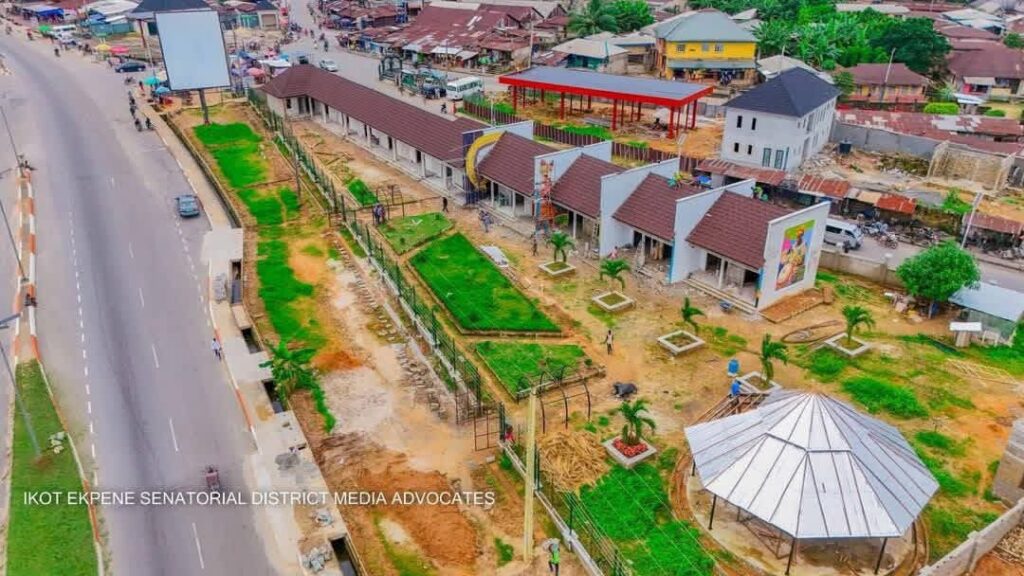
A major focus of the visit was the ongoing Raffia Mall, a project conceived to provide a modern and organised environment for raffia traders and artisans while reconnecting the city with an industry that has, for generations, defined its cultural and commercial identity.

Ikot Ekpene, established in 1951 as the first experimental Local Government Area in West Africa, has long been associated with raffia craftsmanship, with products ranging from baskets, bags and mats to furniture and other handcrafted items.

However, despite the city’s enduring reputation, stakeholders in the raffia trade have over the years struggled with inadequate trading spaces, poor facilities and limited institutional support, challenges which have constrained the sector’s growth and visibility.

It was against this background that ISDMA inspected the Raffia Mall, with Nkom explaining that the project was not simply about providing shops but about giving a new lease of life to an industry closely tied to the history and identity of Ikot Ekpene.

Nkom said the administration’s vision was to create an environment where raffia-related businesses could thrive, attract patronage and investment, and once again become a major source of livelihood for residents.

“This is not just about building shops. It is about restoring the identity of Ikot Ekpene as the Raffia City and creating an environment where our people can do business and preserve what our forefathers handed down to us,” he said.

Giving details of the project, the architect, Frank Kingsley, described it as a Raffia City Development Project comprising 15 shops for raffia traders and a modern office complex for officials.

According to him, the development was deliberately designed to combine commercial activities with the cultural character of the city, including artistic representations of raffia traders and artisans whose contributions to Ikot Ekpene’s heritage have not always received adequate recognition.

The facility will also include an outdoor bar and recreational area designed to provide space for relaxation and social interaction.

For raffia traders who spoke during the inspection, the project could mark a significant change from the difficult conditions under which they have operated over the years.

Some of the traders told the delegation that inadequate trading spaces and poor facilities had affected the visibility and commercial prospects of their products, expressing hope that the new mall would provide a more attractive and organised setting for their businesses.

One of the traders said the project had renewed their confidence that raffia trading could once again occupy a prominent place in the economic life of the city.

Beyond the Raffia Mall, the ISDMA delegation inspected other projects being undertaken by the council administration, including a standard motor park, an access road to administrative offices at the council secretariat annex, an Ikot Ekpene shopping mall comprising 46 shops and solar-powered boreholes across the wards.

The delegation also inspected the council’s Operation Zero Potholes initiative, road grading and other infrastructure interventions aimed at improving mobility and the general living and business environment.

At the end of the inspection, ISDMA described the projects as evidence of an approach that links physical development with the preservation of local identity, particularly through the Raffia Mall.

Idara Jerome, Uyo

The Ikot Ekpene Senatorial District Media Advocates (ISDMA) has commended the Chairman of Ikot Ekpene Local Government Area, Mr Aniefiok Nkom, for what it described as a deliberate effort to revive the city’s fading raffia heritage through infrastructure development and economic renewal.

The commendation followed an inspection tour of ongoing projects in the local government area by members of the media group, who also engaged the council chairman on his administration’s efforts to restore Ikot Ekene’s identity as the famed “Raffia City.”

A major focus of the visit was the ongoing Raffia Mall, a project conceived to provide a modern and organised environment for raffia traders and artisans while reconnecting the city with an industry that has, for generations, defined its cultural and commercial identity.

Ikot Ekpene, established in 1951 as the first experimental Local Government Area in West Africa, has long been associated with raffia craftsmanship, with products ranging from baskets, bags and mats to furniture and other handcrafted items.

However, despite the city’s enduring reputation, stakeholders in the raffia trade have over the years struggled with inadequate trading spaces, poor facilities and limited institutional support, challenges which have constrained the sector’s growth and visibility.

It was against this background that ISDMA inspected the Raffia Mall, with Nkom explaining that the project was not simply about providing shops but about giving a new lease of life to an industry closely tied to the history and identity of Ikot Ekpene.

Nkom said the administration’s vision was to create an environment where raffia-related businesses could thrive, attract patronage and investment, and once again become a major source of livelihood for residents.

“This is not just about building shops. It is about restoring the identity of Ikot Ekpene as the Raffia City and creating an environment where our people can do business and preserve what our forefathers handed down to us,” he said.

Giving details of the project, the architect, Frank Kingsley, described it as a Raffia City Development Project comprising 15 shops for raffia traders and a modern office complex for officials.

According to him, the development was deliberately designed to combine commercial activities with the cultural character of the city, including artistic representations of raffia traders and artisans whose contributions to Ikot Ekpene’s heritage have not always received adequate recognition.

The facility will also include an outdoor bar and recreational area designed to provide space for relaxation and social interaction.

For raffia traders who spoke during the inspection, the project could mark a significant change from the difficult conditions under which they have operated over the years.

Some of the traders told the delegation that inadequate trading spaces and poor facilities had affected the visibility and commercial prospects of their products, expressing hope that the new mall would provide a more attractive and organised setting for their businesses.

One of the traders said the project had renewed their confidence that raffia trading could once again occupy a prominent place in the economic life of the city.

Beyond the Raffia Mall, the ISDMA delegation inspected other projects being undertaken by the council administration, including a standard motor park, an access road to administrative offices at the council secretariat annex, an Ikot Ekpene shopping mall comprising 46 shops and solar-powered boreholes across the wards.

The delegation also inspected the council’s Operation Zero Potholes initiative, road grading and other infrastructure interventions aimed at improving mobility and the general living and business environment.

At the end of the inspection, ISDMA described the projects as evidence of an approach that links physical development with the preservation of local identity, particularly through the Raffia Mall.
It is a long established fact that a reader will be distracted by the readable content of a page when looking at its layout. The point of using Lorem Ipsum is that it has a more-or-less normal distribution of letters, as opposed to using ‘Content here, content here’, making it look like readable English. Many desktop publishing packages and web page editors now use Lorem Ipsum as their default model text, and a search for ‘lorem ipsum’ will uncover many web sites still in their infancy.

It is a long established fact that a reader will be distracted by the readable content of a page when looking at its layout. The point of using Lorem Ipsum is that it has a more-or-less normal distribution of letters, as opposed to using ‘Content here, content here’, making it look like readable English. Many desktop publishing packages and web page editors now use Lorem Ipsum as their default model text, and a search for ‘lorem ipsum’ will uncover many web sites still in their infancy.

The point of using Lorem Ipsum is that it has a more-or-less normal distribution of letters, as opposed to using ‘Content here, content here’, making

The point of using Lorem Ipsum is that it has a more-or-less normal distribution of letters, as opposed to using ‘Content here, content here’, making it look like readable English. Many desktop publishing packages and web page editors now use Lorem Ipsum as their default model text, and a search for ‘lorem ipsum’ will uncover many web sites still in their infancy.

admin

RECENT POSTS

CATEGORIES

Leave a Reply

Your email address will not be published. Required fields are marked *

SUBSCRIBE US

It is a long established fact that a reader will be distracted by the readable content of a page when looking at its layout. The point of using Lorem Ipsum is that it has a more-or-less normal distribution

Copyright BlazeThemes. 2023