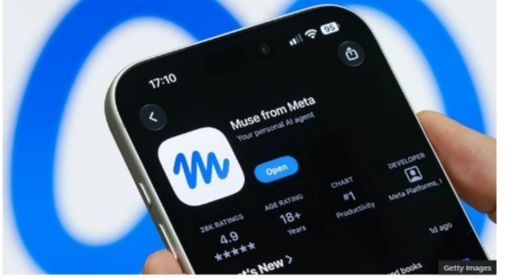
Meta has introduced its artificial intelligence assistant, Muse, to the United Kingdom, offering users a digital tool designed to handle routine personal and administrative tasks with limited human intervention.
The AI agent is designed to go beyond answering questions by carrying out assignments such as comparing energy deals, organising calendars, searching for travel options and managing everyday correspondence.
Unlike conventional chatbots, Muse can continue working on assigned tasks while users attend to other activities. However, actions involving purchases, messages or social media posts require user approval, although its autonomy can be adjusted through settings.
The platform’s growing capabilities have also brought renewed attention to the privacy implications of granting artificial intelligence access to personal emails, calendars and phone messages. Its performance is also limited by restrictions involving some third-party platforms, with certain services unavailable for direct transactions.
During a week-long trial, the assistant demonstrated its ability to provide useful summaries and suggest responses to incoming messages, although it sometimes produced awkward replies that lacked an understanding of ordinary social interactions.
The trial also highlighted concerns about reliability, as the agent struggled to complete certain online searches and repeatedly requested permission before carrying out routine activities.
Meta is positioning Muse as part of its broader investment in artificial intelligence, with the company hoping to make digital agents a major part of everyday consumer technology.
However, the UK’s Information Commissioner’s Office has cautioned users about the risks associated with autonomous AI systems, particularly the possibility that errors could have wider consequences when such tools are permitted to act independently.
According to the BBC, the launch comes amid growing scrutiny of how technology companies handle personal information and questions about the extent to which humans can retain control as artificial intelligence becomes increasingly sophisticated.