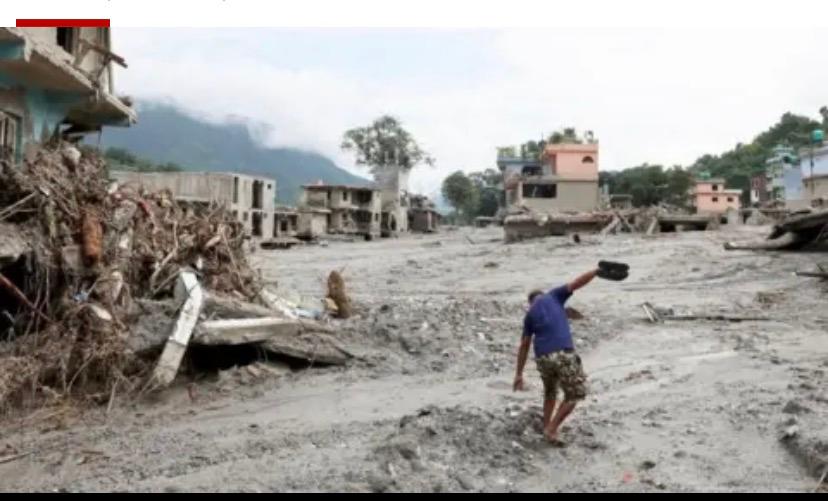
Nepal has renewed its call for stronger international action on climate change as the country grapples with one of its worst recent flood disasters, with hundreds dead and thousands still unaccounted for following a devastating surge along the Nepal-Tibet border.
According to Nepal’s Ministry of Foreign Affairs, 626 bodies had been recovered and about 2,400 people remained missing as of Saturday, while more than 4,450 people had been rescued. The government cautioned that the figures could change as search teams reach isolated areas and verify reports.
The catastrophe began on Wednesday after a glacier collapse in the Himalayas unleashed a massive torrent of water, rock and debris into river valleys, sweeping away homes, roads, bridges and hydropower facilities. The floods also left hundreds of foreign nationals, including tourists and pilgrims, unaccounted for, deepening the international dimension of the disaster.
Nepal’s Foreign Minister Shisir Khanal said the country needed specialised international assistance, particularly for rescuing people trapped in tunnels, restoring communications, identifying recovered bodies through DNA testing and other technically demanding operations. India has already deployed relief supplies and a specialist tunnel-rescue team, while China is also preparing technical assistance.
The disaster has revived concerns over the growing vulnerability of the Himalayan region to climate-related hazards. While scientists have not established a direct link between climate change and the specific glacier collapse, experts say rapid warming and accelerating glacier loss are increasing risks across the Hindu Kush Himalayan region.
With rescue operations still being hampered by bad weather and damaged infrastructure, Nepal is looking beyond the immediate emergency. The government says the scale of destruction to homes, roads, bridges and power infrastructure will require substantial international support for reconstruction, while calling for a broader global effort to address the climate crisis that is placing vulnerable countries on the frontline.