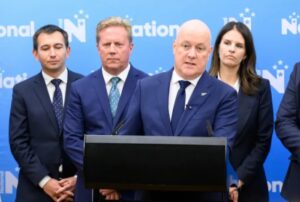
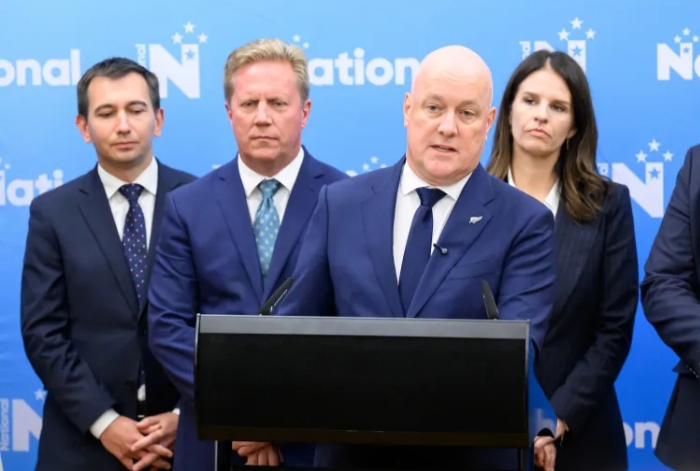
New Zealand Prime Minister Christopher Luxon is facing another round of difficult political negotiations after the final results of the November 7 general election left his governing coalition without enough seats to secure a parliamentary majority.
The results, officially released on Friday, November 27, show that Luxon’s National Party and its two existing coalition partners have collectively secured 65 seats in the 130-member parliament, one short of the 66 required to command a majority.
The outcome has placed the centrist Opportunity Party, led by Qiulae Wong, in a potentially decisive position as political parties begin discussions on how the next government will be formed.
Wong’s party won seven seats, making it an important player in the negotiations. However, reaching an agreement with the conservative National Party and its populist partners could prove difficult because of differences over economic policies, immigration, climate change and social reforms.
The National Party secured 40 seats, while its coalition partners, ACT and New Zealand First, won 13 and 12 seats respectively. The opposition Labour Party finished with 36 seats, leaving it far from the number needed to form a government independently.
Wong has campaigned on policies including a proposed universal basic income of up to NZ$370 weekly, stronger climate protection measures, healthcare reforms and a ban on bottom-trawling fishing. She has also promised to promote a more respectful political environment and work towards a stable administration.
However, her positions could clash with those of New Zealand First leader Winston Peters, whose party supports tighter immigration controls and withdrawing the country from the Paris Climate Agreement.
ACT leader and Deputy Prime Minister David Seymour also holds positions that differ from Wong’s, particularly on government spending and the political representation of the indigenous Maori population.
Luxon, who became prime minister in 2023, acknowledged the importance of securing a stable arrangement, saying New Zealanders deserved a government capable of working together and completing its full term.
The election outcome represents a setback for the incumbent administration, with economic stagnation believed to have contributed to declining public support for Luxon’s government.
Political scientist Luke Oldfield of Victoria University of Wellington believes a deal is still likely, despite the challenges facing the negotiating parties. He considers the formation of another right-leaning government more probable than a fresh election.
If the parties fail to reach an agreement, New Zealand could face another general election next year, extending the country’s political uncertainty.