Nigeria’s electricity challenges are creating a growing market for solar power, with businesses, households and communities increasingly investing in alternative energy systems to reduce their dependence on the national grid and petrol and diesel generators.
The Insight Lens Project, in an analysis of the country’s emerging solar economy, reported that the sector could unlock billions of dollars in investment as demand for more reliable electricity continues to rise. Citing a World Bank assessment, the report put the potential value of commercially viable solar opportunities in Nigeria at $8.5 billion by 2030.
According to the report, about $6.5 billion of that opportunity could come from commercial and industrial solar projects, while utility-scale developments and other distributed energy models account for additional investment potential.
Businesses are increasingly turning to solar and battery systems to reduce their reliance on diesel generation, with applications extending beyond basic electricity supply to areas such as irrigation, cold storage, agricultural processing and small-scale manufacturing.
On the scale of existing installations, the International Renewable Energy Agency (IRENA), as cited in the report, estimated Nigeria’s installed solar photovoltaic capacity at 197 megawatts, including 124MW from off-grid systems. However, solar panel imports from China rose from 861MW in 2023 to 1.33 gigawatts in 2024.
The Insight Lens Project noted that the difference between official capacity figures and import volumes could indicate that a substantial number of rooftop and privately installed systems are not fully reflected in conventional national statistics.
Government programmes are also expected to accelerate adoption. The report cited the World Bank’s $750 million Distributed Access through Renewable Energy Scale-up programme, which aims to provide new or improved electricity access to more than 17.5 million Nigerians and mobilise over $1 billion in private investment.
The programme is also targeting the replacement of more than 280,000 petrol and diesel generators. The World Bank’s earlier Nigeria Electrification Project, according to the report, supported more than one million solar home systems and 125 hybrid mini-grids, reaching over five million people and generating more than 5,000 private-sector green jobs.
Mini-grids are expected to remain important in communities with limited access to the national grid. The report highlighted the Nigerian Electricity Regulatory Commission’s Mini-Grid Regulations 2026, which provide for isolated mini-grids of up to 5MW per site and interconnected systems of up to 10MW.
Nigeria is also seeking to capture more value from the industry through local manufacturing. The report said the Rural Electrification Agency, Infrastructure Corporation of Nigeria and Dutch firm Solarge BV are planning a 1GW solar photovoltaic manufacturing facility, with a target of achieving 50 per cent local content within three years.
The country’s Energy Transition Plan projects 209GW of solar photovoltaic capacity by 2050 and 130GW of battery storage by 2060. The report, however, stressed that the figures are planning scenarios rather than guaranteed outcomes.
Despite the expanding market, the sector faces challenges including foreign exchange pressures, financing costs, equipment quality, maintenance, consumer protection and the eventual disposal of solar panels and batteries.
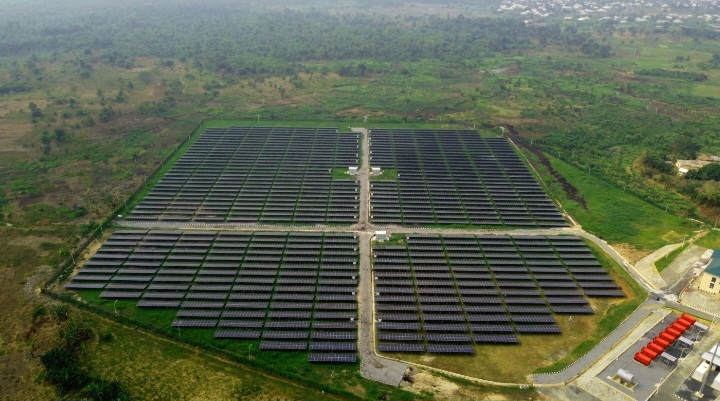
Nigeria’s energy transition is likely to involve solar farms, rooftop systems, mini-grids and battery storage operating alongside grid electricity, gas and hydropower. The expansion of the sector will depend on whether these investments can deliver more reliable electricity, reduce energy costs and support productive economic activity.