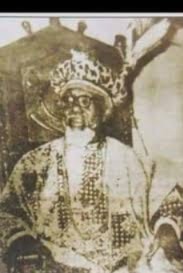
Some traditional rulers inherit a throne. Others transform the institution they occupy into a symbol of identity, unity and collective pride.
Edidem Thompson Udo Uyoata Akpabio, the late Oku-Ibom Ibibio and Paramount Ruler of ‘old’ Eket, belonged to the latter category.
His was a life lived at the intersection of traditional authority, public administration and the evolving consciousness of the Ibibio people.
Born on December 31, 1910, at Mkpok in present day ONNA Local Government Area, Edidem Akpabio grew into one of the most respected traditional authorities of his generation.
He was a public servant, administrator, community leader, traditional ruler and custodian of Ibibio culture and identity.
His early education was received at Government School, Eket, and later at the Qua Iboe Mission Institution (now Etinan Institute), Etinan.
In 1927, he entered the Eastern Nigeria Public Service as a clerk.He distinguished himself in the public service and rose to become a Principal Executive Officer before retiring in 1955.
The retirement from the civil service, however, opened another chapter in his life.
Edidem Akpabio was installed as Clan Head of Nung Ndem, and subsequently became Paramount Ruler of Eket (which then was comprised of present day Eket, ONNA, Esit Eket and Ibeno Local Government Areas).
He also served as President of the Eket Traditional Council and later as Chairman of the Cross River State Council of Chiefs.
In each of these positions, he brought to traditional leadership the discipline, experience and administrative understanding acquired during his years in public service.
His greatest traditional responsibility would come when he was selected as Oku-Ibom I, becoming the first occupant of the Oku-Ibom stool.
The Oku-Ibom institution itself is regarded as much older than the documented succession of modern occupants. According to an account of the history of the stool, earlier Okus existed but were not formally documented; Edidem Akpabio became known as Oku-Ibom I because he was the first occupant whose position entered the documented historical record.
His emergence as Oku-Ibom placed him at the apex of the traditional leadership of the Ibibio people and gave him a responsibility that extended beyond Eket.
On the position, he became President of the Supreme Council of Traditional Rulers of Ibibioland.
He redefined the place of Ibibio traditionalism in a rapidly changing society, and strived hard to preserve the people’s identity and interests within emerging political structures.
Edidem Akpabio’s historical importance becomes clearer when viewed against the long political evolution of the people who today constitute Akwa Ibom State.
The area now known as Akwa Ibom passed through several political arrangements before becoming a state in its own right.The mainland territories were incorporated into successive colonial and post-colonial administrative structures and eventually became part of Cross River State.Throughout those changes, questions of identity, representation, development and political autonomy remained important to the people.Traditional institutions played a significant role in preserving the consciousness of distinct communities and peoples.
As the foremost traditional head of the Ibibio people in his time, Edidem Akpabio represented that traditional dimension of collective identity.His leadership reinforced the idea that the Ibibio people possessed a shared cultural heritage and legitimate collective interests.
He was one of the ten traditional rulers from the ten local government areas that now constitute Akwa Ibom State who met in Etinan On 25 February 1978 and adopted a resolution demanding the creation of Akwa Ibom State and forwarded the demand to the Constituent Assembly sitting in Lagos
He was a lover of education, seen mostly through the education of his own children who grew up to be eminent intellectuals and professionals who served Nigeria dilligently. Two of them were a judge of the Court Of Appeal, the Late Justice J.T.U.Akpabio and a former National President of the Nigeria Medical Association, NMA, Dr Edmundson T. Akpabio.
His service was eventually recognised at the national level with the conferment of the Officer of the Order of the Federal Republic (OFR) in 1981.
As Akwa Ibom marks its 39th anniversary, Edidem Thompson Udo Uyoata Akpabio is remembered as one of the traditional custodians of the identity and collective consciousness that helped shape the historical environment from which modern Akwa Ibom emerged.
#AkwaIbomAt39
#IbomLeadingLights
#CelebratingOurHeroes
#39Heroes39Prides
#HeroUdoUyoataAkpabio
#The39thAnniversaryCollectives
#AkwaIbomStateMinistryOfInformation
#AriseAgenda