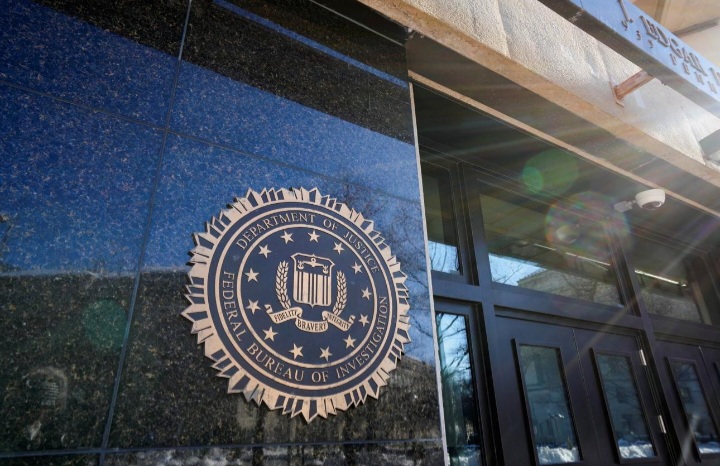
The Federal Bureau of Investigation (FBI) has asked a US federal court to uphold its handling of records sought in a Freedom of Information Act (FOIA) lawsuit involving documents connected to Nigerian President Bola Ahmed Tinubu.
According to Sahara Reporters, the bureau made the request in a September 23, 2026, court filing submitted alongside the Drug Enforcement Administration (DEA) at the US District Court for the District of Columbia.
The lawsuit was filed by Aaron Greenspan, who challenged the adequacy of searches conducted by the agencies in response to his FOIA request. Among the issues raised was whether the FBI had taken sufficient steps to account for possible spelling variations while searching for responsive records.
In its defence, the FBI said its review went beyond a conventional electronic search. The agency told the court that personnel manually examined a multi-subject file page by page after conducting separate searches using “Bola” and “Tinubu.”
The filing does not disclose what, if anything, was found through those searches. It also does not establish that the exercise produced fresh allegations or evidence concerning Tinubu.
Much of the government’s submission instead concerns the legal basis for withholding portions of the records. The FBI said some information was protected under FOIA exemptions covering grand-jury proceedings, electronic surveillance material and internal prosecutorial deliberations.
The agency also argued that releasing certain records could expose the reasoning and strategy of prosecutors involved in criminal cases, potentially affecting their ability to conduct investigations and legal proceedings.
The DEA, for its part, defended redactions in investigative records identified as DEA-6, DEA-292 and DEA-210. It cited protections for confidential sources, investigative techniques and information connected to sensitive undercover operations.
Both agencies maintained that their searches were reasonable and that non-exempt portions of responsive records had been released where legally possible.
They are asking the court to grant summary judgment in their favour, effectively seeking a ruling that their handling of the FOIA request met the applicable legal requirements.