Enugu State Government spent N295.17 million on erosion and flood control between January and June 2026, after receiving about N1.39 billion in ecological fund allocations during the same period.
SaharaReporters reported that the figures showed Enugu received ecological fund allocations throughout the first half of the year, while N295.17 million was recorded as expenditure on erosion and flood control.
Data from the Office of the Accountant-General of the Federation showed that the state’s monthly ecological receipts rose to N278.6 million in April, followed by N258 million in May and N271.7 million in June.
The state’s 2026 Quarter Two Budget Implementation Report, published by the Enugu State Budget Office, recorded the N295.17 million expenditure under the “Erosion & Flood Control” subhead of the “Preservation of the Environment” classification.
The amount exceeded the N262 million originally budgeted for erosion and flood control for the year by N33.17 million, representing 112.7 per cent implementation of the approved provision.
Other environmental programmes recorded no expenditure during the period. The state budgeted N150.89 million for tree planting and N65.26 million for wildlife conservation, but no spending was recorded under either subhead by the end of June.
Overall, N478.15 million was allocated to the preservation of the environment in the 2026 budget, with N295.17 million, or 61.7 per cent, recorded as spent by the end of the second quarter. The report indicated that the entire expenditure under the classification went to erosion and flood control.
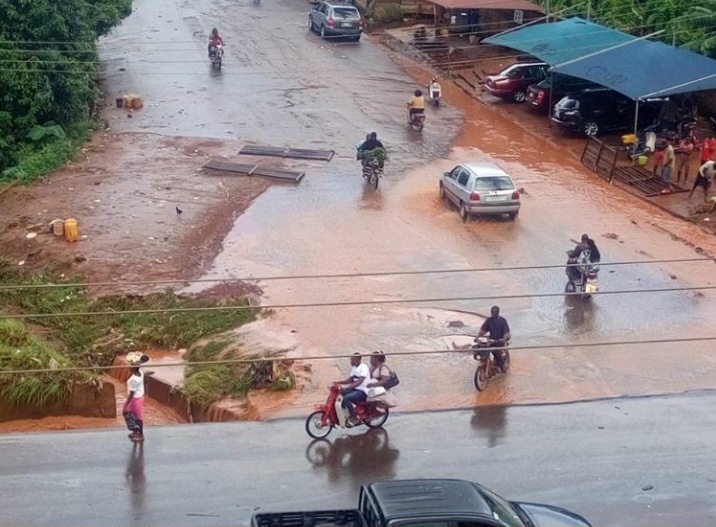
The figures have emerged against the backdrop of renewed flooding in parts of Enugu State. SaharaReporters reported that flooding which began on September 20 and intensified between September 22 and 23 affected more than 2,000 houses and destroyed large areas of farmland.
Enugu was also among 15 states identified by the National Emergency Management Agency (NEMA) as being at high risk of riverine flooding following rising river levels and an alert issued by the Nigeria Hydrological Services Agency (NIHSA).