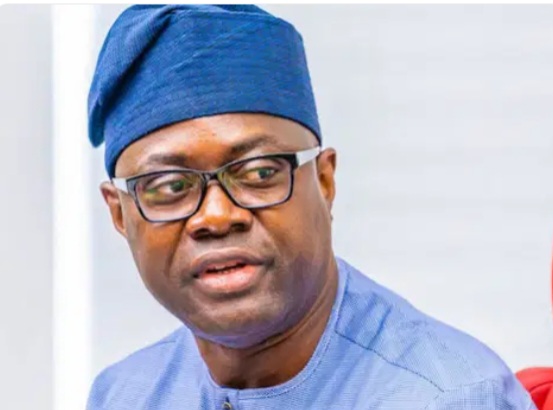
Oyo State lawmakers have endorsed a new round of infrastructure financing by Governor Seyi Makinde, approving a ₦100 billion loan alongside a plan to renegotiate the terms of an existing ₦300 billion contractors’ facility.
The decision followed deliberations at the State House of Assembly on Wednesday, where members made the case for completing major public projects, including the Rashidi Ladoja Circular Road, Ido-Eruwa Road and LAUTECH Teaching Hospital in Oyo town.
According to Vanguard, the governor’s request covers two distinct arrangements with United Bank for Africa (UBA) Plc. The proposed ₦100 billion borrowing is new funding for infrastructure, while the separate transaction involves transferring the state’s existing contractors’ loan from Access Bank to UBA.
The proposed transfer would bring the interest rate on the existing facility down from 26 per cent to 22 per cent. However, the refinancing does not mean the state is taking another ₦300 billion in fresh cash; it is a change in the financing terms of an existing obligation.
Lawmakers who spoke in support of the proposals included Deputy Speaker Muhammad Abiodun Fadeyi, Adebayo Babajide Gabriel, Olorunpoto Cephas Rahman and Sunkanmi Babalola. They argued that completing infrastructure projects could strengthen commercial activity, improve movement between communities and create employment.
The new loan will run for 48 months at an interest rate of 22 per cent, subject to adjustments in line with money market conditions. The facility also carries annual management and advisory fees of 0.25 per cent and 0.5 per cent, respectively, calculated on the outstanding balance.
Under the repayment terms presented to the Assembly, the government will have a three-month grace period for principal and interest payments. Interest accumulated during that period will still be due and will be incorporated into payments scheduled for the fourth, fifth and sixth instalments.
The Assembly’s decision gives the state government approval to advance the proposed transactions. Their financial consequences will differ: the ₦100 billion facility adds to the state’s borrowing commitments, while the refinancing is intended to reduce the cost of servicing an existing debt.