Democrats are facing a difficult path to securing a commanding majority in the United States Senate, with fresh election forecasts suggesting that their hopes of expanding their representation to 55 seats remain uncertain ahead of the November 3 midterm elections.
A forecast published by Vote-Scope on October 23 projected 54 seats for Democrats, although its estimated range runs from 48 to 55. The projection places a substantial Democratic majority within the model’s possible outcomes, but polling experts have cautioned that reaching that threshold would require an unusually strong performance.
Lee Miringoff, director of the Marist Institute for Public Opinion, described the prospect of Democrats securing 55 seats as probably beyond realistic expectations. Patrick Ruffini, a founding partner at Echelon Insights, put the likelihood at approximately 10 per cent.
Democrats currently need a net gain of four seats to secure a 51-seat majority. Reaching 55 seats would require eight additional seats without losing any of the seats they currently hold, making the challenge considerably more demanding.
Other forecasting models offer different assessments of the electoral landscape. The Fred Cornell Senate Forecast projects Democrats at 52 seats and gives the party a 66 per cent chance of winning at least 51 seats. Meanwhile, the 270toWin consensus forecast places 49 seats in the Democratic column, with five races classified as toss-ups.
The figures highlight the uncertainty surrounding control of the Senate, where a party can perform well nationally but still struggle to secure enough victories in individual states.
Democrats’ potential targets include North Carolina, Maine, Ohio and Texas. However, winning those four contests would bring the party to only 51 seats, assuming it retains all its existing seats. Additional victories in states such as Alaska, Iowa and Kansas would be necessary to approach the 55-seat mark.
Michigan, Georgia, Minnesota and New Hampshire are also important to the party’s calculations because Democrats would need to defend their existing positions in competitive races while pursuing gains elsewhere.
Ruffini identified Iowa as a particularly important test of the party’s prospects. According to his assessment, victories in Texas and Ohio could put Democrats in position to reach 52 seats, while an Iowa win could make Kansas more competitive and open a possible route to 55 seats. Losing Iowa, he argued, could leave the party with a ceiling of around 53 seats.
He also pointed to historical polling errors as a reason for caution, saying 73 per cent of polls between 2018 and 2024 overestimated Democratic support. Across Iowa, Ohio and Michigan, he said the proportion rose to 93 per cent.
For Democrats to make substantial gains across several states, Ruffini estimated that the party might need a national advantage of 10 to 12 percentage points in the House vote, compared with an environment he said was closer to eight points based on public Senate polling.
The broader political climate could still influence the outcome. Historically, the party occupying the White House has lost Senate seats in 15 of the 23 midterm elections held between 1934 and 2022, although the pattern has not been consistent in every election.
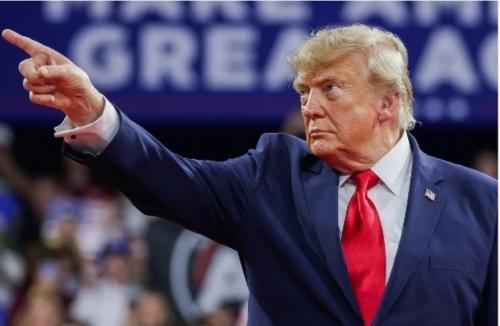
Ruffini suggested that turnout among voters who supported President Donald Trump in 2024 but do not regularly participate in midterm elections could be a significant factor. If Republican difficulties extend to voters who typically turn out in midterm contests, he said, the possibility of a much larger Democratic gain would become more plausible.
With Election Day approaching, the competing forecasts underscore the distinction between winning enough seats to control the Senate and building a substantially larger majority. While the latter remains within the range of some projections, it would require Democrats to retain vulnerable seats and make gains across several states where Republicans remain competitive.