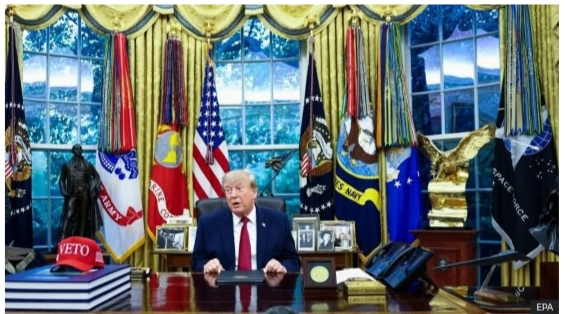
US President Donald Trump has moved to place restrictions on major future alterations to the Oval Office, signing an executive order that grants the presidential workspace and some adjoining rooms special historic recognition.
The decision comes after Trump introduced several changes to the White House, including extensive gold decorations in the Oval Office and the removal of the East Wing as part of plans to construct a new ballroom.
Under the new directive, the National Park Service is expected to oversee the preservation of the designated spaces, with emphasis on maintaining their architectural features and historical significance.
The order, however, leaves room for future occupants to change furnishings, decorations and certain operational or security arrangements, provided such adjustments do not substantially affect the building’s historic character.
Trump said the measure was intended to stop future administrations from demolishing or fundamentally altering the office, which he described as an important representation of American history and national identity.
The move has drawn questions about its legal implications. Historic preservation lawyer Greg Werkheiser argued that the directive does not give Trump the power to impose binding restrictions on his successors. He also questioned the administration’s commitment to historic preservation in view of other construction and renovation projects in Washington.
The White House already has National Historic Landmark status, although existing legal provisions give presidents some discretion to make changes. Major construction projects are subject to congressional approval.
BBC News reported that the Oval Office assumed its present location in the early 1930s during the administration of President Franklin D. Roosevelt.