Russia is widening its air campaign against Ukraine’s economic lifelines, targeting energy facilities, industrial plants, grain exports and commercial infrastructure as diplomatic efforts to revive peace negotiations gather momentum.
The intensified strikes threaten to deepen Ukraine’s economic crisis ahead of winter, with analysts warning that Moscow’s strategy is increasingly focused on crippling the country’s ability to sustain its economy while battlefield advances remain difficult.
According to a report by CNN’s Lauren Kent, Russian attacks on critical infrastructure have increased in frequency and scope, raising fears of a worsening humanitarian crisis as the United States prepares to mediate fresh peace talks.
John Lough, head of international partnerships at the New Eurasian Strategies Centre, told CNN that Russia’s air campaign was now “clearly aimed at destroying the Ukrainian economy.”
He argued that Russian President Vladimir Putin had shifted emphasis from territorial advances in eastern Ukraine to economic pressure, following what analysts described as Ukraine’s relatively successful summer operations.
“(Putin) has concluded the only way to break that is to actually break the economy, and they are doing that in a systematic way,” Lough said.
The campaign has placed Ukraine’s energy infrastructure under mounting pressure, with Russian missiles and drones striking power facilities earlier and more aggressively than in previous years. Analysts expect the attacks to intensify as winter approaches, potentially leaving millions of Ukrainians without electricity, heating and water.
The consequences are already being felt across the country, with power disruptions affecting businesses, public services and household livelihoods. Authorities in Kyiv reportedly said about 40 per cent of buildings in the capital were without heating as of Saturday.
Ukraine’s Foreign Minister Andrii Sybiha accused Moscow of using the approaching winter as a weapon against civilians, saying Russia was seeking to achieve through “cold and darkness” what it could not accomplish on the battlefield.
The United Nations panel of investigators last week concluded that Russia had committed war crimes and crimes against humanity through deliberate attacks on civilian infrastructure, particularly energy systems during the harsh winter of 2025-2026.
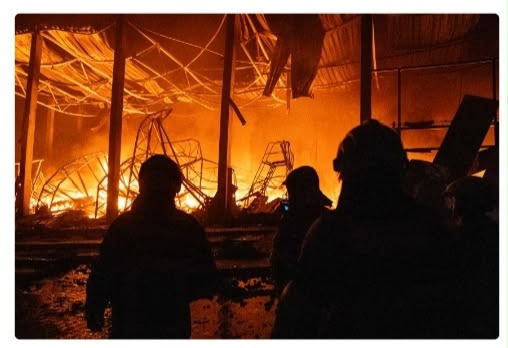
Russia has also expanded its attacks to industrial and commercial facilities, including steel plants in Kryvyi Rih and Zaporizhzhia, which were hit by ballistic missiles between August and October, forcing shutdowns.
The disruptions have affected employment, wages and government revenue, with analysts warning that damage to major industries could have serious socioeconomic consequences for thousands of households.
Cristian Vlas, an Eastern Europe researcher at conflict-monitoring organisation ACLED, said the attacks appeared designed to create simultaneous crises across several sectors of Ukraine’s economy.
“They’re targeting things like malls, storages, warehouses – so, that disrupts the flow of goods, the sale of goods, and so on,” Kateryna Stepanenko of the Institute for the Study of War told CNN.
The strikes have also extended to Ukraine’s agricultural sector, Black Sea export routes, Danube ports and railway infrastructure, threatening the movement of goods and the livelihoods of people dependent on trade and production.
Civilian casualties have risen alongside the expanded air campaign. ACLED data cited by CNN showed that more than 2,700 Ukrainian civilians had been killed by Russian strikes in 2026, the highest level since the opening months of the war.
The report also noted a steady increase in Russian attacks, from 3,650 in January to 5,532 in October. Ukraine, meanwhile, has intensified its strikes inside Russia, targeting military facilities and weapons-production infrastructure.
The deteriorating economic situation is forcing civilians to make increasingly difficult choices. A report by the International Rescue Committee found that financial hardship in southern and eastern Ukraine was pushing some residents to leave their homes or risk working in dangerous conditions.
In some areas, farmers have continued cultivating land contaminated by mines in a bid to preserve their income.
Olga Kashuba, the IRC’s deputy director of field management in Ukraine, told CNN that financial hardship was driving decisions with lasting consequences for families.
“The lack of financial resources is not just (about) paying the bills. It really creates the pressure to make the life-changing decisions,” she said.
With energy infrastructure increasingly damaged, air defences facing shortages of critical interceptors and civilian livelihoods under pressure, analysts warn that Ukraine is entering a particularly dangerous phase of the conflict.
The intensification of Russia’s attacks as fresh diplomatic efforts loom raises questions about whether the mounting economic and humanitarian costs will strengthen pressure for a settlement—or further undermine Ukraine’s ability to withstand the war.