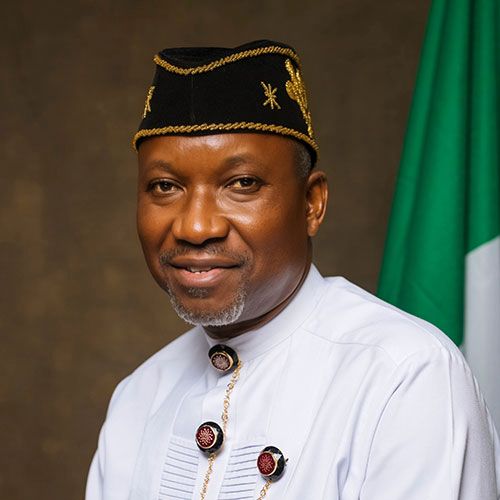
The Federal Government says more than $2 billion in private-sector investment has been secured to expand Compressed Natural Gas (CNG) infrastructure and accelerate the transition to cheaper and cleaner transportation across Nigeria.
Minister of State for Petroleum Resources (Gas), Ekperikpe Ekpo, said the investment was already driving the expansion of refuelling facilities, vehicle conversion centres and technical capacity under the Presidential Initiative on Compressed Natural Gas (Pi-CNG).
Ekpo, in a statement issued on Tuesday by his spokesman, Louis Ibah, disclosed that over 120,000 vehicles had so far been converted to CNG through more than 400 certified conversion centres, while over 90 refueling stations were operational.
He said the programme had also produced more than 7,700 trained automotive technicians and generated over 10,000 direct and indirect jobs.
The minister said the government had complemented private-sector efforts with the deployment of 655 CNG-powered buses and 5,123 CNG tricycles, adding that thousands of privately converted vehicles were already operating in the country’s public and commercial transport system.
According to him, the growing adoption demonstrates that CNG has moved beyond being a proposed alternative fuel to becoming an increasingly practical option for motorists and transport operators.
Ekpo said the ultimate measure of the programme would be its impact on the cost of movement and logistics, rather than the number of vehicles converted or filling stations established. He noted that reduced fuel expenditure could translate into lower fares and operating costs for commuters, traders, farmers, businesses and other productive sectors, particularly in the wake of petrol subsidy removal.
To widen access, he said the ministry was collaborating with Pi-CNG, the Midstream and Downstream Gas Infrastructure Fund, state governments, transport unions and private investors to establish more refuelling facilities, conversion centres and dedicated CNG corridors.
He welcomed President Bola Tinubu’s directive for 500 additional CNG refueling stations, which would raise the planned national network to 1,000, and urged more state governments to partner with the initiative to extend its benefits to underserved communities.