Akwa Ibom State is seeking to retain more economic value within the state by strengthening collaboration with small and medium-scale industrialists, with emphasis on local production, job creation and reduced dependence on goods sourced from outside the state.
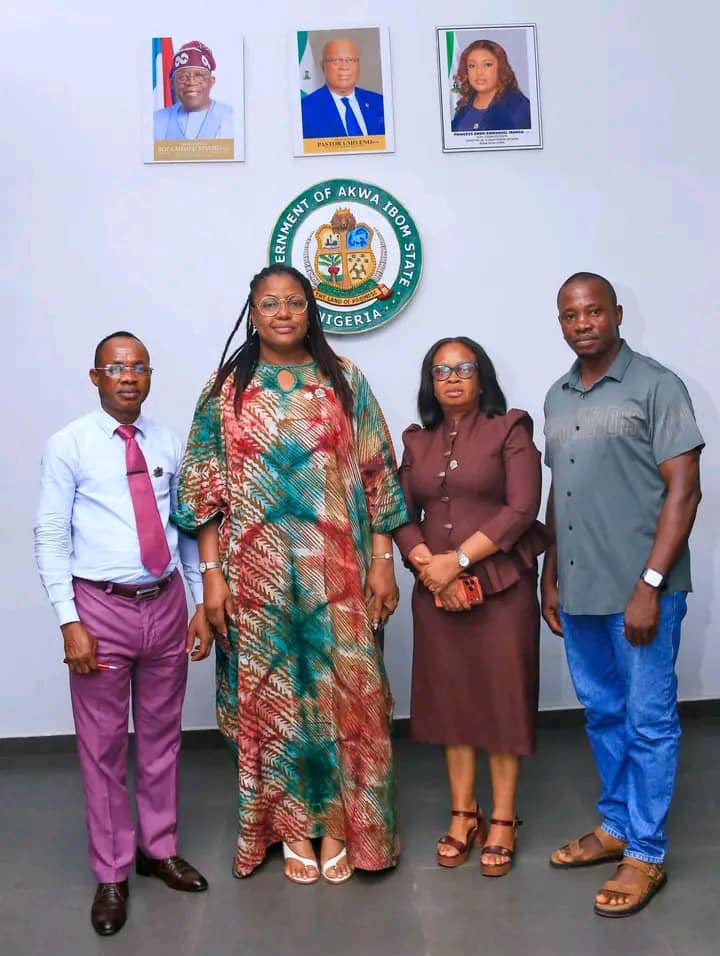
The push formed part of discussions when the Commissioner for Humanitarian Affairs, Princess Emem Ibanga, received the Akwa Ibom chapter of the Nigerian Association of Small Scale Industrialists (NASSI) in Uyo on Tuesday. Ibanga said a structured partnership with the association could help government interventions reach more beneficiaries while creating sustainable livelihood opportunities.
NASSI State Chairman, Prince Mascot Ekon, said stronger government support for local producers would help reduce dependence on external markets, stabilise commodity prices and strengthen indigenous businesses. He said the association’s network of farmers, fishermen, artisans, traders and other producers could provide the foundation for more effective local supply chains.
Ekon also disclosed plans to collaborate with Fidelity Bank on dedicated accounts for SMEs, describing improved access to formal financial services as important to the growth of small businesses. He called for greater emphasis on self-reliance and production within Akwa Ibom to ensure that more economic opportunities and resources remained in the state.
The Special Assistant to the Governor on Entrepreneurial Development, Mrs. Meflyn Anwana, further proposed partnerships on renewable-energy projects, particularly solar solutions for rural communities, while seeking government assistance with land and operational costs. She also advocated attracting foreign investors to establish manufacturing facilities in the state, saying local industries would expand employment and reduce dependence on imported or externally sourced goods.
Ibanga assured NASSI and other stakeholders of the ministry’s readiness to establish a joint framework for implementing empowerment and livelihood programmes. She said collaboration with private organisations, development partners and community-based groups was essential to delivering measurable results and advancing Governor Umo Eno’s economic and social development agenda.