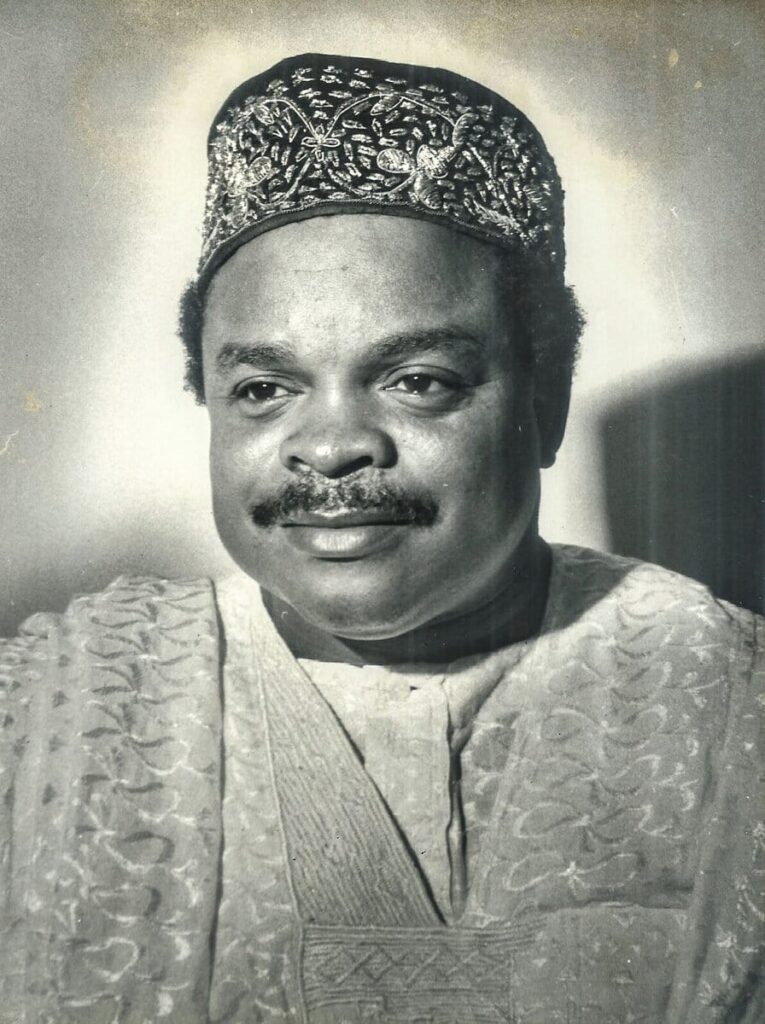
Chief O. U. Affiah belonged to the generation of Nigerian nationalists and indigenous political leaders who entered public life at a defining moment in the country’s transition from colonial rule to self-government.
He played an active role during Nigeria’s transition to independence alongside key nationalists like Dr. Nnamdi Azikiwe under the National Council of Nigeria and the Cameroons (NCNC) political party.
A parliamentarian, administrator, political leader and minister of the former Eastern Nigeria Government, he rose from the political ranks of then Abak Division to become one of the prominent voices from the present day Akwa Ibom area in the government of Eastern Nigeria.
By the time of the 1957 Eastern House of Assembly election held on March 15, Affiah emerged as a representative of Abak Division.
His entry into the Eastern House of Assembly placed him among the generation of legislators who participated in the development of representative government in Eastern Nigeria.
The legislature of the period was not just a debating chamber. It was one of the principal arenas in which Nigerians increasingly exercised political authority over regional affairs, debated public policy and negotiated the competing interests of the different communities that made up Eastern Nigeria.
Affiah rose beyond the legislature into the executive arm of the regional government.
By 1959, he became Minister of Works, and managed the region’s public infrastructure initiatives, leading key discussions on expanding capital projects like rural electrification, road setups, and bridges.
Speaking out and standing up with his fellow colleagues in government against the then Igbo ethnic domination and marginalization of the ethnic minorities of former Eastern Nigeria, he was able to extract concessions from the government in the form of infrastructural development projects. Examples included paved roads, water projects, electrification of towns. In the 1960’s through the early 1970’s before the devastation of the economy of Eastern Nigeria by the civil war, many things worked properly. For example, many older people can relate to the fact in Eastern Nigeria, that the supply of electricity and water and our schools etc functioned relatively well.
By the early 1960s, he had become Minister of State responsible for Establishments and Chieftaincies, with his responsibilities extending to traditional institutions and their relationship with the regional government.
He later became Minister of Customary Courts and Chieftaincy Affairs, one of the important portfolios in the Eastern Nigerian Government.
The significance of that ministry went beyond its title. Traditional institutions remained an important part of social and political organisation throughout Eastern Nigeria. The regional government had created a legal and administrative framework governing customary courts, traditional authorities and the recognition and status of chiefs.Affiah therefore occupied a ministry positioned at the intersection of traditional authority, customary law and modern regional administration.
An official Eastern Nigeria Government publication lists the responsibilities of his ministry as including Customary Courts, Native Courts and Chieftaincy Affairs.
His tenure coincided with an
important period in the formal development of chieftaincy institutions in Eastern Nigeria.The region had undertaken major reforms in the 1950s concerning the position, status and recognition of traditional rulers. The government had commissioned the G. I. Jones inquiry into the position, status and influence of chiefs and natural rulers, while legislation established a more formal framework for customary courts and chieftaincy affairs.Affiah’s ministry was consequently responsible for matters that touched directly on the traditional political structures of communities across the region.
His responsibilities also brought him into some of the most delicate traditional disputes of the period.
One notable example was the controversy surrounding the succession to the Obongship of Calabar. The Eastern Nigeria Government commissioned A. K. Hart to investigate the dispute, and the resulting Report of the Enquiry into the Dispute over the Obongship of Calabar was published in 1964 by the Government Printer in Enugu. The report was specifically prepared at the request of Affiah, the Minister of Customary Courts and Chieftaincy Affairs.
His tenure also coincided with wider debates about the place of traditional authority in a modern African state. The old colonial system of indirect rule was undergoing transformation. Traditional rulers were increasingly being incorporated into a new constitutional and administrative order, while customary courts were being reshaped as part of the emerging regional judicial system.
His political influence was not restricted to his ministerial portfolio only.
As an elected representative of Abak Division, he belonged to the group of minority-region politicians who participated in the political negotiations that shaped the Eastern Region during the late colonial and early independence years.
The political history of the period was marked by demands from minority communities for greater representation, equitable development and constitutional safeguards. Leaders from the Annang, Ibibio,Oron, Efik, Ijaw, Ogoni and other minority communities increasingly used parliamentary representation and executive office to press their concerns within the Eastern Nigerian political structure.
Affiah was one of the politicians who occupied a significant position within that system.His public service also extended into questions of development.Accounts of the period credit minority political leaders, including Affiah, with advocating for infrastructure, education, employment opportunities and other public investments in their communities.
The political world in which Affiah operated was, however, increasingly unstable.Nigeria became independent in 1960. The First Republic subsequently became engulfed in political tensions, regional rivalries and constitutional crises. The military coup of January 1966 and the counter-coup of July 1966 transformed the political environment.The Eastern Region itself entered one of the most turbulent periods in its history.When war eventually broke out in 1967, the political class of the former Eastern Region was caught in the upheaval.
Communities were displaced, institutions were disrupted and many prominent political and public figures became victims of the conflict.Affiah was among them.
Affiah was one of the prominent Akwa Ibom political figures killed during the Nigerian Civil War, for which a fitting memorial was organised for at Ibom Hall by then Governor Godswill Akpabio.
The unresolved dimension of his death is part of the tragedy surrounding the generation to which he belonged.
For Akwa Ibom, and particularly for the Annang people, his story is part of the larger history of political participation in the old Eastern Region.
As Akwa Ibom marks its 39th anniversary, HERO Chief O. U. Affiah is remembered as a parliamentarian and regional minister whose public life was intertwined with the formative years of representative government in Eastern Nigeria, a political pioneer from Abak who rose to the regional cabinet and became a custodian of the institutions of customary justice and traditional authority.
His life, like those of many of his contemporaries, reminds succeeding generations that the history of Akwa Ibom did not begin with the creation of the state in 1987. Its roots reach deep into the parliamentary struggles, public service, community leadership and sacrifices of the men and women who served in the institutions of the old Eastern Region and Nigeria.
#AkwaIbomAt39
#IbomLeadingLights
#CelebratingOurHeroes
#39Heroes39Prides
#HeroOUAffiah
#The39thAnniversaryCollectives
#AkwaIbomStateMinistryOfInformation
#AriseAgenda