Idara Jerome, Uyo
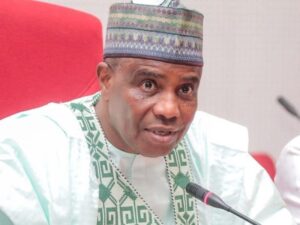
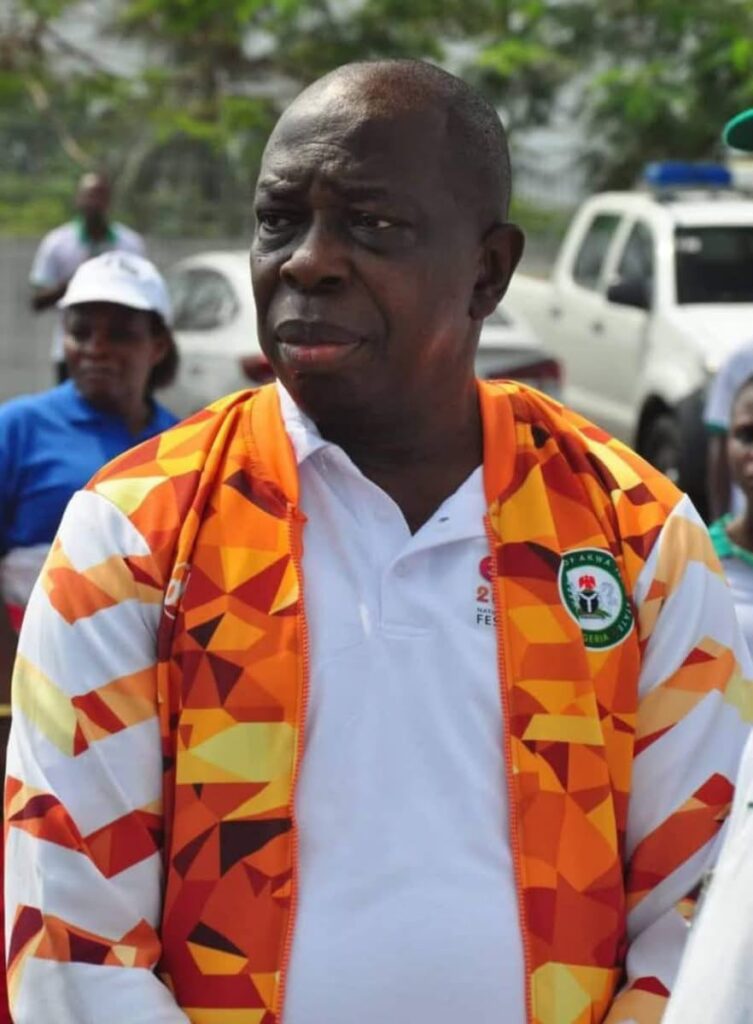
Akwa Ibom State Commissioner for Sports Development, Paul Bassey, has said that the state is repositioning sports from an activity largely associated with football and entertainment into a broader instrument for human capital development, youth empowerment, talent discovery, employment and economic diversification.
Bassey, in a press conference organized as part of the activities to mark Akwa Ibom at 39 in Uyo on Thursday said the transformation was being driven by investments in grassroots competitions, athlete welfare, multi-sports development, sporting infrastructure and the establishment of institutions designed to identify and develop young talents across the state.
The commissioner said the administration’s approach was already producing measurable results, citing Team Akwa Ibom’s performance at the 2025 National Youth Games in Asaba, where the state won 11 gold, nine silver and 10 bronze medals.
He said the performance represented an improvement from the state’s sixth-place position among the nine Niger Delta states at an earlier edition, attributing the progress to enhanced training, the State Sports Festival and stronger government support for athletes.
Bassey said the Governor Umo Eno administration had also introduced monthly allowances for state athletes, many of whom are students, to assist with transportation, training and other basic needs. He noted that medal-winning athletes were also approved for cash incentives of ₦500,000 for gold, ₦250,000 for silver and ₦150,000 for bronze.
“The strongest argument for sports investment is not the trophy cabinets. It is the young persons whose life is being changed,” Bassey said, stressing that sports creates opportunities not only for athletes but also for coaches, referees, physiotherapists, sports scientists and other professionals.
According to him, the state’s investment in athletes is also helping to stem the movement of talented sportsmen and women to neighbouring states, as athletes now have greater incentives to remain in Akwa Ibom and compete under the state’s banner.
He identified the construction of a modern gymnasium at the Godswill Akpabio International Stadium as one of the administration’s key interventions, saying it had reduced the ministry’s dependence on privately rented facilities for the training of athletes across nearly 40 sporting disciplines.
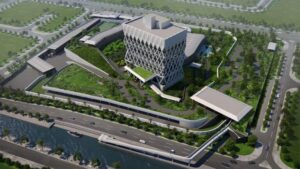
Beyond infrastructure, Bassey highlighted the proposed ARISE Sports Academy in Eket as a major long-term investment, saying perimeter fencing and a gatehouse had commenced. He said the academy would provide a structured pathway for talent discovery, coaching and professional development, with the initial focus expected to be on sports in which the state has demonstrated comparative strength.
“Instead of waiting for a talented youngster to be discovered by accident, the state can create a deliberate mechanism for identifying talent and developing it professionally,” he said.
The commissioner also disclosed that the state had strengthened its multi-sports programme, moving beyond its traditional football emphasis to disciplines including chess, boxing, swimming, wrestling, weightlifting, athletics, judo, karate and badminton. He said the decision was already yielding results, with Akwa Ibom athletes returning with victories from national and international competitions.
Bassey further pointed to the state’s three athletes who represented Nigeria at the Commonwealth Games and won medals, saying Governor Eno subsequently approved automatic employment for them. He also cited judoka Nsikak Okon, who secured an international scholarship after her Commonwealth achievement, as an example of how sporting success could open pathways to education and global opportunities.
The commissioner said the maintenance of major sporting facilities remained central to the state’s strategy, noting that the Godswill Akpabio International Stadium had retained international-standard facilities and was recently recognised as Nigeria’s Football Pitch of the Year at the Nigeria Pitch Awards. He added that the Eket Stadium and other sporting centres across the state were also being maintained and used for national competitions.
Bassey said the forthcoming second Akwa Ibom State Sports Festival, scheduled for September 22 to 27, would consolidate the grassroots strategy, with 27 sporting disciplines and venues spread across the state. He said the event had the backing of a nine-commissioner organising committee, while athletes would be camped at the University of Uyo.
“It is not even about me, it’s about the state… Sports Festival 2.0, it can only be better,” Bassey said, urging the public to support the athletes and view the competition as part of a deliberate process of building the next generation of Akwa Ibom sporting stars.
He also called for greater private-sector participation in sports, saying the cost of sustaining the sector made government funding alone insufficient. According to him, partnerships such as Ibom Air’s support for Akwa United demonstrate the potential for businesses to participate in building a sustainable sports economy in the state.