Idongesit Mishael, Uyo
Akwa Ibom State government says it is exploring ways to turn about 700,000 metric tonnes of solid waste generated annually into electricity, recyclable products, fertiliser and other economic opportunities, as the government moves to reposition waste management as a revenue-generating sector.
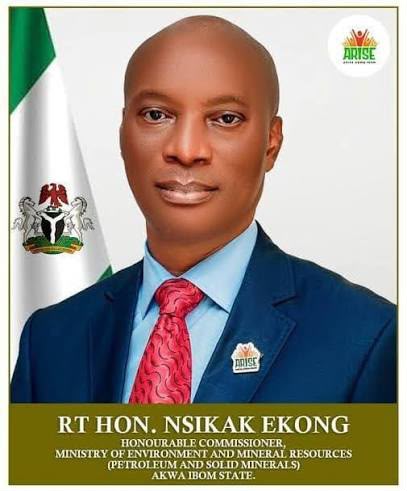
The Commissioner for Environment and Mineral Resources, Rt. Hon. Nsikak Ekong, disclosed this on Thursday while briefing journalists on the state’s environmental interventions, saying the volume of waste generated daily in the state had made waste-to-wealth initiatives both an environmental necessity and an economic opportunity.
According to him, Akwa Ibom produces an estimated 2,000 metric tonnes of solid waste every day, a situation he said could be transformed from a major environmental challenge into a source of employment, investment and revenue if properly harnessed.
Ekong said the state had engaged consultants to develop workable models for converting the huge waste stream into wealth, disclosing that a United States-based company had proposed a waste-to-energy model involving the conversion of refuse through incineration and the sale of generated electricity to the national grid.
He added that an Indian company had also presented a waste-to-wealth proposal centred on profiling households, introducing colour-coded bins and separating waste at source, with plastics targeted for recycling and organic materials converted into fertiliser and other useful products.
The commissioner said the proposed system would fundamentally change how residents perceive waste, noting that materials currently discarded indiscriminately could acquire economic value when properly sorted and processed.
“I just look at the situation where people begin to fight over waste, because if we do that, that means that you can sell whatever waste you generate and then you make money,” Ekong said, adding that the initiative would also create employment for youths.
He said the state was hopeful that the waste-to-wealth strategy would be incorporated into ARISE 2.0, stressing that effective waste management would simultaneously address environmental pollution, public health concerns, unemployment and resource recovery.
The commissioner disclosed that Akwa Ibom’s waste challenge was closely linked to flooding, recalling that indiscriminate dumping had blocked drainage channels and contributed to the severe flooding recorded in Uyo in July.
He said Governor Umo Eno had consequently directed immediate interventions in flood-prone areas, including the Nkemba Trough, Ikpa Road and Shelter Afrique Extension, while desilting and other remedial works were ongoing.
Ekong further announced the establishment of the Clean Akwa Ibom Brigade as a specialised environmental response team to monitor flood-prone locations, communities and other areas requiring urgent intervention.
Beyond waste management, he said the government was intensifying action against illegal mining and logging, while pursuing afforestation and other climate-related interventions, including the planting of about 18,750 trees across 30 hectares in Ikot Ekpene and Ini Local Government Area.
He also disclosed that more than 10,000 solar-powered streetlights had been deployed across urban and rural areas, while solar energy was being used to power selected government facilities and 50 CNG buses had arrived as part of measures aimed at reducing greenhouse gas emissions.
The commissioner said the state had developed a Climate Change Policy and was working with the House of Assembly on a Climate Change Law, while the government was also exploring bankable environmental projects capable of generating carbon credits from waste management, tree planting, biomass and other climate-related initiatives.
Also speaking, the Commissioner for Information, Aniekan Umanah, said the government’s environmental strategy was being pursued alongside its wider infrastructure and development programme, stressing that waste-to-wealth, biomass, afforestation and carbon-credit initiatives could collectively create new economic opportunities while improving the state’s environmental outlook.