By Lucy Daniel
Governance becomes meaningful when its impact moves beyond official announcements to touch the lives of ordinary people. For a retiree, it may mean receiving a long-awaited gratuity. For a civil servant, it may mean a dependable income. For a lecturer, it may mean improved remuneration, while for a young person, it may mean access to skills and opportunities for a sustainable livelihood.
These human realities provide an important context for assessing the administration of Akwa Ibom State Governor, Pastor Umo Bassey Eno, PhD, particularly its emphasis on workers’ welfare, human capital development, industrial harmony and inclusive economic growth.
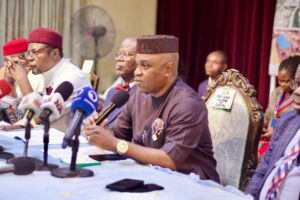
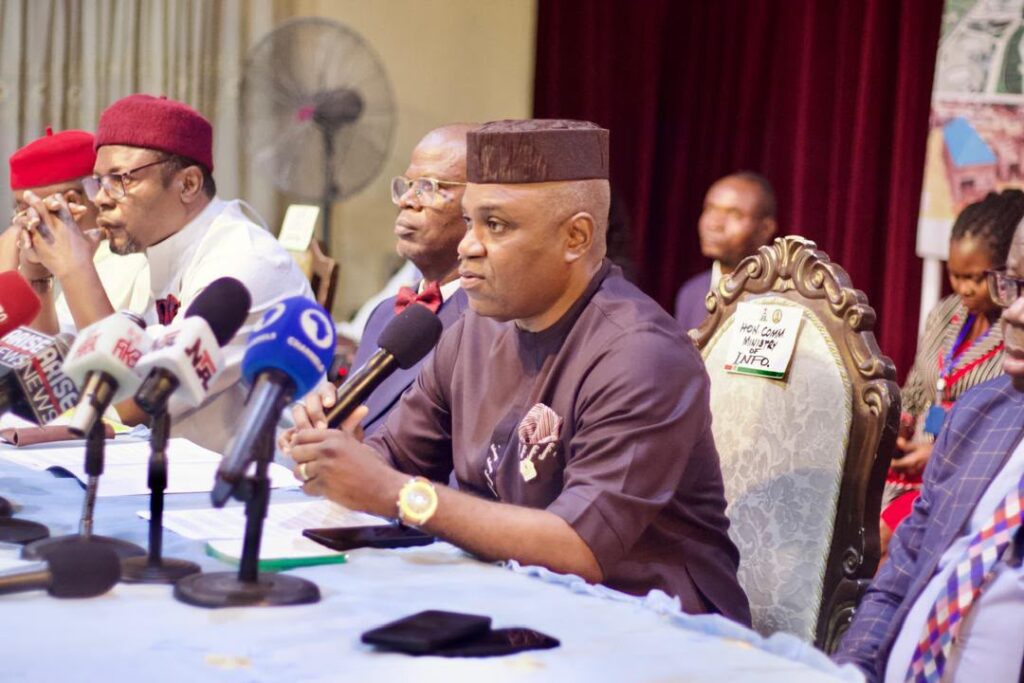
The ninth edition of the state government’s ministerial briefing series, held yesterday, at Akpan Isemin Hall, Government House, Uyo, provided an opportunity to examine these priorities and their implications for the state’s economy.
Presentations by the Ministry of Labour and Manpower Planning and the Bureau of Political and Social Re-orientation highlighted interventions ranging from the payment of inherited gratuity liabilities and implementation of the minimum wage to improved remuneration in tertiary institutions, labour dispute resolution and grassroots public enlightenment.
Beyond the figures presented, these interventions illustrate an important dimension of the ARISE Agenda: development extends beyond physical infrastructure to include investment in people, stronger public institutions and an environment in which workers, businesses and communities can contribute meaningfully to economic progress.
One of the major disclosures at the briefing was that the administration had paid more than ₦100 billion out of the ₦111 billion inherited gratuity liabilities owed to retirees.
The scale of this reported intervention is significant because gratuity represents an important part of the financial security expected by public servants after years of service.
For many retirees, these payments can help meet healthcare expenses, support family responsibilities, settle debts and establish small businesses. Their economic effects also extend to local markets, where beneficiaries spend money on food, transportation, housing and other essential goods and services.
Published accounts from labour representatives provide additional context for understanding the reported progress.
In May 2026, the Chairman of the Nigeria Labour Congress in Akwa Ibom State, Sunny James, commended the administration’s efforts to settle outstanding gratuities, describing the gradual payments as a source of relief and renewed hope for retirees.
Similarly, Anestina Iweh, President of the Nigeria Union of Local Government Employees in the state, reported progress in gratuity payments to local government retirees. According to findings payments had advanced to retirees from later service years, with some 2023 retirees also beginning to receive their entitlements. She further reported that promotion and leave-grant arrears for local government workers had been cleared.
These assessments provide perspectives from organised labour and employees’ representatives, complementing the figures presented by government officials.
They also demonstrate the importance of measuring workers’ welfare through practical outcomes rather than financial announcements alone.
The administration’s reported progress in settling inherited obligations represents a substantial financial commitment. Sustaining that progress and addressing outstanding cases remain important to ensuring that more retirees receive the benefits they earned through years of service.
For the wider economy, the principle is clear: payments to retirees restore purchasing power, support household stability and stimulate economic activity within communities.
The implementation of the ₦80,000 minimum wage from November 1, 2024, and the payment of the 13th-month salary, popularly known as EnoBer, were among the workers’ welfare measures highlighted at the ministerial briefing.
These interventions matter in an economy where households must manage competing demands involving food, transportation, education, housing and healthcare.
A dependable salary allows workers to plan their finances, while an additional annual payment can provide relief during periods of increased expenditure.
The Head of Service, Mrs Elsie Peters, also publicly commended the administration’s workers’ welfare policies during the 2026 Public Service Week. She highlighted regular salary payments, minimum-wage implementation, EnoBer and the government’s reported progress in settling inherited gratuity liabilities.
Her assessment reinforces the significance of these measures from the perspective of the public service leadership responsible for implementing government employment policies.
The economic benefits extend beyond individual employees. Public servants contribute to demand for goods and services, supporting traders, transport operators, food vendors and small businesses.
The full value of wage improvements depends on purchasing power, the cost of living and the government’s capacity to sustain its obligations. Regular payments, prudent financial management and improved productivity are essential complement to salary increases.
Within the ARISE Agenda, workers’ welfare is both a social commitment and an element of the wider effort to sustain economic activity.
The Ministry of Labour and Manpower Planning reported interventions involving organised labour, including the Academic Staff Union of Universities, the Judiciary Staff Union of Nigeria and the Parliamentary Staff Association of Nigeria.
Engagements with teachers’ and transport workers’ associations were also highlighted.
These interventions underscore the importance of dialogue in resolving disputes and maintaining the stability of essential institutions.
Universities need stable working environments to educate future professionals. The judiciary requires functional institutions to support the rule of law and commercial confidence. Transport services connect communities, facilitate trade and support the movement of agricultural produce.
Prolonged industrial disputes can disrupt these activities and impose costs on workers, employers, students and the wider public.
The ministry’s reported engagement with labour organisations reflects an approach that places consultation and mediation at the centre of industrial relations.
For an economy seeking to expand investment and employment, industrial harmony is an important supporting condition. Businesses and public institutions benefit when disputes are managed constructively and workers’ grievances receive appropriate attention.
This aspect of governance may not attract the same public attention as major infrastructure projects, but its contribution to institutional stability is significant.
The ministerial briefing also highlighted interventions involving former workers of the defunct Akwa Palm Limited and workers of Gabriel Coconut Company.
According to the presentation, the government facilitated ₦150 million in gratuities and other entitlements for former Akwa Palm workers after years of closure and outstanding obligations.
The ministry also reported facilitating ₦180 million to cover six months of salary arrears for Gabriel Coconut Company workers. Governor Eno subsequently approved two additional months of salary arrears for the affected workers.
These interventions have important social and economic implications.
Unpaid salaries can place families under considerable financial pressure, affecting children’s education, access to healthcare and the ability to meet basic needs. The settlement of arrears can help households recover financial stability and meet accumulated obligations.
Government engagement in labour-related disputes can also create opportunities for dialogue between employers and workers, helping the parties work towards resolving outstanding issues.
The reported interventions illustrate the importance of treating workers’ entitlements as legitimate obligations and recognising the human consequences of prolonged employment disputes.
The administration’s reported salary improvements in state-owned tertiary institutions constitute another important aspect of its human capital development strategy.
According to Special Adviser Sir Udo Kerian, professors at Akwa Ibom State University received an approved 30 per cent salary increase, while other academic staff benefited from a 25 per cent increase and non-academic staff from a 20 per cent increase.
The briefing also outlined salary adjustments at the University of Education, Afaha Nsit, and the state polytechnic and school of technology.
These measures reflect the relationship between workers’ welfare and the quality of education.
Tertiary institutions depend on qualified lecturers, researchers, administrators and technical personnel. Appropriate remuneration can support staff morale, professional commitment and the retention of experienced personnel.
The long-term economic benefits of education are even broader. Universities and other institutions prepare people for careers in public administration, agriculture, technology, business, professional services and other sectors essential to economic diversification.
The importance of this investment is reinforced by Governor Eno’s declaration of a state of emergency in education and his approval of an additional 2,000 teachers following the earlier recruitment of 1,000 teachers.
The combined emphasis on teacher recruitment, remuneration and institutional development presents education as a long-term development priority.
The ultimate measure of success will be the extent to which these investments improve teaching, learning outcomes, research, graduate employability and the skills available to businesses across the state.
Other measures outlined at the briefing included the settlement of outstanding pension contribution deductions for affected workers, a health insurance scheme for public servants, wardrobe allowances for teachers, staff training, improved working tools and pension increases for specified categories of retirees.
The administration also reported that it had commenced processing promotions ahead of the end of the year and integrated airport workers into the state civil service without reducing their existing salary structure.
These measures highlight the importance of building a capable and motivated public service.
Access to professional training can improve competence, while appropriate working tools can help employees discharge their responsibilities more efficiently. Healthcare arrangements can help reduce the financial pressures associated with illness, and timely promotions can recognise professional development.
During the 2026 Public Service Week, the Head of Service also reported that nearly 9,000 workers had been recruited since Governor Eno assumed office, including a latest batch of 4,000 candidates expected to resume in October.
Recruitment can strengthen understaffed institutions and expand employment opportunities. Its lasting value depends on placing employees where they are needed and ensuring that additional personnel translate into better service delivery.
Taken together, these interventions reflect an effort to connect workers’ welfare with the effectiveness of government institutions.
The briefing also examined the work of the Bureau of Political and Social Re-orientation.
Special Adviser Barrister Kufre Udosen explained that the bureau’s responsibilities included helping citizens understand government policies, gathering feedback and encouraging participation in community development.
Political Adviser Prince Godwin Ntukude reported collaboration with the bureau to extend public enlightenment campaigns to 22 local government areas.
This is an important component of inclusive development because citizens need reliable information to understand and access government programmes.
The agricultural equipment leasing initiative cited at the briefing illustrates the point. Agricultural machinery can be expensive for smallholder farmers to purchase individually. Accessible leasing arrangements can potentially reduce the initial financial burden and support more efficient farming.
Public enlightenment can help farmers understand eligibility requirements, access arrangements and programme benefits. Feedback from communities can also help the government identify implementation challenges.
When effectively conducted, public communication strengthens the connection between policy formulation and actual participation.
For the ARISE Agenda, with its emphasis on agricultural development and rural transformation, this relationship is particularly relevant.
The ministerial briefing also provided a platform for the Chairman of the Nigeria Union of Journalists, Akwa Ibom State Council, to raise concerns about employment opportunities for indigenes, particularly in the oil and gas sector.
He alleged that some employment opportunities intended for qualified Akwa Ibom residents were being sold to non-indigenes by individuals entrusted with distributing them. He also called for stronger measures to address environmental degradation and property damage allegedly associated with some oil servicing operations.
These concerns point to the importance of transparent recruitment practices and responsible business conduct.
Akwa Ibom’s economic future depends on expanding opportunities beyond public employment. Agriculture, tourism, manufacturing, technology, professional services and small businesses can provide additional pathways to sustainable livelihoods.
The development of these sectors can help young people apply their skills, establish enterprises and participate more fully in the state’s economy.
At the same time, investment must be accompanied by appropriate engagement with host communities. Businesses operating in the state have responsibilities concerning environmental protection, community relations and compliance with applicable laws.
The government reported that Governor Eno had constituted a joint committee involving relevant stakeholders to examine concerns surrounding Sterling Global’s operations across 17 local government areas.
The committee provides a framework for examining the issues and considering the concerns raised by affected communities and other stakeholders.
A stable investment climate is most sustainable when commercial activity, community interests and responsible business practices are addressed together.
The interventions presented at the ministerial briefing connect with several priorities of Governor Eno’s ARISE Agenda, including human capital development, education, agricultural advancement, institutional performance and inclusive economic growth.
These priorities reinforce one another.
Agricultural development requires farmers to have access to productive resources and markets. Education depends on qualified teachers and motivated lecturers. Public institutions require capable personnel, while economic diversification depends on an environment in which businesses can operate and employment opportunities can expand.
Workers’ welfare is therefore closely connected to the state’s wider development objectives.
The reported payment of inherited gratuity liabilities provides relief to retirees and can support local consumption. Salary measures help workers meet household obligations. Investments in education can strengthen the future workforce, while public enlightenment can improve citizens’ access to government programmes.
These are different interventions, but they contribute to the broader objective of improving the conditions in which people live, work and pursue economic opportunities.
The administration’s long-term performance will depend on sustaining these commitments, maintaining fiscal discipline and translating public expenditure into measurable benefits for citizens.
The record presented by the administration provides a basis for discussing the role of policy continuity in Akwa Ibom State.
The reported reduction in inherited gratuity liabilities, implementation of the minimum wage, payment of EnoBer, engagement with organised labour and salary improvements in tertiary institutions represent commitments with implications for workers, retirees and public institutions.
The emphasis on education, manpower development and grassroots public enlightenment also reflects an interconnected approach to development.
A second term would provide an opportunity to consolidate these programmes, strengthen their implementation and pursue their long-term benefits through the ARISE Agenda.
Education reforms require sustained investment to improve learning outcomes. Human capital development takes time to influence productivity. Public-sector reforms need effective implementation, while economic diversification requires consistent support for enterprise and employment creation.
The value of continuity lies in its capacity to sustain effective programmes, build on existing investments and strengthen results over time.
Sustained progress also depends on prudent financial management, transparency, effective monitoring and responsiveness to the needs of workers, retirees, young people, entrepreneurs and rural communities.
For Akwa Ibom, the development objective remains the translation of public policy into improved livelihoods, stronger institutions and wider economic opportunities.
The second-term conversation surrounding Governor Eno is therefore closely connected to the future implementation of the ARISE Agenda and the administration’s ability to build on its reported achievements.
The significance of governance is often most apparent in everyday experiences.
For a retiree, it may be the receipt of a long-awaited gratuity. For a public servant, it may be regular salary payments. For a lecturer, it may be improved remuneration and working conditions. For a farmer, it may be access to affordable machinery. For a young person, it may be the opportunity to acquire skills that lead to employment or entrepreneurship.
Published assessments from labour representatives and public service officials provide useful perspectives on the administration’s reported workers’ welfare measures. Their accounts complement the figures presented at the October 13 ministerial briefing, while the continuing concerns of some retirees underline the importance of sustained implementation.
Together, these perspectives place workers’ welfare within the larger context of economic development and institutional performance.
As Akwa Ibom pursues the objectives of the ARISE Agenda, its progress will depend on the ability to transform public resources into lasting opportunities, effective institutions and improved living standards.
The administration’s reported interventions provide a basis for assessing that development direction. Continued implementation will determine how widely and sustainably their benefits are felt.
For Governor Umo Bassey Eno, the second-term proposition centres on consolidating the development framework already established, strengthening institutional performance and extending economic opportunities to more people across the state.
The enduring promise of the ARISE Agenda lies in development that values workers, respects retirees, invests in education, supports enterprise and places human welfare at the centre of public policy.
#UmoEnoBetterDaysAreHere #ARISEAgenda2 #CampaignWithEvidence #BlackmailFreeAkwaIbom
Daniel, SA to the Governor on Media
Writes from Uyo, Akwa Ibom State
providencemaga@yahoo.com