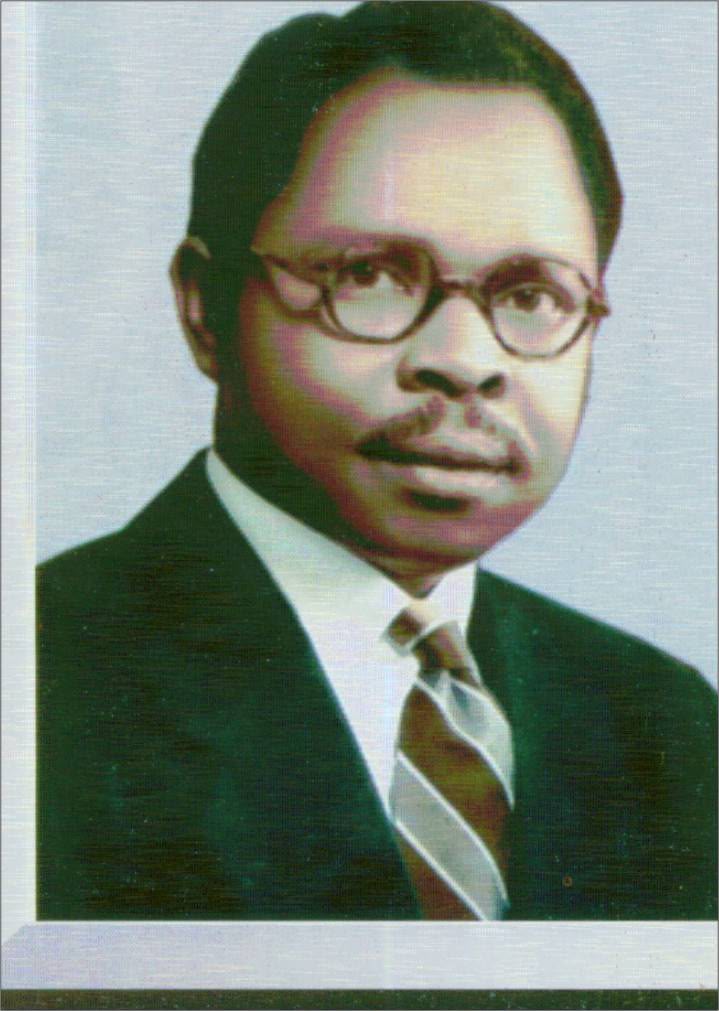
Long before estate surveying and valuation became an established profession in Nigeria, and long before the management, development and valuation of land and property became recognised as essential components of Nigeria’s economic development, John Wood Ekpenyong had already begun laying the professional foundations upon which the estate surveying and valuation profession in Nigeria would eventually be built.
Estate surveyor, valuer, public servant, housing administrator, chartered surveyor, professional pioneer and institution builder, John Wood Ekpenyong belonged to the generation of Nigerians who acquired professional training abroad and returned home determined to build institutions capable of sustaining indigenous professional practice.
His career took him from the Nigerian public service to the United Kingdom for specialised professional education, from the management of public housing in the Eastern Region to private professional practice in Lagos, and eventually to the leadership of the emerging professional body that became the Nigerian Institution of Estate Surveyors and Valuers.
His place in the history of Akwa Ibom therefore extends far beyond his profession.He was one of the pioneering sons of the region whose achievements in a highly specialised profession placed an Akwa Ibom name prominently in the early history of Nigeria’s professional development.
John Wood Ekpenyong was born in 1915 in what is today Itu Local Government Area.
He received his early education at Methodist College, Uzuakoli, in present-day Abia State.
After completing his education, he entered the Nigerian public service and worked in the Ministry of Lands and Housing in Lagos.It was during his years in government service that his professional potential became evident.
In 1949, he obtained a government scholarship to study Estate Management at the University of London in the United Kingdom.
During that period, only few Nigerians had the opportunity to undertake specialised professional training overseas.Ekpenyong’s decision to pursue estate management, therefore, placed him at the forefront of a new generation of Nigerian professionals.
In 1954, he graduated from the University of London with a Bachelor of Science degree in Estate Management.
His achievement was historic.He became the first Nigerian to study Estate Management at university level, and the first Nigerian to qualify as a Chartered Surveyor in the United Kingdom.
Professional histories of the Nigerian estate surveying and valuation profession consistently identify him as the pioneer of the profession in Nigeria.
After completing his studies, Ekpenyong returned to Nigeria to fulfil his obligation under his government scholarship.He was posted to the Eastern Region, where he worked in various capacities in the public service. His career in the regional public service eventually took him into housing administration, where he became General Manager of the Eastern Regional Housing Corporation.
His experience in housing administration gave him an understanding of the relationship between land, property development, housing provision and public policy. It was an experience that would later become important to his professional philosophy and his contribution to the development of estate surveying and valuation in Nigeria.
He retired from the public service in 1962.But retirement from government did not mark the end of his professional career.Instead, it opened another chapter.
In 1962, Ekpenyong moved to Lagos and established his own professional practice, Messrs. J. W. Ekpenyong & Co. Through private practice, he continued to develop the professional standards and principles that he had acquired in Britain and adapted them to the Nigerian environment.
He became a Fellow of the Royal Institution of Chartered Surveyors (RICS) and a Fellow of the Auctioneers and Estate Agents Institute of London. He was also a foundation Fellow of the Nigerian Institution of Estate Surveyors and Valuers.
Ekpenyong understood that the future of his profession in Nigeria could not depend solely on individual practitioners.He knew there was a need to establish a Nigerian professional institution that would create standards, promote professional ethics, protect the public interest and provide a platform for the development of estate surveying and valuation as an indigenous profession.
He, therefore, became deeply involved in the movement that eventually produced the Nigerian Institution of Estate Surveyors and Valuers.
In the years preceding the formal establishment of the Institution, Nigerian estate professionals who had trained in Britain began discussing the need for an indigenous professional body. Ekpenyong was one of the central figures in those deliberations.
In 1968, he was among the Nigerian professionals who attended a Commonwealth Foundation seminar in London devoted to the development of professional bodies across Commonwealth countries.
On his return to Nigeria, the discussions contributed to the growing movement for the creation of a national institution for estate surveyors and valuers.
In 1969, that effort culminated in the establishment of the Nigerian Institution of Estate Surveyors and Valuers (NIESV).
John Wood Ekpenyong was elected its first President.He served as President from 1969 until 1972, providing the new institution with its earliest leadership and professional direction.
His leadership came at a crucial moment.Nigeria was only a few years into independence, and many professional fields were still dominated by expatriates. The establishment of NIESV represented an important step towards the Nigerianisation of the landed profession.Under the pioneering generation led by Ekpenyong and his colleagues, estate surveying and valuation began to move from a largely expatriate practice into an organised Nigerian profession.The profession that emerged from those early efforts would eventually encompass property valuation, estate management, property development, investment advice, land administration, facility management and other aspects of the built environment.
Ekpenyong did not just participate in the creation of an association.He helped establish a professional culture.He represented a generation that understood that professional advancement required more than individual qualification. They knew it required institutions, standards, ethics, training and succession.
That philosophy explains why his name has continued to occupy a special place in the profession decades after his death.
In recognition of his pioneering contribution, the Nigerian Institution of Estate Surveyors and Valuers established the John Wood Ekpenyong Memorial Lecture, an annual professional event that has become one of the Institution’s major platforms for discussing real estate, housing, land administration and national economic development.
His name has also been permanently attached to the national headquarters of the Institution.The NIESV National Secretariat is located on J. W. Ekpenyong Street in Abuja.
On February 4, 2026, the Institution held the 32nd edition of the John Wood Ekpenyong Memorial Lecture
on the theme “From Compliance to Competitiveness: Positioning Abuja’s Land Governance Framework for Investment Confidence & Revenue Growth,” delivered by Esv Johnbull Osarumen Amyaevbo, immediate Past President of NIESV, Fellows’ Induction, more than five decades after he helped establish the professional body. The Institution described the lecture as a testament to the service he rendered to the formation and development of NIESV.
Ekpenyong’s influence also went beyond professional organisation.His years in the Eastern Regional Housing Corporation placed him at the intersection of land management, housing policy and public administration. His later private practice gave him the opportunity to apply professional knowledge directly to Nigeria’s emerging property market.
He therefore belonged to a generation of professionals who helped create the intellectual and institutional foundations for modern real estate practice in Nigeria.
Akwa Ibom was not yet in existence during most of Ekpenyong’s professional career. The people of present day Akwa Ibom were then part of the old Eastern Region and, subsequently, the old South-Eastern and Cross River State political structures.Yet, long before the creation of Akwa Ibom State in 1987, men such as Ekpenyong were already demonstrating the capacity of the people of the region to excel in specialised professions and contribute to the building of national institutions.
John Wood Ekpenyong died on 20 August 1974, leaving behind his wife, Mrs. J. Ayo Ekpenyong, and four children. He was only about 59 years old.
His death came only five years after the establishment of NIESV, but by then the foundations had been firmly laid.The institution survived him.The profession expanded.New generations of Nigerian estate surveyors and valuers emerged.The principles of professional organisation, qualification and ethical practice that characterised his pioneering years continued to shape the institution he helped establish.
Today, the Nigerian Institution of Estate Surveyors and Valuers remains one of Nigeria’s established professional bodies, with a national structure and a wide range of practitioners serving the property and built environment sectors. Its very existence is part of the institutional legacy of the generation to which Ekpenyong belonged.
Long after his death, the Institute he helped established visited his birth place in Itu.
In a Facebook post on the official NIESV National page, ESV (Otunba) Saheed Makinde,HNPS, wrote: “Today, March 31, 2022, the Institution’s President and Chairman of Council, ESV Sir. (Chief) Emmanuel Okas Wike, PNIVS in company of the first and second Vice Presidents, our amiable past presidents, ESV (Asiwaju) Dosu Fatokun and ESV (Olorogun) James OMERU, Council Members, the Chairman, Akwa Ibom State Branch and few members visited our founding President’s place of Birth in Itu Local Government of Akwa Ibom State. The Royal Majesty and Paramount Ruler of the town warmly received the Institution and appreciated the visit. The President started by thanking the Royal Majesty for opening his door to receive the Institution. He also thanked the Itu community for giving the Institution Late ESV J.W. Ekpenyong, a pioneer of the profession which the members are following his foot steps today. Hence, the reason for the visit and also invite the Royal Majesty and his Chiefs to grace the ocassion to honour their late illustrious son.The Royal Majesty and the Chiefs appreciated the visit and prayed for the Institution.”
For Akwa Ibom, therefore, John Wood Ekpenyong is remembered as an estate surveyor, a pioneer, the first Nigerian to obtain a university degree in Estate Management, the first Nigerian to qualify as a Chartered Surveyor in the United Kingdom, the first President of the Nigerian Institution of Estate Surveyors and Valuers, a public servant, housing administrator and private practitioner who helped transform a relatively unknown field into an organised Nigerian profession.
As Akwa Ibom celebrates 39 years of statehood, his story belongs among the stories of the men and women whose achievements preceded the birth of the State but helped establish the professional, intellectual and institutional foundations upon which subsequent generations would build.
John Wood Ekpenyong, therefore, remains a distinguished Hero of the Akwa Ibom Project.
#AkwaIbomAt39
#IbomLeadingLights
#CelebratingOurHeroes
#39Heroes39Prides
#HeroJohnWoodEkpenyong
#The39thAnniversaryCollectives
#AkwaIbomStateMinistryOfInformation
#AriseAgenda