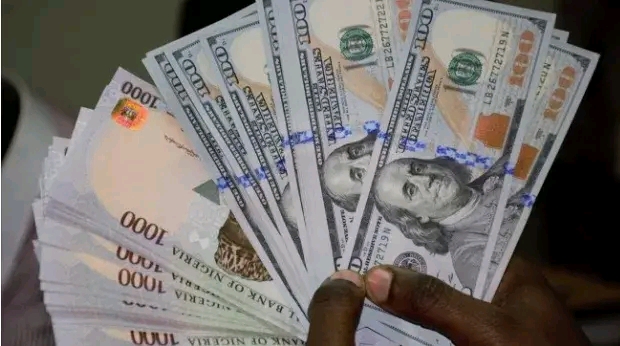
Nigeria’s foreign exchange market is showing mixed signals, as the naira recorded a significant recovery against the US dollar while the country’s external reserves continued to decline.
Figures released by the Central Bank of Nigeria (CBN) showed that the country’s foreign reserves dropped to $53.989bn on Thursday, November 27, from $54.358bn recorded on Monday. This represents a decline of $369m within four days.
Despite the falling reserves, the naira strengthened at the official foreign exchange market, appreciating to N1,378 per dollar on Thursday from N1,397 recorded a day earlier.
The improvement followed the CBN’s decision to increase the amount of physical dollars commercial banks can supply to Bureau De Change operators. The move is intended to improve access to foreign currency and reduce pressure on the retail exchange market.
However, the naira’s latest gains come after a difficult period for the local currency. Between November 13 and November 25, it lost N43.50 against the dollar, reflecting persistent uncertainty in the foreign exchange market.
The situation remains more challenging at the parallel market, where some currency dealers quoted the dollar at N1,455, while others offered it at N1,440. This suggests that the gap between the official and informal markets remains substantial.
Nigeria’s reserve position has also weakened over a longer period. From November 6 to November 27, external reserves fell from $55.060bn to $53.989bn, representing a reduction of $1.071bn in just three weeks.
Several factors have contributed to the pressure, including increased demand for dollars ahead of the Christmas celebrations, foreign investors adjusting their portfolios and spending associated with preparations for the 2027 general elections.
CBN Governor Olayemi Cardoso had earlier explained that seasonal demand from businesses seeking protection against exchange rate fluctuations, alongside foreign portfolio investors repositioning their funds, was contributing to the situation.
He maintained that the decline in reserves should not be a cause for alarm, describing the recent fluctuations as temporary. Cardoso also identified diaspora remittances and Nigeria’s favourable current account position as factors supporting the country’s external financial position.
Following the Monetary Policy Committee meeting on Tuesday, Cardoso expressed confidence that pressure on the foreign exchange market would ease in the coming year.
As part of efforts to improve dollar supply, the CBN has increased the amount of physical foreign currency banks can sell to eligible BDC operators. Under the new arrangement, banks are permitted to sell up to $1m in cash to qualified operators, compared with the previous weekly limit of $150,000, of which only 25 per cent was available in physical cash.
Although the adjustment could improve dollar circulation and reduce pressure on the parallel market, its overall effect on Nigeria’s foreign exchange liquidity and external reserves will become clearer in the coming weeks.