Idongesit Mishael, Uyo
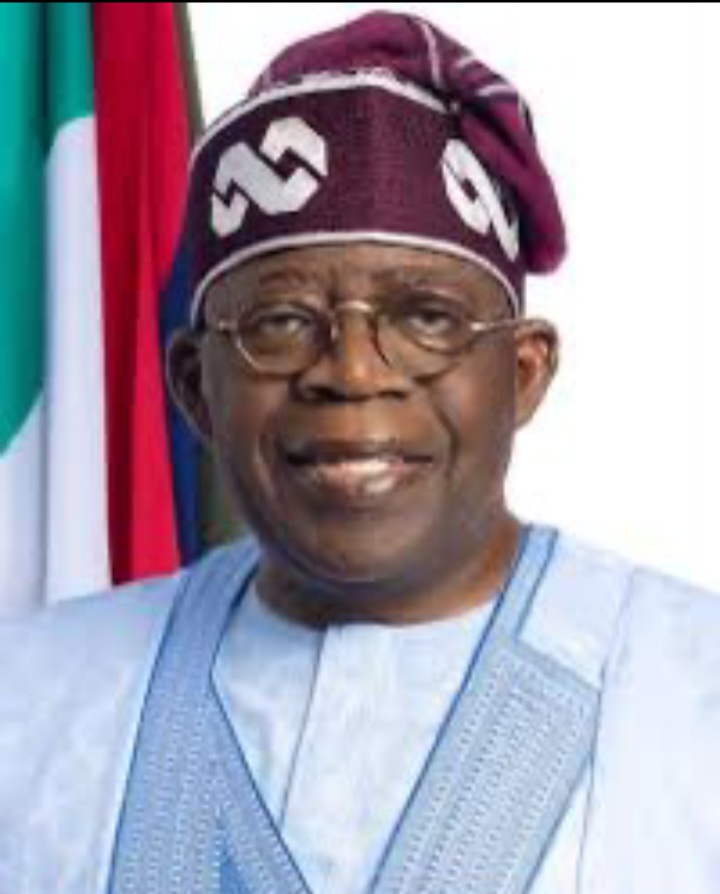
President Bola Ahmed Tinubu has declared that Nigeria has moved beyond the emergency phase of his administration’s economic reforms and entered a new phase focused on production, job creation, lower living costs and broadly shared prosperity.
Tinubu made the declaration on Thursday in his Independence Day address to Nigerians, saying the government’s central economic task had shifted after three years of measures aimed at correcting what he described as deep distortions in the national economy.
The President said the next phase would be judged not merely by macroeconomic indicators but by the extent to which economic gains translate into cheaper goods, productive employment, stronger businesses and improved living conditions for ordinary Nigerians.
“My fellow Nigerians, we have reached a turning point,” Tinubu said, adding: “The emergency treatment is over. The foundation has been repaired. The central economic task before us has changed.”
According to him, the government’s new objective is “simple: shared and widespread prosperity”, with the cost of living identified as one of the most immediate national challenges requiring sustained policy attention.
He said the administration would seek to reduce the cost of production and transportation through expanded mechanised irrigation and dry-season farming, improved access to seeds and fertiliser, greater mechanisation, storage facilities and investments in roads, railways and ports.
Tinubu argued that lowering production costs across agriculture, manufacturing and transportation would ultimately translate into lower prices for consumers, stressing that prosperity must be anchored on increased domestic production rather than economic statistics alone.
“When I speak of prosperity, I do not speak merely of a larger economy, abstract numbers or better statistics,” he said. “I mean something much more personal.”
The President also placed job creation and industrial expansion at the centre of the next phase, saying government would deploy Nigeria’s gas resources to power industries, support the revival of factories, expand digital connectivity and develop skills required by employers.
He said the administration wanted a larger number of Nigerians to participate directly in production and international trade, declaring: “I want to see more Nigerians making things. I want to see more Nigerian farms feeding our cities and supplying our factories.”
Tinubu said the government was also conscious of the hardship still confronting millions of Nigerians, particularly families struggling with food, school fees, medical expenses and transportation costs.
He attributed the depth of the problem to decades of low productivity, inadequate infrastructure, limited opportunities and institutional weaknesses, while acknowledging that the economic reforms of the past three years had not eliminated the immediate pressures facing vulnerable households.
“We cannot erase in four years what accumulated over generations. But we can change its course,” the President said, promising to build an economy capable of steadily lifting Nigerians out of poverty while protecting those who remain vulnerable.
He listed strengthened direct support for poor households, improvements to the National Social Register, the Nigerian Education Loan Fund and consumer credit through CREDICORP among measures intended to provide a bridge for vulnerable citizens while the broader economy expands.
The President also cited growth in the economy, lower inflation from its peak, improved foreign reserves, greater stability in the foreign exchange market and increased non-oil exports as evidence that the reforms had begun to establish what he described as a stronger economic foundation.
Tinubu said the government’s ultimate test would be whether the foundations laid through the reform period produce tangible improvements in the lives of Nigerians, insisting that the administration was now looking beyond economic correction towards sustained national development.
“The age of reform has done its work. Now begins the age of prosperity,” he declared, urging Nigerians to move forward without returning to what he described as the economic practices that created the distortions his administration inherited.
He concluded by expressing confidence in Nigeria’s future and calling for collective commitment to building what he described as a “Promised Land” of abundance and opportunity, where prosperity is broadly shared and every Nigerian child can aspire beyond the circumstances of birth.