By Idongesit Ashameri, Uyo
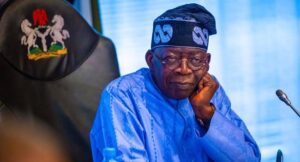
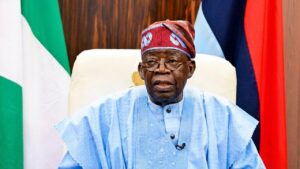
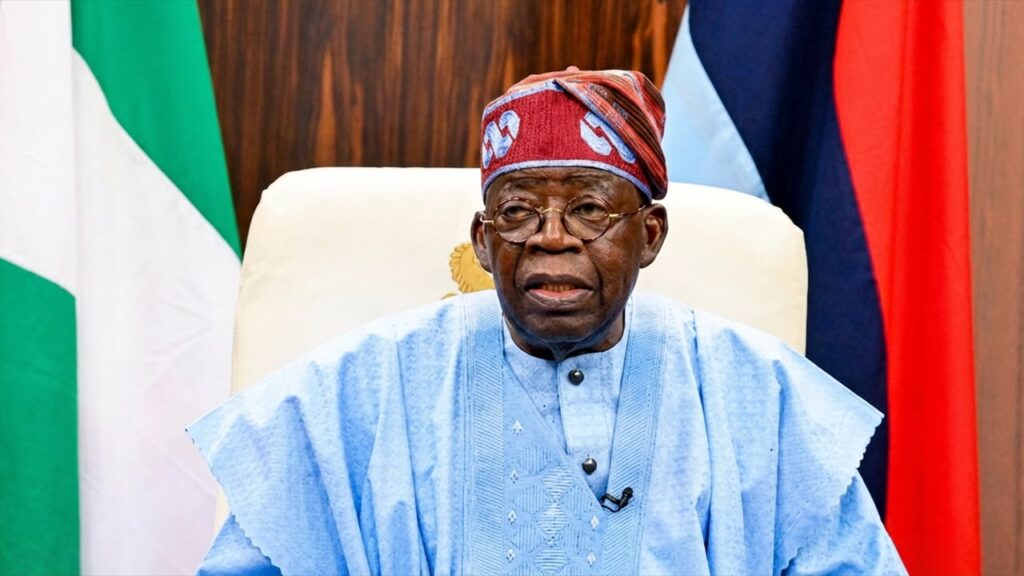
On a day when Nigeria marked 66 years of independence, President Bola Ahmed Tinubu offered Nigerians something more ambitious than a celebration of the past: a promise about the future.
His message was simple, but politically significant. The difficult phase of economic reform, he declared, had run its course. Nigeria, in his telling, had moved beyond emergency treatment and was now entering what he called an “age of prosperity.”
It was a carefully constructed narrative of transition — from pain to recovery, from reform to reward, and from economic stabilisation to shared prosperity.
But beneath the optimism of the Independence Day address lies a more difficult question: how soon will the prosperity being promised at the macroeconomic level become something an ordinary Nigerian can actually feel?
That question matters because Tinubu himself acknowledged the contradiction at the heart of his message. Millions of Nigerians, he admitted, are still struggling to afford food, school fees, medical bills and transportation.
The President’s speech therefore sought to do two things at once: defend the painful economic choices made since May 2023 and persuade Nigerians that those sacrifices are beginning to produce a different economic future.
His preferred metaphor was medicine.
Tinubu described Nigeria before his administration as a sick patient whose underlying economic problems had been masked for years rather than treated. Previous governments, he argued, had effectively used “morphine” to suppress the symptoms while allowing the disease to deepen. His administration, he said, chose the harder option — surgery.
The metaphor captures the philosophy behind the administration’s reforms: remove petrol subsidies, reform the foreign-exchange regime, accept the immediate disruption and eventually build an economy capable of standing without the interventions that had become increasingly expensive and unsustainable.
The President now believes the patient has survived the operation.
“The emergency treatment is over,” he declared. “The foundation has been repaired.”
That assertion is the defining proposition of the speech.
The numbers behind the optimism
There is a substantive economic argument behind the President’s confidence.
Tinubu pointed to economic growth of more than four per cent, declining inflation from its peak, improved foreign-exchange stability, rebuilt reserves, reduced oil theft and record non-oil export earnings of more than $6 billion in 2025. He presented these indicators as evidence that Nigeria’s economic direction has changed.
The significance of this argument should not be dismissed.
For an economy that has spent years wrestling with foreign-exchange shortages, fiscal pressures, weak productive capacity and dependence on crude oil, improvements in macroeconomic stability matter. They can influence investment, government revenue, business confidence and the capacity of the private sector to expand.
But macroeconomic recovery and household prosperity are not the same thing.
That distinction is perhaps the most important test of the President’s new “age of prosperity.”
An economy can grow while households remain under pressure. Inflation can decline while prices remain considerably higher than they were before the inflationary surge. The naira can become more stable without immediately restoring the purchasing power lost by workers, traders and families.
For the Nigerian who goes to the market with a fixed amount of money, what ultimately matters is not simply whether inflation has fallen from its peak, but whether that money now buys more food.
For the small business owner, the question is not merely whether the foreign-exchange market has stabilised, but whether electricity, transportation, credit and raw materials have become affordable enough to make expansion possible.
That is where the President’s promise enters its most difficult phase.
From reform to the cost of living
The President placed the cost of living at the centre of the next phase of his administration.
His proposed solution is fundamentally production-driven: produce more food, reduce the cost of transportation, expand irrigation and mechanisation, improve access to seeds and fertiliser, reduce post-harvest losses, strengthen infrastructure and make it cheaper for factories to operate.
The logic is straightforward.
If farmers produce more cheaply, manufacturers spend less on power, roads and railways reduce logistics costs, and businesses have access to finance, those savings should eventually filter through to consumers.
It is an economic proposition that makes sense in principle.
The problem is time.
A farmer cannot immediately move from rain-fed agriculture to mechanised irrigation simply because the Federal Government has announced a policy. A new road does not instantly reduce the price of food in a market. A railway under construction does not immediately change the cost structure of a trader in Onitsha, Kano or Uyo.
The President’s strategy therefore asks Nigerians who are hurting today to believe in an economic architecture whose full benefits may emerge later.
That is a difficult political and social bargain.
Tinubu recognised this tension when he said government programmes for vulnerable Nigerians should serve as a bridge rather than a substitute for prosperity. He also pointed to strengthened direct support for poorer households, NELFUND, CREDICORP and continued investment in primary healthcare and basic education.
But the central question remains whether the bridge is wide enough to carry those facing the greatest hardship until the promised prosperity arrives.
Agriculture: the most practical part of the promise
Of all the economic sectors addressed by the President, agriculture perhaps offered the clearest connection between policy and everyday life.
Tinubu spoke of mechanised irrigation, dry-season farming, improved access to seeds and fertiliser, greater mechanisation, storage and transportation.
Nigeria’s food challenge cannot be solved simply by importing more food indefinitely. A sustainable solution requires greater domestic production, improved productivity and a functioning value chain from farm to market.
The President’s emphasis on reducing production and logistics costs therefore addresses a genuine structural problem.
Yet a national agricultural strategy needs more than direction.
Farmers need to know how many hectares will be irrigated, how many tractors and other machines will be available, where storage facilities will be built, how credit will reach smallholders and what measurable increases in food production are expected.
The difference between an aspiration and a plan is often found in the numbers.
Jobs and the unfinished industrial question
Tinubu also placed employment and industrialisation at the heart of his prosperity agenda.
He promised to deploy Nigeria’s gas resources to power industries, support the revival of factories, expand digital connectivity and develop skills demanded by employers.
His statement that he wants to see “more Nigerians making things” may ultimately prove one of the most important lines in the speech.
Nigeria’s long-term economic challenge is not merely consumption. It is productive capacity.
A country that imports too much of what it consumes, struggles to generate reliable electricity and has limited industrial capacity will find it difficult to create enough productive employment for a rapidly growing population.
Gas-to-industry, therefore, could become an important piece of the puzzle.
But again, the unanswered questions are practical ones: Which industries? Where will they be located? What power arrangements will support them? How much investment is expected? How many jobs will be created? What happens to businesses that cannot survive the transition?
The prosperity agenda will ultimately be judged less by the elegance of its language than by the number of Nigerians who move from informal survival to productive and sustainable employment.
Infrastructure: building today for a cheaper tomorrow
Infrastructure featured prominently in the President’s economic argument.
Roads, railways and ports, he said, are essential to connecting farms and factories with markets and reducing the cost of moving goods.
This is one area where the administration can point to physical projects rather than policy declarations. The broader infrastructure programme includes major road, rail and port investments, with the administration presenting them as part of the foundation for a more competitive economy.
But infrastructure is a long game.
A completed railway can transform trade. A modern port can reduce logistics costs. A good highway can open an agricultural region to markets.
The challenge is that Nigerians confronting today’s food, transport and electricity costs cannot wait indefinitely for tomorrow’s infrastructure to mature.
That makes infrastructure necessary, but insufficient as an immediate answer to household hardship.
The conspicuous silence on insecurity
If the economic portions of the address were expansive, security was strikingly brief.
The President expressed gratitude to members of the Armed Forces and security services for risking their lives to protect Nigerians. But beyond that acknowledgement, the speech did not develop a detailed security strategy.
That omission is significant in a country where insecurity remains intertwined with agriculture, investment, education, transportation and everyday life.
A farmer who cannot safely reach his farm cannot contribute fully to food security.
A factory owner operating in an insecure environment cannot confidently invest.
A child who cannot safely travel to school cannot fully benefit from education reform.
Security is therefore not a separate sector from prosperity. It is one of its foundations.
The President’s own definition of prosperity — a Nigeria where farmers can cultivate safely, factories can operate reliably and young people can find productive work — implicitly recognises this connection.
The question is why the security challenge received so little substantive attention in a speech that sought to define the country’s next national chapter.
Education and health: bridges to prosperity
Education received attention through NELFUND and the administration’s commitment to basic education.
The loan scheme has become one of the administration’s signature interventions in higher education, aimed at preventing lack of tuition fees from ending students’ educational aspirations.
But higher education finance cannot by itself solve Nigeria’s education crisis.
The quality of basic education, teacher availability, learning outcomes, infrastructure and access remain equally important.
Health presents a similar picture.
Tinubu spoke of strengthening primary healthcare in collaboration with states and local governments, but health occupied relatively little space in the address.
That matters because the health of the population is inseparable from productivity.
A family that spends a large proportion of its income on healthcare has less money for food, education and investment. A sick worker is less productive. A community without functional primary healthcare facilities is less economically resilient.
The prosperity agenda therefore cannot be measured only by GDP and investment figures. It must also be measured by whether Nigerians are healthier, better educated and more economically secure.
The missing conversation about governance
Perhaps the most noticeable omission from the President’s economic argument was the institutional question.
Economic reforms do not operate in a vacuum. Their success depends on the quality of public institutions, transparency, accountability and the efficiency with which public resources are converted into public goods.
The President’s speech devoted considerable attention to correcting economic distortions but comparatively little to how government itself would become more transparent and accountable in the new prosperity era.
That is important because Nigerians are not merely asking whether the economy is growing.
They are asking whether public money is being used efficiently.
They are asking whether government contracts deliver value.
They are asking whether institutions work.
They are asking whether the sacrifices demanded of citizens are matched by corresponding discipline within government.
The prosperity narrative will therefore require an equally convincing governance narrative.
The empathy question
There is another dimension that economic statistics cannot answer: how the speech made Nigerians feel.
The President acknowledged hardship, but his broader message was one of confidence. He asked citizens to look forward rather than backwards, arguing that the country had crossed its own “Red Sea” and that the promised land was now within sight.
For supporters of the reforms, that may sound like the confidence of a leader who has stayed the course despite political pressure.
For critics, however, the same language may sound premature while many households are still struggling with the consequences of economic adjustment.
That gap in perception is important.
Government sees the beginning of recovery.
Many citizens still see the cost of survival.
Both realities can exist at the same time.
What would make the promise measurable?
The most consequential part of the President’s speech may ultimately be what happens after the applause.
The transition from reform to prosperity requires measurable benchmarks.
Nigerians need to know not only that food prices should eventually fall, but what government is doing to accelerate that process.
They need to know how many jobs the industrial strategy is expected to create.
They need to know how much additional food production is targeted.
They need to know how infrastructure projects will affect logistics costs.
They need to know how vulnerable households will be protected during the transition.
They need to know what happens when targets are missed.
This is where dates, numbers and regular public reporting become more important than rhetoric.
A prosperity agenda that can be measured can also be held accountable.
The real test begins now
President Tinubu’s Independence Day speech was, at its core, a defence of his economic reforms and a declaration that the country is entering a new phase.
It was strongest when explaining the administration’s economic philosophy: Nigeria could no longer postpone difficult structural decisions, and the next task must be to convert economic stability into productive growth.
It was less convincing where the distance between policy and lived experience remains widest — immediate household relief, insecurity, governance and the timetable for tangible improvements.
That does not necessarily invalidate the President’s economic argument.
It does, however, raise the standard by which his next phase will be judged.
The reform period could be defended in terms of what government needed to correct.
The prosperity period must be judged by what Nigerians receive.
That is a fundamentally different test.
The farmer wants a safe farm and a better price.
The trader wants lower transport costs and enough customers.
The manufacturer wants dependable power and affordable credit.
The graduate wants a job.
The parent wants affordable food, good schools and accessible healthcare.
The pensioner wants dignity.
The ordinary Nigerian wants to wake up without calculating which essential expense must be sacrificed that day.
That is where the President’s “age of prosperity” will eventually acquire meaning.
The administration has declared that the foundation has been repaired. The next question is whether Nigerians can now begin to build their lives on it.
And that is a question no speech can answer.
Only results can.
The President’s address, therefore, should perhaps not be read simply as a celebration of what his administration says it has achieved. It should be read as a pledge of what Nigerians should now expect.
The era of asking citizens to endure reform, by the President’s own declaration, is giving way to an era in which they expect to experience the reward.
That makes the next phase less about explaining the pain — and much more about demonstrating the gain.