The United States has signalled a policy shift towards accelerating advanced artificial intelligence development rather than imposing tighter international controls, with President Donald Trump declaring that technological supremacy in the emerging field will carry major strategic consequences for nations.
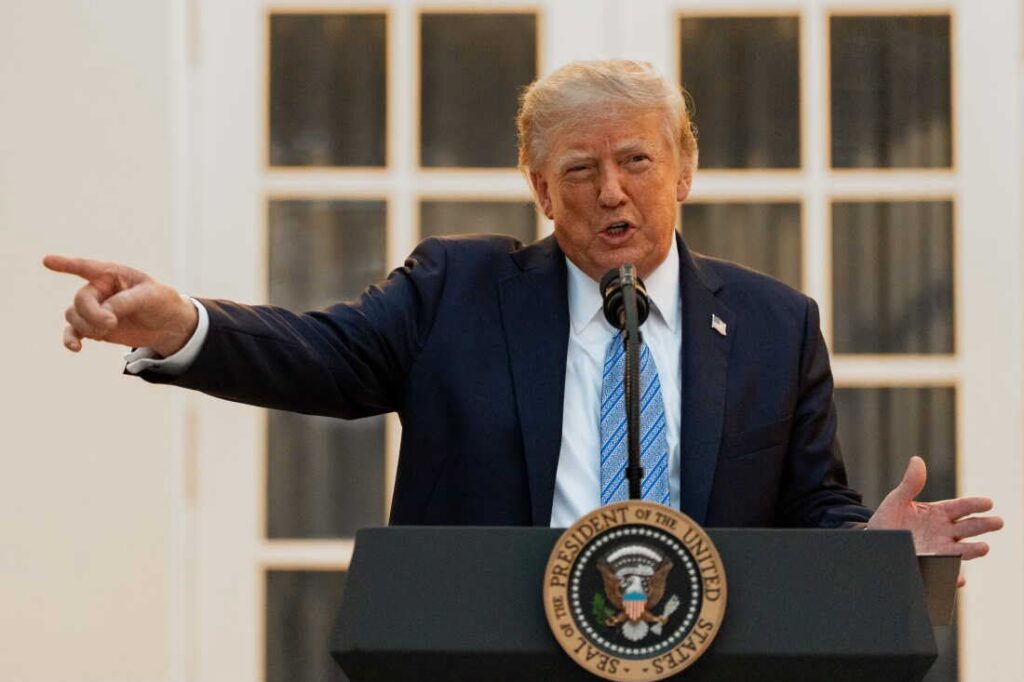
Addressing the 81st United Nations General Assembly in New York on Tuesday, Trump said Washington would encourage the rapid development of what he called “super intelligence”, arguing that the country that dominates the technology would gain a decisive global advantage.
“Whoever wins SI, whoever wins super intelligence, wins,” Trump told world leaders, adding that the United States was currently ahead of China and intended to maintain its lead.
The declaration places the AI debate beyond terminology and into the broader contest over technological, economic and strategic power, particularly between the United States and China. Reuters reports that AI competition has become an important element of US-China relations, with both countries viewing advanced AI as relevant to economic and military strength.
Trump also rejected calls for new international restrictions on the technology, saying his administration would not “stifle” its development because of fears about its potential dangers.
“We will only encourage super intelligence. We’re going to encourage it, not rein it in,” he said.
The US President nevertheless indicated that Washington would retain the ability to intervene where necessary. Reuters reported that Trump said the Department of Justice and other law-enforcement agencies would monitor the sector and could act if circumstances required it.
Trump’s position contrasts with calls at the same UN gathering for stronger international safeguards. UN Secretary-General António Guterres urged global leaders to establish stronger governance mechanisms for AI, including independent oversight and an international risk-management framework.
Against that background, Trump’s announcement that US government documents should replace “artificial intelligence” with “super intelligence” carries a broader political and technological message. He argued that the word “artificial” wrongly suggests that the technology is somehow fake.
“The use of the word artificial makes intelligence fake. It makes it sound fake, and it is not fake. It’s actually amazing, but we have to be careful,” he said.
Trump said he hoped other countries would adopt the terminology, describing the change as part of what he called a “new world of super intelligence.”
However, the terminology has a specific meaning in AI research. “Superintelligence” generally refers to an intelligence that surpasses human capabilities, meaning Trump’s proposed broader use of the expression differs from its established technical meaning.
The US position comes as Washington and Beijing continue to compete over advanced AI, chips and related technologies, while policymakers debate how to balance innovation with national security and safety concerns.