Idara Jerome, Uyo
Some primary healthcare facilities in Akwa Ibom State are still grappling with critical gaps in water, electricity, sanitation and infrastructure despite previous advocacy visits to relevant authorities, prompting the Network of People Living with HIV/AIDS in Nigeria (NEPWHAN) to seek stronger media intervention to push for solutions.
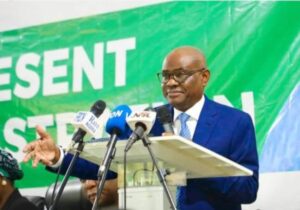
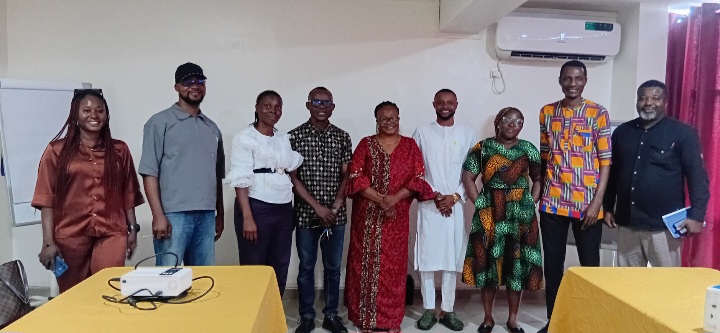
NEPWHAN State Coordinator, Mrs Elizabeth Udo, disclosed this on Wednesday in Uyo at a Media Roundtable on Community-Led Monitoring (CLM), organised under the Global Fund Grant Cycle 7 National TB/HIV Reach Impact Project (N-THRIP), where stakeholders reviewed findings, achievements and outstanding challenges from community monitoring activities.
Udo said the concerns were not a reflection of all primary healthcare facilities in the state, acknowledging that the Akwa Ibom Government had made efforts in primary healthcare delivery, but stressing that conditions observed in some facilities still required urgent attention.
She cited a facility at Mbiabong where flooding had reportedly left water standing within the premises, creating an environment in which mosquitoes were prevalent. “Immediately you enter, the mosquito will be the one that will welcome you,” she said, describing the situation as one of the facility-level challenges requiring intervention.
Udo also disclosed that another facility visited by the monitoring team had no adequate electricity, water or toilet facilities, raising questions about how the centre could respond effectively when confronted with emergency cases.
She said the concerns had, in some instances, already been presented to relevant authorities through advocacy engagements, but some remained unresolved, making sustained public attention necessary. “There are a lot of issues on ground that we are supposed to help in that facility,” she said.
According to her, the purpose of involving journalists was to ensure that verified community-level evidence reached government, philanthropists and other stakeholders capable of responding to the identified needs. She, however, cautioned journalists against embellishing the findings or introducing information outside what the monitoring teams established.
“Please, when you are giving the report, give what we are giving you. Please, don’t give any outside report,” Udo said, urging the media to maintain accurate and evidence-based reporting in order to preserve the credibility of the advocacy process.
She said NEPWHAN also wanted journalists to participate more actively in subsequent advocacy visits, awareness campaigns and demands for improved health services, noting that the CLM programme had expanded beyond HIV/AIDS to cover the integrated AIDS, Tuberculosis and Malaria (ATM) response.
The Program Officer of Drug Free and Preventive Healthcare Organization (DAPHO), Aniediongo Ime Akpaidem, said the unresolved nature of some of the identified challenges was a major reason for bringing the media into the monitoring process. “Most of these challenges at the health centres, we’ve paid advocacy visits to the relevant authorities, and yet, some of them are still unresolved,” she said.
Akpaidem said the media could help amplify the issues, provide communities with a platform to share their experiences and sustain attention until appropriate solutions were implemented. “We feel that if we bring the media in and have this media roundtable where we tell you our issues, it would help us to publicize it,” she said.
Senior Programme Advisor, AIDS Healthcare Network Initiative (AHNI) ACE 5, Iheanyi Elechi, representing the State Director, Dr Bala Gana, said CLM provided a mechanism for capturing the perspective of health service users and using such evidence to improve services. He said the programme was monitoring HIV/AIDS, tuberculosis and malaria services across the state.
Elechi said areas identified for attention included staff capacity and commodity management, adding that AHNI supports HIV/AIDS services across all 31 local government areas and health facilities in Akwa Ibom State. He said the information generated through CLM could help partners identify areas requiring additional support.
In a goodwill message delivered on behalf of AKSACA Programme Manager, Dr Enobong Akpan, by Dr Emediong Udoh of Strategic Information, the agency commended the three CBOs implementing the community-led response—Exotic World, DAPHO and POWEI—for their contributions. “There’s nothing for us without us,” Udoh said, describing community participation as central to effective health programming.
The roundtable brought together NEPWHAN, community-based organisations, AKSACA, AHNI, health-sector stakeholders and media practitioners to examine CLM progress and outstanding gaps under the N-THRIP programme, with stakeholders calling for stronger collaboration, accurate reporting and sustained follow-up to ensure that evidence generated from communities translates into improvements at affected facilities.