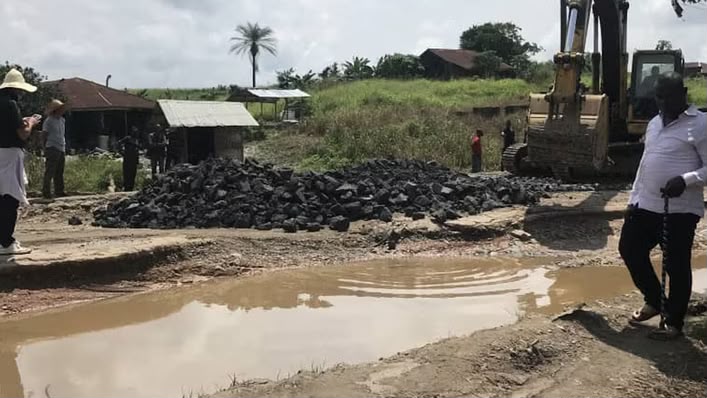
For residents of parts of Cross River and Akwa Ibom, the rainy season has become more than a period of swollen drains and flooded roads. It has become a season of fear, as landslides and advancing erosion threaten to swallow homes, businesses and public infrastructure.
In Cross River, the human cost has been particularly devastating, with 10 landslides reportedly recorded within Calabar Municipal Council in five months. The incidents in Ikot Anwatim, Ikot Effanga and the Boro Pit area of Satellite Town left families mourning, destroyed property worth millions of naira and displaced residents who suddenly found themselves without homes.
For Ubong Edu, a security guard in Ikot Anwatim, the disaster was a personal catastrophe. He lost four children and his home to the landslide, leaving him to confront the difficult task of rebuilding a life after losing virtually everything.
“Life had turned tremendously sour and tough,” Edu said, appealing to government and relevant agencies to educate residents on practical measures that could help prevent or reduce the impact of future landslides.
His plea goes beyond financial assistance. Having received N2 million from the Cross River State Government to begin again, Edu wants residents to understand what they can do to protect themselves before the next disaster strikes.
For another victim, Itoro Abang, the problem is equally immediate. The teacher said the landslide swept away or destroyed her family’s belongings, leaving them dependent on temporary accommodation.
“My family did not get any of our property after the landslide; everything was washed away and damaged. We are almost hopeless,” she said.
The situation has also raised concerns beyond the immediate victims, as emergency officials warn that continued development in valleys, unstable slopes and other vulnerable locations could expose more communities to disaster.
The Director-General of the Cross River State Emergency Management Agency, Efa Nyong, said the agency had assessed and documented affected locations, while government had moved some displaced families to safer areas and provided financial assistance to some victims.
But in Akwa Ibom, residents are confronting a different version of the same threat: watching erosion gradually eat into the places where they live and do business.
Parts of K-Line Ewet Housing Estate, Nkemba Street, Ukana Offot, Abak Road, Nsikak Eduok Road, Ediam Road, Edohoeket Street, Idua Road, Afaha Eket Road, All Weather Road, Ikot Udoma, Mkpok Lane, Eket-Oron Road and Hospital Road are among locations identified as vulnerable.
For residents, the greatest anxiety is not knowing when a seemingly manageable erosion channel could become a major disaster.
An Uyo resident, Aniedi Edet, said the expanding erosion threatened homes, private facilities and public infrastructure, urging authorities to act before the situation produced casualties.
Another resident, Obong James Nsikak, said erosion was threatening his business premises and putting his life’s investment at risk.
“We need a lasting solution to this threat. It is disheartening that every rainy season, residents of Uyo live in fear, not sure of what happens the next moment,” he said.
The Akwa Ibom Government says it is responding to the problem, pointing to the Uyo Village Road Erosion Control, Land Reclamation and Bridge Construction project, which is expected to reclaim about 150 hectares, protect public facilities and support the planned Uyo Downtown Development.
The Commissioner for Works, Prof. Eno Ibanga, said the intervention followed severe erosion that had previously threatened homes and infrastructure, including the residence of the Village Head of Ewet Offot.
The wider South-South region, however, presents a broader environmental challenge. In Rivers State, communities in Etche, Ikwerre, Obio/Akpor, Oyigbo and parts of Port Harcourt have also reported persistent gully and coastal erosion.
Environmental and human rights activist Celestine Akpobari said some residents had been forced to abandon buildings because of fears that advancing erosion could cause them to collapse.
His concern is that communities once considered relatively safe are increasingly finding themselves exposed, while some damaged roads and settlements remain without timely intervention.
Environment expert Henry Eferegbo said development planning must take greater account of changing environmental conditions, calling for the use of Geographic Information Systems and stronger collaboration among urban planners, surveyors and environmental specialists.
He also warned against deforestation, indiscriminate land reclamation and other activities that can weaken natural protection against flooding, erosion and landslides.
The South-South Development Commission has also acknowledged the scale of the problem, saying its team inspected erosion and landslide sites in Cross River to assess the damage and identify possible areas of intervention.
Yet the recurring stories from affected communities reveal a problem that extends beyond damaged roads and washed-away soil. Each collapsed house represents a family displaced; each destroyed business represents savings and years of work lost; and each landslide carries the possibility of turning an environmental problem into a human tragedy.
For residents already living on the edge of eroding land, the central question is therefore no longer whether government will respond after disaster strikes, but whether enough can be done before the next heavy rainfall turns another home into a casualty statistic.