A US military weapon designed to make a person’s skin feel unbearably hot without firing bullets is being considered for possible use along the country’s southern border, raising concerns about injuries and the limits of nonlethal force.
According to Newsweek, the US Defence Secretary, Pete Hegseth, authorised the Department of Homeland Security (DHS) in September to test the Active Denial System (ADS), a directed-energy weapon that uses invisible electromagnetic waves to produce an intense burning sensation on the skin.
The proposed testing comes as President Donald Trump’s administration continues to prioritise efforts to curb illegal immigration across the US-Mexico border.
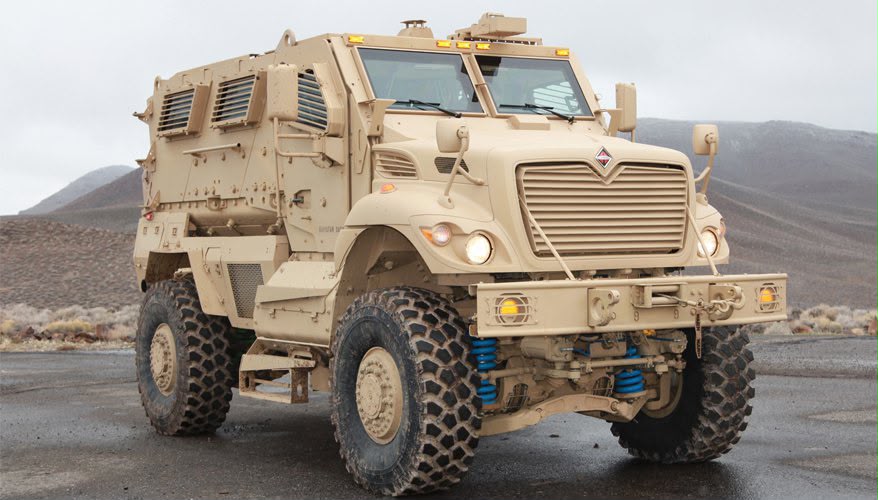
The weapon, mounted on a vehicle, directs electromagnetic waves at a target from a distance. The energy is absorbed within the outer layers of the skin, rapidly raising the temperature and activating sensory nerves that register pain.
Unlike conventional firearms, the ADS is designed to drive people away from a targeted area through intense discomfort rather than penetrate the body with a projectile.
The US military says the sensation stops when the beam is switched off or the affected person moves out of its path. However, residual tingling or tenderness can persist for up to 15 minutes, according to a Pentagon account of a 2012 demonstration.
The technology operates at a frequency of about 95 gigahertz and has a reported range of approximately 1,000 metres, allowing operators to direct its energy at people from considerable distances.
Development began in the late 1980s, while the ADS demonstration programme ran from 2002 to 2007. Despite years of development and demonstrations, the system has not been actively deployed in combat or policing operations, according to the Newsweek report.
Burn injuries and human rights concerns
Although designed as a nonlethal weapon, the ADS is not without risks. Reports cited by Newsweek include incidents in which people sustained burns during accidents or improper use.
An airman reportedly suffered burns during a training exercise in 2007 but recovered fully. A separate laboratory accident in 1999 resulted in blistering.
The distinction between a weapon intended to cause temporary pain and one capable of inflicting physical injury has become central to the debate over its potential use in law enforcement.
In a 2023 report, the United Nations Special Rapporteur on Torture warned against using directed-energy weapons such as the ADS in law enforcement, citing the severe pain they can cause, their potential health effects and concerns about compliance with international human rights standards.
The report also highlighted a particular danger: because the beam is invisible, people targeted may struggle to identify its source or determine how to escape it. In crowded areas, this could trigger panic and stampedes.
The US Air Force, however, concluded in testing published in 2008 that exposure to ADS waves did not promote cancer or cause reproductive problems. That finding does not eliminate the separate concerns about burns, prolonged exposure or the circumstances in which the weapon might be used.
Border security versus public safety
A US Customs and Border Protection spokesperson told Newsweek that the agency continually evaluates new technology that could improve national security while saving lives. DHS referred the publication to the same statement, while the Pentagon directed enquiries to DHS.
The proposed tests could help authorities assess whether the technology has a practical role in border operations. However, testing does not necessarily mean the weapon has been approved for operational deployment.
The debate extends beyond whether the ADS can stop people without bullets. It also concerns how officers would use it, how exposure would be controlled and what safeguards would protect people from serious injury.
For a weapon that works by deliberately causing intense pain, its possible introduction into immigration enforcement is likely to intensify scrutiny of the balance between border security, public safety and human rights.