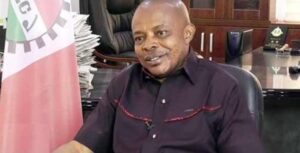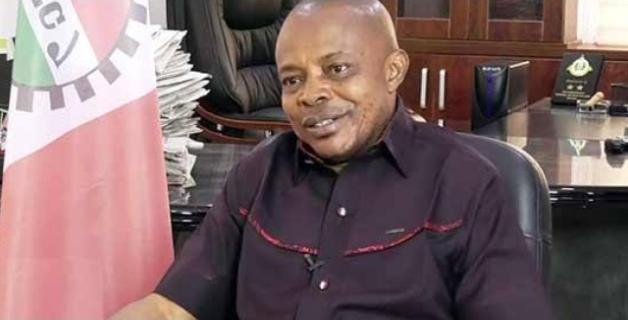
Nigeria Labour Congress (NLC) President Joe Ajaero has criticised the Trade Union Congress (TUC) for rejecting the Federal Government’s proposed ₦70,000 monthly transport allowance for public sector workers, insisting that the union was not part of the negotiations that produced the agreement.
Ajaero made his position known on Thursday during an appearance on Channels Television’s Morning Brief, where he questioned why the TUC was opposing an arrangement it had chosen not to participate in.
The Federal Government had approved the transport support for public servants across different levels for six months, starting in November 2026. The decision followed a conciliation meeting with the NLC in Abuja.
However, the TUC, led by Festus Osifo, rejected the proposal shortly after its announcement, arguing that workers needed a substantial salary increase rather than temporary financial relief. It also called for the implementation of outstanding agreements with the Joint Health Sector Unions (JOHESU).
The TUC proposed increasing the monthly salary of the lowest-paid federal worker from ₦70,000 to ₦300,000, with corresponding adjustments for other salary grades. It maintained that the government could raise workers’ salaries without waiting for another minimum wage review.
But Ajaero explained that the NLC had proceeded with the negotiations independently after the TUC distanced itself from the process. According to him, the disagreement between the two labour centres began during the early stages of discussions over workers’ welfare.
He said he would have preferred both unions to present their demands separately, giving the government an opportunity to consider and harmonise their positions before reaching a decision.
Beyond the dispute, the NLC president warned against demands for a ₦1 million minimum wage, arguing that such an increase could destabilise the Nigerian economy if the underlying economic problems remained unresolved.
Ajaero maintained that the priority should be improving the purchasing power of the naira and reducing the cost of essential goods and services. He argued that higher salaries would offer little relief if inflation and the rising cost of living continued to erode workers’ earnings.
His comments come as Nigerians grapple with high transportation costs, expensive food, rising cooking gas prices and other household expenses. Petrol prices, which stood at about ₦195 per litre at the beginning of 2023, have climbed to more than ₦1,300 at many filling stations.
Food inflation also remained a major concern, with the reported year-on-year rate reaching 19.59 per cent in September 2026, further squeezing household budgets.
The proposed transport allowance could cost the Federal Government an estimated ₦465.7 billion over six months if extended to about 1.1 million employee records on the Integrated Personnel and Payroll Information System.
Although the intervention is expected to provide some relief, questions remain over its ability to address the broader financial difficulties facing public workers, particularly if the payment is not implemented fully and on schedule.
The disagreement has also exposed fresh divisions within Nigeria’s labour movement. While both the NLC and TUC jointly demanded a ₦500,000 minimum wage in August 2026, their positions have since diverged over how best to secure better conditions for workers.
With the allowance scheduled to begin next month, attention will now turn to its implementation and whether the temporary support will make a meaningful difference to workers struggling with the rising cost of living.