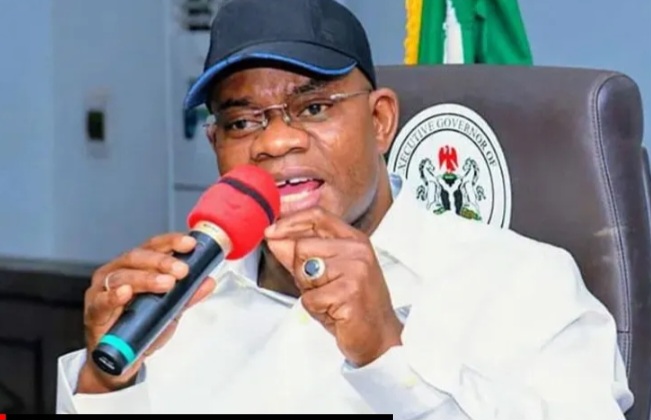
Stephanie Peter The Osun State Government has rejected the Economic and Financial Crimes Commission’s (EFCC) allegation that N11 billion was looted from its accounts, describing the claim as an attempt to justify what it called an illegal action through unfounded accusations. In a statement posted on X on Thursday, the state’s Commissioner for Information and Public Enlightenment, Kolapo Alimi, insisted that no financial misconduct had occurred. He further alleged that the EFCC was acting on the directive of the former Osun State Governor, Gboyega Oyetola, to frustrate the current administration’s payment of palliatives to workers, a commitment the government said it had made months earlier. The statement followed the EFCC’s decision to place a temporary restriction on the Osun State Government’s account while investigating the alleged mismanagement of N11 billion in Federation Account Allocation Committee (FAAC) funds, Ecology Funds, and Intervention Funds. According to the EFCC, investigators detected multiple large transfers from the state government’s account to several corporate entities, prompting the commission to impose a temporary 72-hour post-no-debit restriction pending the outcome of its investigation. The anti-graft agency said the action was taken pursuant to the provisions of the EFCC (Establishment) Act, 2004, and the Money Laundering (Prevention and Prohibition) Act, 2022. Legal experts have noted that while the EFCC may impose a temporary post-no-debit restriction during an investigation, any extension beyond the stipulated period would generally require a court order. The issue has since become one of the major legal questions arising from the dispute. Responding to the action, the Osun State Government said all palliative payments to workers had already been completed before the restriction was imposed. “Fortunately, we have paid all the palliatives to Osun State workers,” the statement said. The statement added that the initiative was introduced to cushion the impact of the country’s economic hardship. The government also maintained that the subsidy programme was not the first of its kind and alleged that the EFCC’s investigation was politically motivated. It further stated that “there is no fund to loot in Osun State,” arguing that the state’s resources are being channelled into infrastructure projects, workers’ welfare and sectoral development for the benefit of residents. The government also accused the EFCC of conducting what it described as a “witch-hunt” since March 2026, alleging that senior government officials had been subjected to repeated invitations and harassment intended to distract them from governance. It maintained that if the anti-graft agency had credible evidence of wrongdoing, it should have followed established legal procedures rather than freezing the state’s accounts. “There are established procedures for bringing suspects to book instead of a politically motivated and unlawful freezing of government accounts without recourse to the rule of law,” the statement said. The statement concluded by describing the allegations as false and an attempt to justify what it called an illegal action, insisting that the commission’s claims would neither withstand judicial scrutiny nor sway the court of public opinion. The EFCC has maintained that its investigation is based on intelligence reports and financial records, and that the temporary restriction was necessary to preserve the funds pending the outcome of its investigation.
Take It Back Movement Stages Nationwide Protests, Lists Demands
Stephanie Peter The Take It Back Movement on Wednesday staged coordinated protests in Abuja, Lagos, Ibadan, Port Harcourt and other parts of the country, demanding government action on insecurity, economic hardship and other national issues. According to The Guardian, the demonstrations, held under the theme “Festival of the Oppressed,” saw protesters call for the rescue of Nigerians held captive by bandits and kidnappers, the implementation of a N500,000 national minimum wage, the withdrawal of charges against activist Omoyele Sowore, and urgent government intervention over reported xenophobic attacks on Nigerians in South Africa. In Abuja, Sowore joined protesters carrying placards bearing inscriptions such as “Nigeria is Bleeding,” “Rescue Our People Now,” “Free All Political Prisoners,” “No to Xenophobia,” and “Revolution Is the Answer.” Addressing journalists, Sowore described the protest as a reminder of what he called the need for an “imminent revolution.” He reiterated the movement’s demands, including a N500,000 monthly minimum wage for Nigerian workers, the release of Nnamdi Kanu, and the withdrawal of ongoing cybercrime and treason trials involving activists and other Nigerians facing charges over criticism of the government. “We have several demands that we must reiterate here. They include that Nigerian workers must be paid N500,000 per month as the minimum wage. We have also asked that they release Nnamdi Kanu from unjust and unlawful detention. “They should discontinue all forms of trial, whether it’s cybercrime or treason trials, against activists and Nigerians who are raising their voices against bad governance in this country,” he said. Sowore added that the movement would continue its nationwide actions and urged Nigerians to join the campaign. In Lagos, protesters gathered in the Maryland area, chanting solidarity songs and pro-democracy slogans before security operatives dispersed them with tear gas. Reacting to the development, the Head of Legal Aid of the Take It Back Movement, Bolaji Oluwatosin, condemned the disruption of what he described as peaceful demonstrations against economic hardship and insecurity. He argued that the action violated citizens’ constitutional rights to peaceful assembly and freedom of expression, accusing the Nigeria Police Force of targeting lawful protesters instead of focusing on its constitutional responsibility to protect lives and property. Oluwatosin maintained that the movement would not be discouraged by what he described as state intimidation, adding that its protests would continue until its demands are met. The Presidency and the Nigeria Police Force had not publicly responded to the protesters’ demands or the allegations raised by the movement as of the time of filing this report.
Atiku Criticises EFCC Over Osun Account Freeze
The presidential candidate of the African Democratic Congress (ADC), Atiku Abubakar, has criticised the Economic and Financial Crimes Commission’s (EFCC) decision to freeze the Osun State Government’s statutory allocation account, warning that the move could weaken public confidence in the forthcoming governorship election. According to Punch, Atiku said in a statement issued on Thursday by his Senior Special Assistant on Public Communication, Phrank Shaibu, that the anti-graft agency’s decision to place a restriction on the account just days before the August 15 governorship election has sparked concerns over the independence of institutions charged with ensuring fairness in the electoral process. The former vice president said freezing the state’s principal operational account days to the poll could disrupt governance, delay workers’ salaries, hinder essential public services and create an atmosphere of intimidation. “It is impossible to ignore the implications of freezing a state’s principal operational account on the eve of a governorship election. “Such an action could disrupt governance, delay salary payments, impede essential public services and create an atmosphere of intimidation that has no place in a democratic society,” Atiku said. While acknowledging that the EFCC has a constitutional responsibility to investigate allegations of financial misconduct, he maintained that investigations must follow due process and should not create the impression of political interference, especially close to an election. “If there are legitimate concerns requiring investigation, the law provides due process. Anti-corruption agencies must not conduct themselves in a manner that creates the perception that they are being deployed to influence political outcomes or weaken elected governments at critical electoral moments,” he said. Atiku further alleged that there is a growing pattern of selective deployment of federal institutions against opposition controlled states, arguing that such actions diminish public trust and weaken democratic institutions. He called on the EFCC to reverse the restriction placed on the state’s allocation account, warning that the impact of the action would be felt more by ordinary residents than political office holders, stating that freezing the account would not only affect the government but also residents who depend on timely payment of salaries and essential public services. “Freezing the state’s allocation account is not merely an attack on the Osun State government; it is a direct assault on the people of Osun State, whose salaries, essential public services and daily governance stand to suffer. “The anti-corruption mandate of the EFCC must never be distorted into a political weapon against opposition governments,” he stated. He also urged all institutions involved in the conduct of the August 15 governorship election to be neutral and ensure that the people of Osun decide the outcome of the election. The statement was issued following the EFCC’s decision to place a “Post No Debit” restriction on Osun State Government account. The EFCC stated that the restriction was imposed as part of an ongoing investigation into the alleged diversion of about ₦11 billion in public funds and insisted that the action is not related to the forthcoming governorship election. Osun State Governor Ademola Adeleke has, however, alleged that the affected account is used for the payment of workers’ salaries and accused the EFCC of attempting to cripple the state’s operations on the eve of the election. The EFCC’s action has continued to generate reactions ahead of the governorship election, with political stakeholders expressing different views on the timing of the restriction, even as the commission insists it is carrying out a lawful investigation.
Tension in Osun as EFCC restricts state account ahead of governorship poll
Fresh political tension has emerged in Osun State following reports that the Economic and Financial Crimes Commission (EFCC) has placed a key state government bank account under restriction less than two weeks before the August 15 governorship election. The affected account, domiciled with First Bank and reportedly used for the payment of workers’ salaries, was said to have been placed on “Post No Debit” status, raising concerns over the possible impact on government operations. The development came shortly after Governor Ademola Adeleke alleged that the anti-graft agency was planning to freeze the accounts of the state government and some senior officials in his administration. Reacting to the situation, the governor, through the Commissioner for Information and Public Enlightenment, Kolapo Alimi, described the reported action as an attempt to disrupt the activities of his administration on the eve of the governorship election. According to the statement issued on Wednesday, Adeleke insisted that the EFCC has no legal authority to freeze the accounts of a state government, maintaining that there was no justification for such action. A source close to the government, who spoke on condition of anonymity because he was not authorised to comment publicly, confirmed that the restriction had already taken effect. “I can confirm that the state government account has been frozen by the EFCC. It is no longer an allegation. The governor will address the press shortly to update the public on the situation,” the source said. Although the reason for the restriction was not immediately clear, the development has heightened political anxiety in the state as preparations intensify for the governorship election. As of the time of filing this report, the EFCC had yet to issue an official statement confirming or explaining the action, leaving questions over the circumstances surrounding the account restriction unanswered.
Onung hails Tinubu’s push for technical skills, backs ITF takeover of Sector Skills Councils
Idara Jerome Chairman of the Hospitality and Tourism Sector Skills Council of Nigeria, Mr. Nkereuwem Onung, has commended President Bola Ahmed Tinubu for prioritising technical and vocational skills development, describing the administration’s reforms as a bold step towards building a globally competitive workforce. Onung gave the commendation on Monday in Abuja following the formal handover of the Sector Skills Councils by the National Board for Technical Education (NBTE) to the Industrial Training Fund (ITF) during a ceremony at the Skills House, Maitama. He said the transfer marks a significant milestone in the Federal Government’s drive to make skills acquisition more industry-driven and responsive to the needs of the economy, particularly in the hospitality and tourism sector. According to him, placing the councils under the ITF will deepen collaboration among employers, training institutions and government agencies, while ensuring that occupational standards and training programmes are aligned with labour market demands. “The transfer of the Sector Skills Councils to the ITF is a welcome development. It will strengthen industry participation in skills development and produce a workforce that is better equipped for the realities of the hospitality and tourism sector.” Onung, who also serves as Honorary Special Adviser to the Akwa Ibom State Governor on Culture and Tourism and Chairman of Experience Ibom, said President Tinubu deserves recognition for placing practical skills acquisition, workforce development and industry certification at the centre of the country’s economic reform agenda. He noted that strengthening technical skills would not only improve service delivery in the hospitality and tourism industry but also create employment opportunities for young Nigerians and enhance the country’s competitiveness in the global tourism market. The tourism sector leader also applauded the Director-General of the National Institute for Hospitality and Tourism (NIHOTOUR), Dr. Abisoye Fagade, for his commitment to strengthening the Hospitality and Tourism Sector Skills Council and advancing capacity development across the industry. The handover ceremony attracted major stakeholders in Nigeria’s technical and vocational education and training ecosystem, including the Director-General of the Industrial Training Fund, Dr. Afiz Oluwatoyin Ogun; Executive Secretary of the National Board for Technical Education, Prof. Idris Bugaje; Chairman of the Committee of Chairmen of Sector Skills Councils, A. B. Nagode; chairmen of the various Sector Skills Councils; and other industry leaders. The Sector Skills Councils are responsible for developing National Occupational Standards, identifying industry skills requirements and promoting quality assurance in skills training. Their transfer to the ITF is expected to strengthen industry-led skills development and produce a workforce better equipped to meet the demands of Nigeria’s evolving economy.
NiDCOM confirms release of Nigerian girls detained in Mauritius
Idara Jerome, Uyo The Nigerians in Diaspora Commission (NiDCOM) has confirmed the release of the Nigerian girls who were detained in Mauritius. In a statement issued on Monday by the Commission’s Head of Media, Public Relations and Protocols Unit, Abdur-Rahman Balogun, NiDCOM Chairman/Chief Executive Officer, Abike Dabiri-Erewa, disclosed that the girls had been safely released in Nairobi and were already en route to Nigeria. She explained that the Commission had remained in close contact with the relevant Nigerian Embassy, which formally engaged the authorities involved to ensure accountability over the incident and prevent a similar occurrence in the future. While expressing relief over their release, Dabiri-Erewa also sympathised with the affected young women and expressed the hope that they would be willing to share details of their experiences upon arrival in Nigeria. According to her, their accounts would help guide any necessary follow-up actions and support that may be required. The NiDCOM boss reaffirmed the Commission’s commitment to the welfare, safety and protection of Nigerians living or travelling abroad, stressing that the wellbeing of citizens in the diaspora remains a key priority of the Federal Government. She added that the Commission would continue working with Nigerian diplomatic missions and relevant authorities to safeguard the rights of Nigerians overseas, in line with President Bola Ahmed Tinubu’s Renewed Hope Agenda aimed at supporting citizens both at home and across the diaspora.
MMI Applauds Eno’s ₦31bn empowerment package, Wants Merit-based Selection for Maximum Impact
Idara Jerome, Uyo Mboho Mkparawa Ibibio (MMI) has commended Governor Umo Eno for approving the ₦31 billion Economic Empowerment Programme but cautioned that the initiative would only achieve its full economic and social potential if beneficiaries are selected strictly on merit, fairness and transparency. The foremost Ibibio socio-cultural organisation said ensuring that the right people benefit from the intervention would not only protect public confidence in the programme but also maximise its capacity to create jobs, strengthen small businesses, reduce poverty and stimulate sustainable grassroots economic growth across Akwa Ibom State. In a statement signed by its International Public Relations Officer, Akparawa Idongesit Ikono, and made available to our correspondent in Uyo on Tuesday, MMI described the programme as one of the largest grassroots economic empowerment initiatives in the state’s history and applauded the governor for making such a significant investment in the productive capacity of the people. The organisation particularly hailed the allocation of ₦1 billion to each of the state’s 31 local government areas, describing it as a bold demonstration of the administration’s commitment to inclusive development and shared prosperity. According to MMI, the programme’s focus on youths, women, traders, farmers, transport operators and small business owners reflects a clear understanding that sustainable economic growth is driven by empowering ordinary citizens who constitute the backbone of the state’s economy. It noted that the intervention, expected to benefit about 165,912 people, extends beyond financial support to include skills acquisition, starter packs, agricultural inputs, cooperative support, transport empowerment and enterprise development designed to build long-term economic resilience. While welcoming the inauguration of the implementation committee headed by the Secretary to the State Government, Prince Enobong Uwah, the organisation urged members to discharge their responsibilities with the highest standards of integrity and accountability. “We expect the implementation to be guided strictly by merit, fairness and equity, ensuring that genuine beneficiaries are identified through an open and verifiable process that is completely insulated from partisan politics, favouritism and undue influence,” the statement said. MMI stressed that directing the intervention to deserving beneficiaries would significantly increase its developmental impact by enabling recipients to expand businesses, improve productivity, create employment opportunities and contribute meaningfully to the state’s economy. “With an estimated 165,912 beneficiaries, this far-reaching intervention has the potential to deepen entrepreneurship, stimulate local enterprise, enhance agricultural productivity, create sustainable employment and significantly reduce poverty across the state,” it added. The organisation also advised prospective beneficiaries to regard the grants and productive assets as investments for wealth creation rather than temporary financial relief. “The grants, productive assets and other forms of support should not be viewed as a share of the ‘national cake’ or an avenue for short-term consumption. Rather, they should be deployed prudently to build sustainable businesses, create employment, increase productivity and improve the socio-economic well-being of families and communities,” MMI stated. It reaffirmed its commitment to supporting policies that promote inclusive development, economic justice and social progress, expressing optimism that the programme would leave a lasting legacy if implemented transparently and insulated from undue influence. MMI further congratulated the state government on what it described as a landmark intervention and urged citizens, community leaders and relevant institutions to support the implementation process to ensure the programme achieves its intended objectives across all 31 local government areas.
Ahead of Osun Governorship Election, Oyintiloye Seeks Tight Security
Stephanie Peter, Uyo A chieftain of the All Progressives Congress (APC) in Osun State, Hon. Olatunbosun Oyintiloye, has urged the Commissioner of Police deployed for the August 15 governorship election, Mr. Samuel Etaifo, to ensure a peaceful and credible election. According to ARISE News, Oyintiloye made the appeal while speaking with journalists in Osogbo on Sunday, saying the police must remain neutral and ensure the protection of voters throughout the electoral process. “I want to appeal to the Commissioner of Police deployed for the election to ensure adequate protection of the electorate at all stages of the electoral process,” he said. Oyintiloye noted that the election was already generating tension, stressing that the police had a responsibility to protect voters and safeguard the integrity of the ballot before, during and after the exercise. “The protection of the electorate before, during and after the election should be the major priority of the police,” he said. He added that adequate security is critical to the conduct of a free, fair and credible election. “A credible election can only take place in a peaceful environment. That is why we are urging security agencies, particularly the police, to maintain a peaceful atmosphere,” he said.
Objectivity, professionalism remain journalists’ greatest assets, says Eno
Idara Jerome, Uyo Amid growing conversations about the role of the media in a democratic society, Governor Umo Eno of Akwa Ibom State has urged journalists to uphold professionalism, fairness and balance in their reportage, stressing that credibility remains the strongest currency of the journalism profession. The governor, who also acknowledged the difficult working conditions faced by many media practitioners, gave the charge during the thanksgiving service marking the first anniversary of the Comrade Nsibiet John-led Nigeria Union of Journalists (NUJ), Akwa Ibom State Council, held at The Apostolic Church Nigeria (TACN), Ewet Offot Area Headquarters, Uyo. Represented by the Deputy Governor, Senator Akon Eyakenyi, Eno recognised the sacrifices journalists make daily in gathering information, holding institutions accountable and keeping citizens informed, describing the media as an important pillar in the development of society. He noted that while journalists play a critical role in shaping public opinion and strengthening democracy, the profession comes with significant pressures, including demanding working conditions and the responsibility of reporting accurately in a rapidly changing information environment. “Journalists are important partners in governance, but that partnership must be built on truth, fairness and objectivity. The media must continue to provide constructive criticism while also giving room for accurate information about developments in society,” the governor said. He encouraged media practitioners to always present all sides of an issue before arriving at conclusions, stressing that balanced reporting remains essential to maintaining public trust. The governor’s call came at a time when the media industry continues to grapple with challenges ranging from economic pressures, changing technology, declining revenue models and the growing demand for speed in news delivery without compromising accuracy. Earlier, NUJ Akwa Ibom State Council Chairman, Comrade Nsibiet John, used the occasion to reflect on the journey of his administration in the last one year, expressing gratitude to members for their support and cooperation. John said the council remained committed to improving the welfare of journalists, promoting unity among practitioners and strengthening professional standards within the industry. He attributed the progress recorded by the council to transparency, teamwork and the contributions of past leaders who laid the foundation for the growth of the union. In his sermon, the Area Superintendent of TACN Ewet Offot Area, Apostle Emmanuel Edoungo, urged leaders to see their positions as opportunities to serve humanity, noting that leadership requires humility, responsibility and dependence on God. The cleric recalled that the NUJ leadership had sought prayers before assuming office, describing the anniversary thanksgiving as a reflection of God’s faithfulness throughout the council’s first year. The event attracted journalists from various media organisations, former NUJ leaders, government representatives and other stakeholders who joined in celebrating the milestone. Goodwill messages were delivered by prominent personalities, including the National Chairman of NUJ, Comrade Alhassan Yahya Abdul; Engr. Etido Inyang; Elder Paul Bassey; Comrade Edet Okpo, PhD; and Senator Ekong Sampson, PhD. The anniversary ended with a special presentation by the church to Governor Eno in appreciation of his administration’s relationship with the media.
Digital gap, low wages threaten women’s economic progress in Northern Nigeria
Idongesit Mishael, Uyo For thousands of young women in Northern Nigeria, the dream of economic independence remains challenged by a combination of low digital access, limited job opportunities and persistent wage inequality, a new study has revealed. The findings from the Jobberman Young Nigeria Works (YNW) Phase 2 Baseline Study (2026) showed that many women in the region are being left behind in the changing world of work, with limited access to internet-enabled devices and digital skills restricting their chances of securing better employment opportunities. According to the report, about 60 per cent of women in Northern Nigeria lack internet-enabled devices, creating a major barrier to participation in an increasingly digital labour market where online platforms, remote work opportunities and digital entrepreneurship are becoming critical pathways to employment. The study noted that while women across Nigeria contribute significantly to agriculture, trade, education, healthcare, retail and entrepreneurship, many remain concentrated in low-paying and insecure jobs with limited prospects for career advancement. For women in the North, the challenge is compounded by restricted access to professional networks, productive assets, finance and opportunities in high-growth sectors, leaving many dependent on informal employment and small-scale businesses for survival. The report stressed that employment figures alone do not reflect the true economic realities of women, as many who are considered employed still struggle with irregular income, poor working conditions and limited financial security. “The challenge is no longer whether women are working, but whether they have access to dignified, productive and rewarding employment,” the study stated. It revealed that across Nigeria, nearly two-thirds of women surveyed earn below the national minimum wage of ₦70,000, compared with about one-third of men, despite comparable educational qualifications. The report linked the earnings gap to structural challenges including occupational segregation, unequal access to career opportunities, unpaid caregiving responsibilities and barriers that prevent women from entering better-paying industries. In Northern Nigeria, the digital divide remains one of the strongest limitations to economic mobility. The study found that women who used online job platforms and digital tools during their employment search had better chances of accessing improved work opportunities. However, limited internet access, lack of digital devices and low digital literacy continue to prevent many women from benefiting from emerging employment opportunities in technology, creative industries and remote work. Beyond employment, the report identified entrepreneurship as an important pathway for women’s empowerment, noting that many women have turned to self-employment because formal job opportunities remain insufficient. It, however, warned that without improved access to finance, markets, business development support and digital tools, many women-owned businesses may remain small, informal and vulnerable to economic shocks. “Education remains necessary but is not sufficient to secure decent and well-paying employment,” the study noted, emphasising the need to remove structural barriers limiting women’s participation in the economy. To address these challenges, Jobberman’s Young Nigeria Works Programme is combining employability training, entrepreneurship support, digital literacy, career services and employer engagement to expand access to quality employment. With women expected to represent 70 per cent of the programme’s beneficiaries as part of its target to support 10 million young Nigerians by 2030, the initiative seeks to move women beyond mere participation in the labour market to securing decent work and sustainable livelihoods. The study concluded that improving women’s employment outcomes, particularly in underserved communities in Northern Nigeria, would not only strengthen household incomes but also contribute significantly to inclusive economic growth and national development.