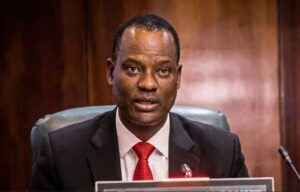
Nigeria could face a sharp depreciation of the naira, with the exchange rate approaching N3,000 to the dollar, if the Federal Government restores petrol subsidy, Finance Minister Taiwo Oyedele has warned.
Oyedele said a return to subsidised petrol prices could push pump prices to at least N2,000 per litre, above the current average of about N1,400, as pressure on government revenue and foreign reserves weakens the local currency.
The Minister of Finance and Coordinating Minister of the Economy spoke on Thursday in Abuja during a briefing on rising petrol prices and renewed demands for the return of fuel subsidy ahead of the 2027 general elections.
He said Nigeria’s estimated daily petrol consumption of 50 million litres would make a return to pre-2023 reform prices cost more than N20 trillion annually. Even selling petrol at N500 per litre would require government spending of more than N16 trillion a year, excluding additional consumption and smuggling.
Oyedele warned that such expenditure would place enormous pressure on public finances, potentially leaving the government with fewer resources to pay salaries and pensions, fund schools and hospitals, provide security and execute infrastructure projects.
He said the amount required to sustain the subsidy would be comparable to nearly all the funds shared among the federal, state and local governments through the Federation Account in 2025.
According to him, the financial burden could also increase Nigeria’s borrowing costs, trigger a sovereign credit downgrade and put further pressure on the naira, creating a cycle in which government intervention ultimately makes imported fuel more expensive.
“A subsidy does not lower the cost of fuel. It only changes how it is paid, and when,” he said.
The minister explained that crude oil, freight and refining inputs are largely priced in dollars, meaning that keeping petrol prices artificially low would require the government to absorb part of the cost, including the foreign exchange burden.
He also rejected the argument that discounted crude supplied to domestic refineries would amount to a production subsidy, saying the arrangement would effectively transfer the discount to consumers through lower pump prices.
According to him, such an arrangement would still constitute a consumption subsidy, with the same fiscal implications as the previous system.
Oyedele further warned that cheaper petrol in Nigeria compared with neighbouring countries could encourage cross-border smuggling, allowing motorists outside the country to benefit from a subsidy financed by Nigerian taxpayers.
Defending the removal of petrol subsidy in 2023, he said the policy had generated N15.8 trillion in additional revenue for the Federation Account between June 2023 and December 2025, with N10.4 trillion going to state and local governments.
He added that while 27 states struggled to pay salaries reliably in May 2023, none was in that position at the time of Thursday’s briefing.
At the federal level, he said part of the savings, alongside additional independent revenue and borrowing, had supported wage increases, infrastructure, electricity subsidies and social transfers, while other funds had helped stabilise the economy amid rising debt-servicing costs.
Rather than restore a blanket subsidy, the minister said the government was pursuing measures intended to reduce the pressure of fuel costs on consumers without recreating the former system.
These include tax and duty waivers on petrol valued at more than N3.3 trillion for the year up to September 30, 2026, a proposed 30-day discount on petrol sold at NNPC stations, a proposed N1,350 ceiling on ex-gantry or landing costs, additional cash transfers and subsidised credit.
The government is also accelerating the deployment of compressed natural gas (CNG) and considering an excess-profit tax on energy operators to fund relief for vulnerable consumers.
Oyedele said the administration would continue to consider targeted support but would not reverse the subsidy reform, arguing that a return to the old arrangement could revive fuel scarcity, smuggling, currency instability and mounting fiscal pressures.
He said the priority was to ensure that the benefits of the reform reached more Nigerians faster and in more practical ways, rather than abandon a policy the government considers necessary for long-term economic stability.